


Dear Dr. Sharon: Is Rejection Sensitivity All In My Head?
Rejection sensitivity can feel overwhelming, especially for people with ADHD who experience emotions more intensely than others. When even small slights feel like major setbacks, it can be tough to know how to cope—or how to support a loved one who struggles. In this Dear Dr. Sharon column, we’ll explore why rejection sensitivity isn’t “all in your head,” how it connects to ADHD, and practical strategies you can use to ease its impact.
Ask the Experts
Remember the old poem about the secret ingredients for boys and girls? Snips and snails for boys, sugar and spice for girls. It wasn't just a silly rhyme; it hinted at a truth: boys and girls experience the world differently. This applies to neurodivergence too. Autism and ADHD can manifest differently in males and females, leading to misdiagnosis or underdiagnosis in women. For parents, this raises a crucial question: how can we ensure that neurodiverse children, regardless of gender, feel seen, understood, and supported? On this episode, our expert panel will discuss how boys and girls experience neurodivergence differently and offer strategies for parents and educators.



This Organized Life: ADHD and Procrastination-with Dr. Sharon Saline (Part 2)
We are back today with part 2 of my conversation with clinical psychologist, Dr. Sharon Saline. If you haven’t had the chance to listen/watch last week's episode on procrastination and ADHD, I’m going to encourage you to check that out first!
This Organized Life: ADHD and Procrastination-with Dr. Sharon Saline (Part 1)
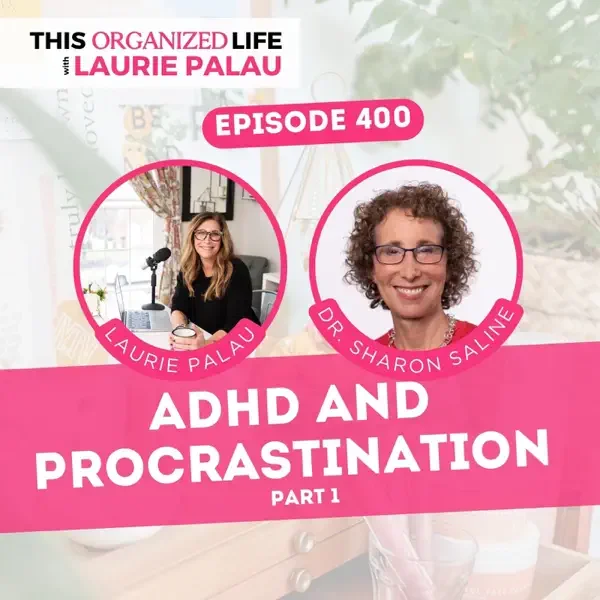
Today I am joined by Dr. Sharon Saline, a clinical psychologist who specializes in working with children, teens, adults and families living with ADHD and neurodivergence.I invited her on the show today to talk about the role of Procrastination specifically as it relates to ADHD.



ADHD for Smart Ass Women with Tracy Otsuka- Dr. Sharon Saline: The Stress-Anxiety-ADHD Nexus
Did you know there's such a thing as productive anxiety and toxic anxiety? One can give you a boost, while the other can drag you down. Managing ADHD, anxiety, time management, and social expectations can be tricky, but they also open doors to self-discovery and growth. Dr. Saline, with over 30 years of experience and a strengths-based approach, offers down-to-earth advice to help you tackle social anxiety, emotional regulation, and time management, especially during life transitions like menopause. Her personal and professional insights help smart women manage their busy brains and use their intelligence as a tool, not a mask.


