

Create Successful Neurodiverse Family Outings Today: Time to connect with the great outdoors!
 After 18 months of dealing with the stress of indoor COVID living, using screens for social connections, and managing the stress of hybrid education, most of us have been hankering for some much needed rest and relaxation this summer. As we head into the last weeks of summer and for some, the early return to school, it's worth taking some time to savor time outside as part of this reset. Connecting families with the great outdoors benefits individual family members and improves family bonds as a whole. Creating neurodiverse family outings that go smoothly and have everyone feeling like a happy camper, however, can be challenging. It's important to find ways to improve family outings so they work for everyone in your family. Even small adventures can make a big difference. Let's finish off the summer by making memories that are as positive as possible for everyone.
Why getting outdoors for neurodiverse family outings is worth it:
Spending time in nature is beneficial and fun for all of us: we can kick off our shoes and wade into the ocean, hike to a beautiful vista or just have a picnic in our own backyards. It's especially great for neurodivergent kids--those youngsters with ADHD, LD, ASD, 2e and/or mental health issues. When any of us venture outside to a beach, park or any green spot, our entire demeanor shifts. We shed some of the stress of our daily lives, feel more relaxed and connect with the atmosphere around us. Children, teens and adults start to feel a welcome sense of spaciousness and freedom.  For neurodivergent kids, especially those living with anxiety or depression, this freedom is often sorely needed. These children and adolescents need a chance to let go from the pressures of all things that they struggle to remember to do and from not feeling good enough at doing them. They spend so much time trying to focus, stay organized and correct their mistakes, that a break to wander, play and explore is a welcome (and necessary) relief. On neurodiverse family outings and excursions outdoors, youngsters and adults alike can just be in the moment. They can enjoy the wide range of outside activities and explore the beauty of the natural environment. They may be happy just to be in a different physical space and do nothing at all. These experiences in nature can be very restorative for them and for you as parents, too. Family outings also provide ideal times for family fun as the 'shoulds' of our daily routines are transformed into games, explorations and discoveries.
Tips to having a successful summer family adventure with neurodiverse kids and teens:
Pick a location that offers something for everyone and doesn't require much planning.
Talk with your family about the available options and what people want to do so you can all work together on making a good experience for everyone. Brainstorm first, and then negotiate any necessary compromises. These outings with your neurodiverse family involve the entire family, so make sure everyone's voice is heard.
Limit your expectations.
Whatever happens has to be okay with you and okay with your family. Share your hopes for the day and listen to theirs. Be open to and make room for spontaneity and go with the flow. The less control you need to exert during the day, the better it will be for you and for everyone else. Remember to play!
Give your teen or child a few specific, simple tasks.
 In preparation for your neurodiverse family outing excursion, make a list and write down items that can be checked off. This gives kids more practice in developing those ever-needed executive planning and organizing skills. They'll be less anxious about thinking they'll arrive unprepared or left something important behind, too. Remind them to bring items that help them relax, or a go-to activity if times are tough.
Create some guidelines about appropriate behaviors for your day.
Limit these to 2 things, because the kids aren't likely to remember more than that. These guidelines should revolve around safety primarily, and be logical and explicit (e.g. swim with another person, not alone, and ask beforehand; stay with the group when hiking; play around the picnic area where we can see you). Remind your child or teen of these 2 guidelines as you arrive at the location. Then ask them to repeat them back to you. This verbal repetition signals to you that they’ve got it.
Focus on the positive.
 There will likely be a blip or two on your neurodiverse family outings. Something may happen that may frustrate you or other family members. That’s a normal part of being together and doing an activity. Take a deep breath, focus on what's most important and help your son or daughter recalibrate. Ask your family what would help them move on and/or make amends if there’s been an argument. Practice forgiveness and refocus everybody's attention on the positive goals of the day such as exploring a different place or trying a new activity. This especially helps neurodiverse kids overcome the negative memory bias that often leads them to focus more on the negatives than the positives. If they have trouble shifting, look around and notice something in their environment--an adaptation of “I spy”--to become more present. Say something like: “I see a hawk in the sky. How big do you think it is?” “Wow, that biker just rode by so quickly. I wonder how fast she is going?” “Can you pick a cool spot for our blanket so we can have lunch?”
Enjoy your adventures!
Read more blog posts:
- Regulate Summer Screen Time for Your Child with ADHD and Yourself
- ADHD and Negativity: Why ADHD kids and teens say “No” and how to help them communicate
- Kick off the Summer with 6 Easy Strategies for Better Living with ADHD
Learn more on Dr. Saline's YouTube Channel!
Handouts, webinars & more in Dr. Saline's Store:
https://drsharonsaline.com/product/live-adhd-webinar-qa-navigating-college-with-adhd-setting-yourself-up-for-success/ https://drsharonsaline.com/product/managing-technology-families-video/ https://drsharonsaline.com/product/home-seminar/

ADHD Support Talk Radio: Perfectionism, Shoulds & Adult ADHD


Overcoming Distractions EP 122: Managing burnout and overwhelm when you have ADHD


Attention Talk Radio - ADHD: What You Should Do vs What You Actually Do


Regulate Summer Screen Time for Your Child with ADHD and Yourself
 Summer is here! How are your kids and teens with ADHD spending the extra free time? On the one hand, kids and teens have more time to turn to video games and connecting with friends on social media. On the other, they have more time and space to move around now that they aren't required to sit and learn so much. This is a much needed break for kids and teens with ADHD who often self-regulate with movement. But with less structure and help with supervision, parents often have trouble keeping up with the entertainment, energy, and emotions of kids all day, every day. Many parents then turn to screens to help kids take the edge off of an otherwise hectic time. So it's not whether screens are part of summer vacation, but how they are. So how can you help your family better regulate summer screen time?
The benefits of online connection for kids with ADHD
Though screen time has a negative reputation, it's not all bad. Games are great for developing problem-solving skills and hand-eye coordination. Kids experience a motivation to excel. They also practice picking themselves up after making mistakes to try again--a helpful experience for those with rejection sensitive dysphoria that often accompanies ADHD.  Social media has the potential to help kids and teens with ADHD expand their social groups and foster stronger connections. They can become part of supportive communities that help them learn to express themselves and develop a stronger sense of self and identity. After years of feeling behind in certain areas compared to their peers, finding ways to improve their self-esteem and sense of belonging makes a big impact on kids and teens with ADHD. Access to the internet, with its vast amount of information, also encourages learning. It can nurture the interests of kids and teens with ADHD. If a child doesn't have access to a yo-yo teacher in their neighborhood, they can learn the basics and some fun tricks on YouTube. Importantly, they can also learn at their own pace. Sometimes kids with ADHD fall behind with certain styles of learning used in school, so having the opportunity to experience how they learn best encourages them to self-advocate for accommodations that might help them succeed now and in the future.
The side effects of too much screen time
Unfortunately, there are "side effects" to getting too much screen time on a regular basis. Too much screen time can actually take a bigger toll on developing children than we often realize. Screens are associated with negative health implications like:
-
- Sleep issues

- Low energy
- Decreased productivity
- Eyestrain
- Headaches
- Sleep issues
Screens - and the applications and games we use on them - can also be highly addicting. We want the summer to be fun for our families, so it can be very difficult to work with them on rules for screen time. But it is important to explore these options to help improve their health and encourage your family to engage with the world around them.
A few simple tips to help you regulate summer screen time with your family:
Discourage late-night screen usage
 If you need to, consider shutting down the internet or turning off phones to discourage late-night usage. Some families choose to have a phone basket or cubby to put everyone's devices in. Doing this an hour or two before bed will help everyone fall asleep faster. Many families choose not to keep television sets or computers in bedrooms to help discourage any over-usage. This should help to improve your child's sleeping patterns, which often aggravate any cognitive or energy issues they may be having.
Co-watch with your children
When possible, make sure that what your kids are viewing or interacting with is age-appropriate. It can actually be really fun to engage with them and their favorite video games, television series, and movies. Ensure that any news they are getting is from reputable sources. Monitor their social media usage to promote healthy interactions. Set child locks on devices and applications for the times when you are not around to co-watch.
Limit screen time
 The Centers for Disease Control and Prevention (CDC) recently reported that children and teenagers spend an average of six to nine hours per day on screens. Bringing this number down is a lot easier in the summer with so many other activities and crafts to try and things to get into. Everyone should really be getting a much-needed break during this season. Follow my parenting acronym "SCREENS" to help you create regulate summer screen time with collaboration and an overall effective plan. Try to stick to a rule with screen time for all of your kids, so that no one feels left out or discouraged. If you're feeling confident, try a "no screen day" once a week. See what kinds of events and other things your children come up with in the meantime. A digital break is great every now and then for everyone, and I highly encourage it. If you can, try to abide by similar rules. You might find that it benefits your own mental health in the long run. There is overwhelming evidence to support that Mother Earth does, indeed, have some sort of integral connection to--and influence over--all living cells. Incorporating outdoor activities into your routine can optimize your body’s function with access to fresh air, sunshine, plants, animals and other environmental factors. Try planting a garden. Enjoy long walks with family pets. Do some yoga or play some frisbee in the yard.
  Encourage your children (and yourself, if you can) to be outside, screen-free, for at least an hour on the days that it is nice outside. And really, if you're dressed appropriately, even rainy days can be fun to play in! Just be sure to check for upcoming storms and that the air quality is reasonable, especially with the unexpected weather we've been having and the increasing natural disasters happening around the world. Also, join your kids for family walks, bike rides, or other explorations. There is no denying that screens play a pivotal role in growth and development in this day and age. After a long year of online learning, it is also imperative to make sure that your family has a plan to regulate summer screen time this year. It's not always easy, but I promise it's worth it.
Read more blog posts:
- ADHD and Technology: Sensible Solutions to Screen (In)Sanity
- Kick off the Summer with 6 Easy Strategies for Better Living with ADHD
- Dinnertime for the Family with ADHD: How to make family meals more enjoyable for all
Watch on Dr. Saline's YouTube channel:
- Managing summer screen time for your kids (WWLP 22 News interview with Dr. Saline)
- How Do I Manage Screen Time and ADHD? (ADDitude Mag ADHD Parenting Q&A with Dr. Saline)
- Summer Structure & Self-Esteem for Kids with ADHD (ADDitude Mag ADHD Parenting Q&A with Dr. Saline)
https://drsharonsaline.com/product/smartphones/ https://drsharonsaline.com/product/managing-technology-families-video/ https://drsharonsaline.com/product/home-seminar/

Relationship: How to Let Someone Go- 3 Most Important Things You Must Do



ADDitude Mag: “I Can Do It Myself!” How to Support Tweens with ADHD (Who Don’t Want Help)



Couples Living with ADHD: Healthy practices that focus less on fairness and more on companionship
 Whether you have ADHD, your partner does or you both do, there’s one thing for certain: the tasks of living--whether fun or tedious--can often seem overwhelming and unmanageable. Executive functioning skill challenges, learning disabilities, ASD, anxiety or depression can add to the complexity of any relationship. Sometimes these challenges are met with humor, empathy and compassion. Other times, couples living with ADHD produce resentment, frustration and blame. How can you and your partner live with ADHD more successfully while nurturing a healthy companionship?
Exchange fairness for collaboration
Begin by forgetting about fairness. Focusing on equality leads a couple down a rocky path. It may seem that one person does more of the heavy lifting. Whether or not this is true, we all have roles to play in our partnerships and in our families.

You need to learn how to negotiate what these are so that there’s flexibility and compromise instead of rigidity and contempt. Healthy relationships are all about give and take, effective communication and acceptance of the other person’s strengths and limitations.
In partnerships, people have different skill sets. One person may be the organizer and the motivator. The other might be better at following lists, coming up with fun ideas or recalling specific memories from five years ago. Instead of concentrating on fairness, shift your attention to what will help nurture your relationship, foster closeness and be useful in getting things done.
Make collaborative agreements with plans for accountability and lean into each other’s strengths. This way, you can break down tasks into manageable parts or delegate chores based on interest and capability. Instead of fairness being your goal, aim for effectiveness and equanimity.

I’m better at social planning, cooking, dealing with medical issues, reserving places to stay on vacations and making sure we celebrate holidays, birthdays and our anniversary. My husband takes care of the garden, goes to the dump, manages structural house problems and deals with airlines. Together we take turns with the laundry, grocery shopping and walking the dog.
How do you and your partner divide tasks? What skills do you and your partner each have? If the division of labor seems imbalanced, how are you addressing that? Do you make joint lists and assign the tasks so one person isn’t doing it all? Zoom out and think about the big picture.
Rinse, wash, repeat: Stop having the same argument
Most couples have the same arguments over and over again. Whether it’s about money, who’s doing (or not doing) what or how to parent the kids, people get caught up in (and sweat) the small stuff. As adults living with ADHD, you are more likely to struggle with impulsivity, emotional control, prioritizing and time management (among other executive functioning skills) compared to other couples. Here are 5 strategies to reduce frustration and foster positive connections and companionship with your partner:
1. Communicate clearly and cleanly:

What is the music between you and your partner? How you talk to each other and negotiate issues is critical for creating a harmonious soundtrack between you. Practice reflective listening when you aren’t upset so you can use it when you are. When the temperature is hot between you, there’s usually no listening.
-
-
-
- Set aside 10-15 minutes at least three times per week and mark your timer.
- The first person speaks and the second one listens, periodically repeating back what is being said using this formula: “I heard you say X, did I get that right? Is there anything else?”
- At the midpoint, you switch roles.
- Then when you are getting agitated and heading down the slippery slope towards a blowout, call up this exercise. This way, you will each feel heard.
-
-
The goal isn’t for a solution but just to improve listening and acknowledge your partner. Afterwards, refrain from going back into the content and decide when you can return to the topic for a solution. You are working together, not against one another.
2. Make requests, not demands:
Instead of wagging your finger or raising your voice in self-righteousness or holding onto your need to be right, keep the playing field level. Asking your partner invites their participation. If they struggle to follow through on things, find a calm moment and brainstorm together what would assist them with persistence and completion.
It’s natural for ADHD brains to wander, even if a person has a list to aid them. When you work as a team, the probability of reaching a goal is much stronger. Acknowledge and appreciate when your partner does something you’ve asked, or at least made a solid effort. This will encourage them to keep going.
3. Give your partner the benefit of the doubt:
 We all know that it’s more satisfying to accomplish what we set out to do than to leave things unfinished. Most people with ADHD would rather be successful in what they attempt but may fall short, despite their best efforts. They frequently carry around a deep-seated sense of shame about their limitations, which spills over into their relationships.
Perhaps your ADHD partner resents you because you don’t have ADHD and things seem easier for you, or they don’t like how you tell them what to do. Maybe they name you as the problem in the relationship because you have ADHD and think everything is your fault. Relationships work best when you give your partner the benefit of the doubt rather than assuming they do things on purpose.
4. Be accountable for your actions and inactions:
Relationships succeed when both parties are accountable for what they bring to the table--the good, the bad and the ugly. Brainstorm tools that will help your relationship, such as writing things down, using alerts and alarms, sending neutral reminders via text message, creating family bulletin boards and/or online calendars.
Start with one change at a time--that’s what people can handle. When there are several things on the list, “I wish you wouldn’t do,” or, “I wish you would start doing,” becomes overwhelming and, at times, humiliating.
5. Foster closeness and fun:
Many couples living with ADHD are so busy dealing with the pressures and responsibilities of daily life, that they’ve lost track of what drew them together in the first place. Nurturing your positive connection is essential for growing your love.
 Find some time to remember what you like about one another. Take turns choosing an activity and mix things up by trying something new. Instead of going out to dinner again, try a whitewater rafting trip for the day, get food from a new restaurant and have a romantic picnic, be a tourist in your own town, or visit a new museum. Develop a shared interest such as playing tennis, learning salsa or baking bread. Make time for intimacy.
If you are not connecting positively, you will negatively. Anger and hostility also reflect a deep connection, just not a productive or pleasant one. If these activities are tough for you because there’s too much blame or resentment, I encourage you to seek counseling.
Read more blog posts:
- Gender, Sexuality and ADHD: Parenting Children and Youth with ADHD Exploring Their Gender and Sexual Identity
- 5 Tips for Parenting Neurodiverse Kids on the Same Page
- Beyond ADHD Pandemic Burnout: How To Help Your Family Regroup And Find Strength
Watch on Dr. Saline's YouTube Channel:
- ADHD in Couples' Relationships (ADDitude ADHD Support Group Q&A with Dr. Saline)
- Moms with ADHD: Why YOU Are the Best Mother for Your Child
- Dads with ADHD: A Father's Day Special
https://drsharonsaline.com/product/shame/ https://drsharonsaline.com/product/motivation/

Dinnertime for the Family with ADHD: How to make family meals more enjoyable for all

 Dinnertime can be a wonderful opportunity to catch up with your family, learn what's going on in each other's lives and share the delightful experience of a tasty meal. It has the potential to be an enjoyable break in your day where you can check-in with your family (and yourself) and connect with each other. However, if that doesn't sound like your experience, you're not alone. Dinnertime for families living with ADHD can look quite different. Your child or teen face unique challenges that make it difficult for them to calmly transition to the table and be ready to eat what's served. I'll discuss some of these challenges as well as how to help everyone feel more prepared and excited to enjoy a meal with one another.
Why mealtimes can be challenging for kids and teens with ADHD
Getting everyone to the dinner table
Kids and adult with ADHD often get overwhelmed when they're asked to stop one activity and start another. Shifting from one task to another involves executive functioning skills such as impulse control, cognitive flexibility and organization that they might struggle with. Knowing how to wrap up where they are in a project, remembering where they're leaving off when it's time to return, and moving onto something new can be challenging. Hyperfocus on a project or activity makes this even tougher because of a lack of awareness of how time passes. Think about how time goes fast when you're having fun but even more so. Leaving a fun computer game or playing hoops with your neighbor to eat a meal with your parents, no matter how many warnings your mom or dad gave you, can still come as a shock that they now have to process. So getting to the table with a smile may well not happen.
Arriving in a good mood
 Ideally, family members come together around the table in a friendly, happy mood. However, that can be a lot to expect at dinnertime for your ADHD family. Expecting kids to reign in emotions from the events of their day or even their last activity might be too much to ask. If they're overwhelmed with having to stop what they were doing to eat at what they think is an inconvenient time, they'll probably bring this upset to the table. They might also have had a difficult day and aren't up for cheerfully sitting around you to eat dinner. Displeasure about the food or anxiety about the noise or conversation could also contribute to a foul mood. Chat with your child or teen about how to join the family and participate in the meal with more equanimity. Learning how to do this takes time and practice. Eating what's served We all can agree that eating well is one of the keys to living well. Yet, nutrition can be a hard enough thing to handle for yourself, let alone when you are raising a picky eater. Having a well-rounded diet is important, yet it can seem almost impossible with a sensory sensitive child or teen with ADHD who, for example, only likes white-colored foods. As you try to get a handle on it and ensure that your family is getting all of the vitamins and minerals they need, things can get a little dicey (pun definitely intended) with so many different food preferences. Dinnertime for your ADHD family can feel like a rollercoaster ride. "Picky eaters" make up 26% of the American population, while anywhere from 13 to 22% of children are reported as "picky eaters" at any given time. People rarely consider it a chronic problem since it is so prevalent in children, especially aged 2-5, and see it more as a passing phase. However, about 40% of children are reported to have inconveniently specific eating preferences that last more than two years, and this is especially common for children diagnosed with ADHD.
7 tips to help make dinnertime more enjoyable for your ADHD family
1. Ask your child or teen about their food preferences.
Do you consider your kid or teen a picky eater? Not being interested in the meal served can add stress at dinnertime for any family. My guess is they aren't selective about their foods because they prefer dine exclusively on lobster rolls or prime rib. Rather, kids with ADHD who have strong taste preferences often like familiar foods, like crackers, mac and cheese or PB&Js.  Eating their preferred foods consistently might not offer them the best nutrition. But the stress of needing to swallow foods you don't like--while also in an upset mood or heated emotional environment--isn't good for the body, either. Having a familiar, fulfilling meal can help them get the sustenance and energy they need without needing to add more stress to an already stressful day. Ask them questions about the foods they like. Is it the flavor, the texture, the fact they can hold it in their hands? This will help you better grasp their eating needs as well as gain understanding about their experiences. Kids with ADHD want to be understood more than judged. Taking the time to inquire about their perceptive is meaningful to them and helpful to you.
2. Take their preferences into consideration when introducing new foods at mealtime.
 If you're concerned about your kid's limited food preferences, try working with them slowly over time on expanding their food preferences. Forcing them to eat a meal that you might love, but they don't, will only lead to an unpleasant experience for your family. See if you can find a new food once in a while that might be a healthier version of their favorite foods, but still meet their preferences. If your child loves french fries, try an often healthier alternative - sweet potato fries. Then, gradually move on to other similar foods. When they're trying new foods, don't set your expectations too high. You might think you have all the information and that you definitely got it right this time. The bottom line is--it's still up to them to decide, and it still might not work. Prepare yourself for this scenario so you don't give a strong reaction in the moment. The goal isn't to shame your child or teen into eating. Showing support and acknowledge for their courage in taking a risk will help them feel more comfortable with trying new foods in the future.
3. Set up reminders leading up to mealtime.
Give your child or teen time to prepare for an upcoming meal time. Use a reminder system to let your child or teen know that food will be prepared and ready to serve soon. I'm not referring to yelling up the stairs, "Dinner in 10!" Raising your voice won't support any calm transition. It can actually be triggering, so it's best to avoid at all times, even when it's not out of anger or frustration. If your child or teen has headphones on or their door closed, they're not going to hear you anyway.  Instead, knock on their door or calmly approach them (while respecting their privacy and physical boundaries) and let them know that dinner will be ready in 15 or 10 minutes and then with a 5 minute warning. Ask them to acknowledge the reminder using the Rule of Three so you both understand that they get it. Another option is helping them set up reminders in their phone, watch, alarm clock or other device. This promotes their independence and helps them build strategies for time management skills.
4. Keep your child or teen informed with what's on the menu.
Inform your child or teen about what's for dinner. This eliminates unknown variables that might make them anxious about mealtime. Kids and teens with ADHD struggle with enough anxiety in their lives; knowing what's next on the menu takes away unnecessary anticipation and worry. They might also plan accordingly - perhaps avoiding a similar meal at lunchtime.
5. Better yet, let them have a say in what's on the menu.
If your child or teen helps create the menu, then they're more likely to want to eat what's on it. Chances are, not everyone in the family agrees on the same food preferences. You will likely have to compromise and agree to mix things up. If there is a food you all love and crave every week, like pizza, then consider having a weekly Friday Pizza night! Transforming dinnertime into an ADHD family tradition is fun and promotes family bonds.  Weekly family meetings are a perfect time to discuss ideas for upcoming meals. Collaborating on meals takes pressure off of planning and shopping for meals on your own. It also leads to a happier outcome for all and teaches essential living skills. If you're looking for new ideas or inspiration, try looking on Pinterest from saved or new recipes, or dusting off those cook books to pass around. Encourage your kids to notice what they crave throughout the week, too. They can write them down or text them to you. Then, talk about this during your weekly family meeting.
6. Have easy, preferred food options available as back-up.
It helps to know if there's food on the menu that your kid knows they won't like. That way, you won't make more than necessary, and there will be no upsetting surprises. You can prepare (or they can do this themselves) a safe choice ready for them to eat instead. Maybe that's a quick sandwich or an easy, go-to microwave meal.
7. Involve your child or teen in the meal prep process.
 If there's time and interest, involve your child or teen with the process of prepping, cooking and serving the meals. This is a great way to get them in the ready-to-eat mindset and teach them how to cook. Their body and mind are excited to eat thanks to the food's aroma and occasional taste. They're also looking forward to relaxing at the table after some physical work. They're ready to jump in as soon as it's ready! Making and serving food is also a time to get creative-- a common strength for people with ADHD! Whether it's trying a different ingredient, cooking it differently, serving it on the dish in a fun design or setting up the table with a new aesthetic, it can help your kid get engaged and lead to a fun, enjoyable meal with your family.
Read more blog posts:
- ADHD and Negativity: Why ADHD kids and teens say “No” and how to help them communicate
- Create successful neurodiverse family outings today: Time to connect with the great outdoors!
- Post-Pandemic Self-Care for Parents: 12 Tips for Wellness Practices in a New Normal
https://drsharonsaline.com/product/managing-technology-families-video/ https://drsharonsaline.com/product/home-seminar/

22 News Mass Appeal: 5 common mistakes parents of children with ADHD make

Click the logo below to read more and watch the interview.


Negative Memory Bias and ADHD: Tips to Help Kids and Youth with ADHD Remember the Positives
 Have you ever noticed that your child or teen with ADHD remembers negative comments people say to them more than they do positive ones? While all human brains are wired for the negative memory bias, or negativity bias, the minds of kids and youth with ADHD seem more vulnerable to holding onto what is "bad" more than what is "good." The combination of the negative memory bias and ADHD symptoms such as working memory challenges, emotional dysregulation and low self-esteem can make it even more challenging for people living with ADHD to balance out with positive memories. Let's dive more into the impacts of the negativity bias on people with ADHD, as well as helpful strategies you can use to help the children and youth in your life focus more on the positives.
The impacts of negative memory bias in children and youth with ADHD
This negative memory bias is strengthened for kids and youth with ADHD during childhood. It's common for family members, peers, teachers, coaches and other influential people in children's lives to criticize children and youth with ADHD. Oftentimes, people might intend to offer feedback, but kids still interpret the statements as criticisms. They're not remembering things, not doing things properly, keeping things messy, not controlling themselves, etc. These encounters are opportunities to focus on, remember and learn from as children with ADHD grow up. But focusing on the negatives can contribute to negative self-talk, as well as feelings associated with shame, anxiety and depression.  In addition to the negative memory bias, many people with ADHD experience Rejection Sensitive Dysphoria, which involves having a heightened response - often physical, mental and emotional - to rejection, criticism, mistakes and other negative experiences. Putting more weight on these negative experiences over positive ones can impact behavior and decision making, such as people-pleasing, striving for perfection or avoiding situations that might have negative outcomes (even if those same experiences could also lead to positive outcomes). While our ancestors needed the ability to learn and remember lessons from tough experiences for survival, people today also need to learn how to retain lessons from good experiences. This is especially true for children and young people with ADHD. Beneficial experiences not only serve as the foundation of self-esteem, secure attachment and self-management, but they also nourish inner strengths. How can we help balance the weight of negative experiences with positive ones for children and youth with ADHD?
Working memory, the negative memory bias and ADHD
In order for the good moments to outmaneuver the negativity bias, they have to be installed in the brain's neural structures. This process requires holding the thought in the working memory long enough to be picked up by short-term memory structures and then transferred to the long-term memory. Of course, people with ADHD, by definition, typically struggle with working memory challenges. Therefore, this transfer doesn't occur as frequently as we would like, if at all. So the key issue here is "long enough." While there is no research to give us a specific time for this, "long enough" usually means holding a positive emotion, desire, action or outcome to actually feel it--to reflect on it and let it sink in. I would venture to guess this means up to a minute if not longer. How can you assist your ADHD child or teen to do this more successfully?
5 tips to help children and youth with ADHD focus on and remember the positives:
1. Teach and value the importance of celebration.
 When something good happens, teach them that relishing it is important! In our ultra fast-paced world, everyone moves on to the next thing so quickly. Oftentimes, the important integration needed to consolidate memory can be missed. Therefore, negative experiences, strengthened by negative memory bias and ADHD symptoms, aren't being balanced with positive ones. SLOW IT DOWN, and celebrate positive moments alongside them. It's also important to show your child or teen that "celebration" doesn't have to mean a festive gathering with family and loved ones. Rather, it could mean treating yourself to an ice cream or dancing alone to your favorite song. Celebrations don't depend on other people showing up - you can celebrate yourself and your personal accomplishments in various ways that might change over time.
2. Ask questions about 'highs and lows' at dinnertime
Practice doing highs and lows of the day at dinner with the family. Encourage everyone to say something. Don't ask questions about the statements during the sharing. Instead, if you want to follow up on an issue, ask first. We are trying to create a safe place to hold both the positive and negative occurrences simultaneously; giving them equal weight. This process will create new, essential neural pathways. If daily highs and lows are too much for your family, then do them once a week at regular meal, like Friday dinners. Try to stay as consistent as possible to create the strongest impact on balancing out the negative memory bias.
3. Give genuine, positive feedback daily that is succinct.
Honestly, nothing is too small to be acknowledged. When you do this, make sure you get down to your child's physical level. If your ADHD teen is taller than you are, ask them to sit down so you are at the same level. Put a hand on their arm or shoulder, if that's comfortable. Maintain eye contact with them if you can, and be clear that they get it!  As corny as it sounds, you could even ask them to repeat what they heard you say:
-
- Parent: "Look I really want to make sure that you understood what I said. Can you please repeat it?"
- Child: "Do I have to?"
- Parent: "Yes."
- Child: "Fine, I heard you tell me that you appreciated that I hung up my coat when I got home." Or, "I heard you say that you liked when I got off my computer right after the timer went off."
These exchanges build the neural pathways we are seeking to create and increase inner strengths, balance out the impacts of negative memory bias and foster interpersonal connection. Kids and youth with ADHD often interpret feedback in any form as negative. Be aware of how you word and how they interpret your statement. Try the ADHD Adapted Sandwich Feedback Method to formulate more neutral and effective statements.
5. Explain the subjectivity of criticisms and negativity.

Kids with ADHD often endure frequent criticism, or perceived criticism, from influential people growing up. Your child or teen may be motivated to focus on these encounters so they learn not to remake "mistakes," "improve" their abilities and behavior, rebuild self-esteem, gain acceptance and avoid further criticism.
Children and teens might not yet understand, however, that that criticism can be unwarranted and ableist. In other words, people often make remarks that neglect to accept the differences that come naturally with neurodiversity. Children, instead, deeply value the opinions of - and need support from - their family, friends and community. Instead of questioning the validity of the statement, they tend to trust what they have to say. Review with your child or teen the importance of valuing each others differences. In addition, lead by example by outwardly expressing appreciation for their - and other people's - different strengths and overall differences. Explain how criticisms can be subjective, and why people might make inaccurate statements or remarks without thinking them through. This can be confusing, so remain approachable and check-in when moments are calm to see if they need support with understanding statements and situations.
5. Keep it up, regardless of any unwelcome response that you may receive.
Remember, the pull towards negativity and retaining bad experiences is longstanding and ingrained. Stopping your efforts to counteract it will likely increase its influence. Educating your teen on the impact of the negative memory bias and ADHD symptoms might help them stay motivated to focus on the positives, too. Though you might not see a difference right away, your values and recognition are making important, life-long impacts on your child or teen's thought processes, motivation and self-esteem. Start building the GOOD today!
Read more blog posts:
- Are You Giving Feedback or Criticism? Recognize the Difference and Change What You're Doing
- Raising teens with ADHD: Redefining what ‘success’ means
- 6 Helpful Tips for Dealing with Rejection Sensitive Dysphoria
Handouts, Webinars & More in Dr. Saline's Store:
https://drsharonsaline.com/product/shame/ https://drsharonsaline.com/product/home-seminar/

TDAH Descomplicado Interview with Dr. Sharon Saline
Watch the interview on YouTube. (Portuguese/ English translations) Purchase TDAH by Dr. Sharon Saline



PsychCentral: 32 of the Best Ways to Get Organized When You Have ADHD

Click the logo below to read the article.


22 News Mass Appeal: Managing summer screen time for your kids
Click the logo below to watch the interview.

ADHD and Negativity: Why ADHD kids and teens say "No" and how to help them communicate
 As a parent of a neurodivergent child with ADHD, you might struggle with understanding symptoms of ADHD and negativity. It seems like you're constantly catching your child or teen with a negative attitude. It's 'No' to this and 'No' to that! You might wonder if this is normal during childhood and adolescence or more so for kids with ADHD. Let's explore these 'No's' and see whether they're simply an expression of negativity or something more.
Jared and his family's summer schedule frustration
Recently, I was talking with Jared, an eighth grade boy who was complaining about being bored now that school is over to his mom, Savannah and me. “There’s nothing to do except gaming, and you only let me do that for two hours in the morning and two in the afternoon. What else am I supposed to do?”
 His mom gently suggested going back to some activities that had previously interested him before COVID—piano lessons, basketball, tennis or making movies with his friends. "No, no, no. I don't want to do any of those!” His mom turned to me and said, “I used to do this to my mom. There’s never a right answer.”
I wondered aloud if his ‘No's’ actually meant, ‘Forget about it,’ or, ‘I’m not sure and need to think about it.’ Tennis and making movies were hard ‘No’s.’ Piano and basketball were more of an, ‘I’ll think about it.” I asked him why he doesn’t just say that and he shrugged, “I don’t know...I just can’t think about all that stuff at once."
We talked about how saying ‘No’ flat out like that gives him space to think about something without any pressure. The 'No' seemed to be less of a problem with ADHD and negativity, and more of a request for space to think. The gears in my mind immediately started turning.
The impact of ADHD on negativity
Due to working memory and processing speed challenges, kids with ADHD and negativity challenges are often feeling overwhelmed—emotionally, cognitively or socially. They simply lack adequate amounts of dopamine and norepinephrine in their brains to help them process and recall information efficiently. Over time, becomes hard to keep up with all of the activity around them.
These are mostly unconscious cognitive processes that kids struggle to articulate. Instead, what most kids tell me is that they simply feel flooded and agitated. They lash out and regret their words and actions afterwards. They might also be coping with anxiety or symptoms of rejection sensitive dysphoria. These challenges that commonly occur with ADHD can appear as negativity.
Negativity in public vs. at home
 Kids and teens with ADHD try to muddle through and manage these feelings at school and with friends. However, they don’t feel obligated to make the same efforts at home.
Jared once told me, “I’m not going to be suspended from my family." They don’t have to hold it all together with people they know love them, and whom they love too (despite any actions to the contrary). But this doesn't mean you have to endure inappropriate language, fury and sometimes aggressive behaviors. This doesn't foster a positive connection between you, nor does it teach your child or teen how to manage their intense feelings effectively.
Check in with your child or teen about 'NO.'
In a calm moment, sit down with your child and talk about ‘NO.’ Put on your Sherlock Holmes hat, take out your curiosity and gather some information about your child's challenges with ADHD and the negativity that you experience.
Reasons and meanings behind 'NO' often depend on the situation, so it might help to bring up some specific instances for an effective discussion. Is saying ‘NO’ about setting appropriate limits, expressing their opinion, being contrary, slowing things down or something else? Maybe it’s a combination of things. Brainstorm alternatives to ‘NO,' and come up with a few words or phrases to use when they need time to think about something.
Create a plan with your child or teen on how to address oppositional behavior
To address ADHD, negativity and flat-out oppositional behavior, you have to create a collaborative action plan.
-
-
- Start by discussing some plans and ground rules about explosions or meltdowns in your home.
- Ask your ADHD child or teen to describe what words or actions constitute over-the-top moments, and then offer some of your observations. To avoid blame, use the phrase,"I've noticed that things get out-of-control when..." and be as specific as you can.
- Consider sharing something about what triggers you and how you'd like to change your response. This normalizes their experience which reduces shame about struggling with meltdowns in the first place.
- Together, write down a list of your combined ideas and ask them to link these behaviors to logical consequences. Remember, punishments for kids don't teach any skills. Kids with ADHD and feelings of negativity need tools to help them calm themselves and communicate in these tricky moments.
- Plan to revisit your plan weekly and post it in the kitchen where everybody can see it.
-
Acknowledge your ADHD child or teen's efforts to improve communication
 Shifting away negativity takes time, repetition and encouragement. It involves identifying emotions and needs, and then communicating them effectively. Therefore, it's important to allow your child the chance to process and respond at their own pace. It's a cycle of practice, stumble, try again and practice some more. Regardless of your own frustration, try to acknowledge and validate any and all efforts your child or teen shows.
Managing ADHD and negativity is tough parenting work. Make sure that you practice your own self-care and have support for yourself from close friends, family members, a therapist or coach to assist you. The more you can respond instead of react and regret, the better it will be for everyone in the family.
Read more blog posts:
- ADHD, Defiance and COVID: What can you do instead of yelling?
- ADHD and Anger in the Family: Manage Outbursts with STOP-THINK-ACT
- Create Successful Neurodiverse Family Outings Today: Time to connect with the great outdoors!
Watch on YouTube:
- ADHD and Oppositional Defiance (ADDitude Mag Q&A with Dr. Saline)
- Anger Management with ADHD (ADDitude Mag Q&A with Dr. Saline)
- How to Get Your Teens to Open Up (WWLP 22 News interview with Dr. Saline)
Deeper dive: https://drsharonsaline.com/product/whats-up-with-all-this-anger/ https://drsharonsaline.com/product/home-seminar/

ADDitude Mag: When ADHD Drains and Strains Sibling Relationships
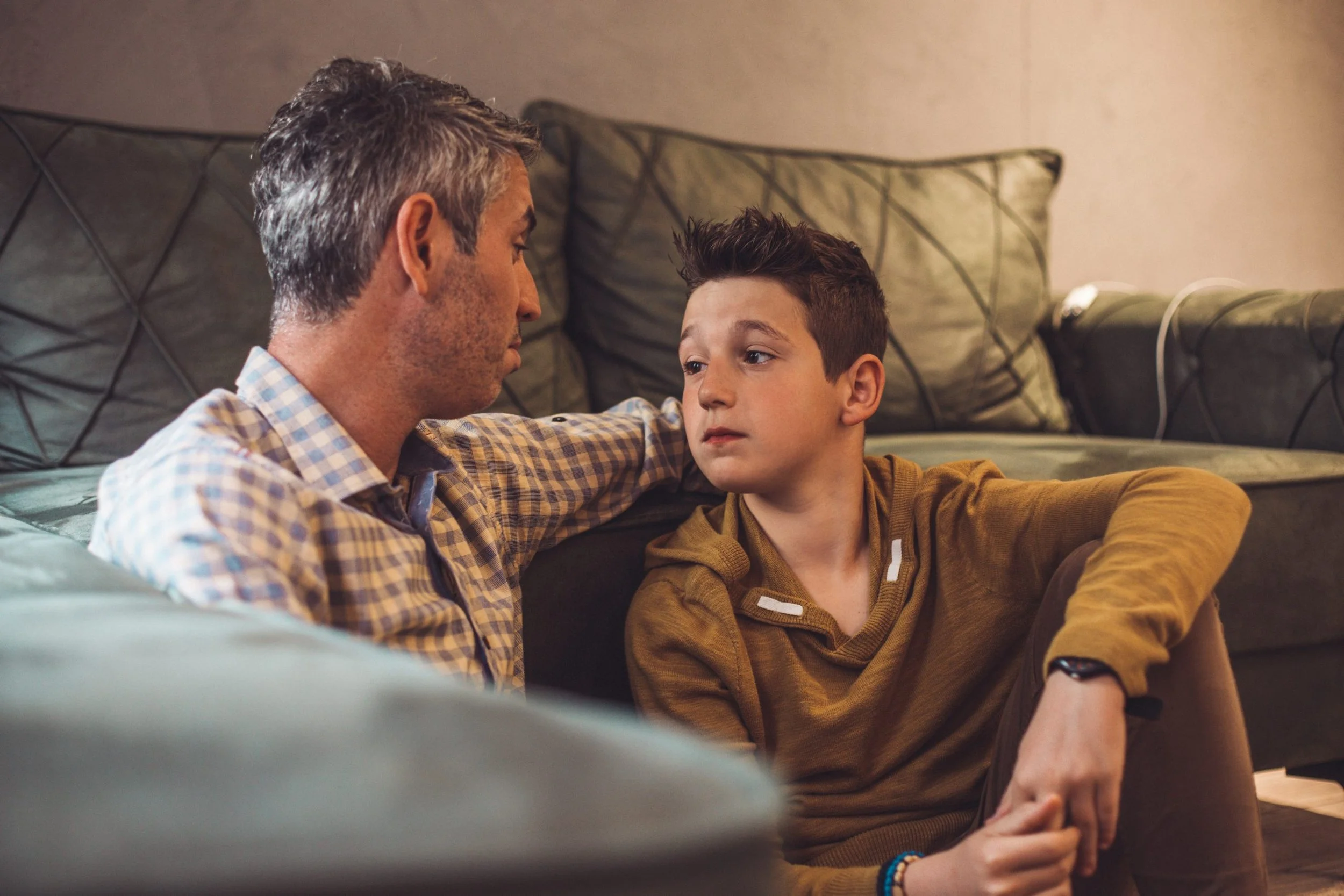
Dads with ADHD: How to use your unique strengths to assist your kids

 As a father with ADHD, you know firsthand what your neurodivergent child or teen lives with every day. Because boys are more likely than girls to be hyperactive or impulsive, ADHD in boys is often displayed and diagnosed earlier and more often. But you may or may not have been assessed when you were growing up. And, although you have symptoms and traits of ADHD, you may still not have a formal diagnosis. Whether you've struggled personally or professionally with issues related to concentration, emotional regulation, organization, impulse control or productivity, you may find parenting particularly challenging. It can tough to be collaborative, stay curious and validate what's going well when you wrestle with impatience, frustration and anxiety. Yet, there are many benefits that are unique to dads with ADHD.
Here are 5 ways that dads with ADHD can especially connect with their kids:
1. Dads with ADHD can hyperfocus on their kids.
 Having a parental figure who can zoom in and pay full attention on an activity is very useful for kids with and without ADHD. Dads who narrow their focus on doing something with their children can make them feel like they are the most important person in the world. This intense concentration facilitates meeting kids where they are, engaging in active listening, and working through small difficulties with precision. When you are hyperfocused, your ability to be an ally and your curiosity about your child opens doors to conversation and comforting support. Figure out some activities that you both enjoy, put down your phone and shine your spotlight of attention on your son or daughter.
2. They help to normalize what makes children different.
 Men who have ADHD are learning to cope with their differences through structure, education, and a whole lot of patience. Dads with ADHD are doing this while raising kids who may share similar strengths and challenges. Hopefully, as an adult, you've reached a point where you value your uniquely wired brain and learned to live with it with compassion and pride. Watching their fathers learn to accept and appreciate their quirks in a healthy way can truly help children to develop more positive thoughts around what makes them different and special.
3. They can often better understand their children's emotions.
All children experience frustration, anger, sadness and fear. During these moments, they may well lash out verbally or physically in aggressive ways. These big feelings can be confusing as well as overwhelming. Dads who live with ADHD may well understand those feelings differently than a neurotypical parent. Men with ADHD often struggle with anger management, intense shame and fear about not measuring up. Dads with ADHD have to go deal with these tougher emotions while supporting and guiding their kids towards developing self-regulation tools that are actually hard for them too. Consider joining with your son or daughter on some aspect of self-Control that you could both improve together. When you work collaboratively, you can model and share emotional intelligence and hard-earned coping strategies.
4. They are often natural problem solvers.
Dads with ADHD have experience learning about themselves and, if they're diagnosed, what an ADHD diagnosis entails. Because of this, they have cultivated many tools to manage challenges. They have natural empathy and useful insights that can help with problem-solving. Our children want to feel heard and assisted with their troubles. However, they also need a good sounding board for their own ideas. Whether it's working through math homework, trying to deal with a bully at school, or deciding what new sport to try, you can step up and be the confidante your son or daughter needs. Your support assists them to build resilience and confidence to figure out future issues as well.
5. They can help children develop healthy life strategies.
 When parents develop healthy coping mechanisms for the many challenges that life brings forth, they demonstrate how to engage in self-care. They also show how routines and relationships can bring meaning and satisfaction to life. Children, always watching and listening, will learn these tools and values from early on through adulthood. Parents with ADHD have a unique opportunity to lead by example while not expecting perfection from themselves. As a father with ADHD, you have a chance to help your kids dismantle gender stereotypes and that having strengths and vulnerabilities and asking for help are normal parts of being human.
Here are a few specific self-care areas that dads with ADHD can focus on:
-
-
-
Getting enough sleep.
Sleep deprivation is known to exacerbate ADHD symptoms. Your immune system’s ability to defend you from outside stressors is highly reliant on factors such as the amount of sleep you get on a regular basis. Without adequate sleep, it can be difficult to focus on simple tasks throughout the day. Sleep deprivation can also affect memory and reduce your problem-solving skills, which are already pain points with ADHD. Practice regular sleep and wake times and set up routines (with incentives if necessary) to facilitate this process.
-
Keeping a family planner or calendar.
Many parents use a calendar, planner, or to-do list to stay on top of everyday tasks. Dads with ADHD often integrate planning functions in their daily work life so why not apply this skill at home? Use a whiteboard, Post-it notes on a wall calendar or a chalkboard to set up daily and weekly routines. This helps kids see what's coming and learn how to organize themselves accordingly. When you rely on this and encourage them to do the same, they will improve their own planning and prioritizing skills.
-
Seeking outside support.
If you don't know how to do something at work or at home, you'll probably seek assistance, perhaps online or in person. Kids with ADHD often expect themselves to be able to do things on their own. They also set unrealistically high standards for themselves. Show your child or teen that it's important to ask for help when you need it. Whether it's managing learning issues, ADHD or mental health challenges, find support in your community for your youngster and for yourself. This could take the form of reading books. It might mean finding family or individual counseling or coaching, or consulting with a physician about medications. Talking to educators or other parents at school or taking a parenting class can also be helpful.
-
Engaging in regular physical exercise.
Have you ever seen a dad running at 7:30 am, pushing a stroller, and holding a dog's leash? How about hitting the gym right after work for 20-30 minutes to get their heart rate up before heading home? Many dads who struggle with ADHD develop a regular exercise routine. This helps regulate their emotions and clear their minds. Dads will often work their exercise in with their kids, too. Evening hoops in the driveway, playing catch, and early morning stretches are ways to bond with kids and get some mental clarity.
-
-
What you need to remember, regardless of your circumstance, is that you are the best father for your child/children. You have helped to bring them into the world, you have nurtured them, and you have loved them to the best of your ability and within your personal resources. It's time to start valuing your unique self and the meaningful connections you have with your children. 
Learn more:

Gender, Sexuality and ADHD: Parenting Children and Youth with ADHD Exploring Their Gender and Sexual Identity

Growing, learning and exploring gender and sexuality
Neurodiverse and neurotypical children, teenagers, and young adults are constantly questioning things. As their brain develops, they learn more about themselves and the world around them. Therefore, it's natural for them to be inquisitive. Part of this curiosity and self-reflection include topics related to values, beliefs and morals, as well as questions of all aspects of identity. Many young adults explore race, religious and cultural identities, as well as gender and sexuality. When the child has ADHD, the unique facets of this condition can influence this process. It takes courage and maturity to explore each of these areas. It's especially tricky in our Western culture for any adult to acknowledge that they are questioning their gender or sexual identity. It's a particularly delicate process for children and teenagers. If your child or adolescent approaches you with this topic, they trust you enough to discuss something very personal and possibly uncomfortable.
Supporting your child's exploration
 Talking through everything with your child can be incredibly emotional for both of you. Therefore, it isn't something that should be taken lightly. In neurodiverse children--those with ADHD, ASD, 2E, anxiety and more, natural challenges with executive functioning skills can make these conversations even more overwhelming. Above all, breathe, and stay compassionate. Ask more questions than you give advice. This is a private process of discovery that your child has decided to share with you. It can be tough for both of you but in very different ways. Therefore, you should save your reactions and questions for later. Then, direct them to your primary care provider, pediatrician or mental health professional. Your job is to be steady as they navigate this bumpy terrain.
Language is important
There are a lot of terms related to gender questioning and sexual identity. However, these two processes are not the same and involve different interventions. I encourage you to educate yourself about them. Here's a short introduction to some of the more common terms:
-
-
Biological sex
Refers to the physical anatomy of a person that identifies them as male, female, or intersex. This includes their physiology (genitalia and body type) and genetic differences (hormones and chromosomes).
-
Gender identity
The way someone perceives themself as male, female, both, or something entirely different. A person's gender identity can be the same or different from the sex they are assigned at birth. Cisgender people have a gender identity that matches their sex assigned at birth. In contrast, trans people have a gender identity that is different from the sex assigned at birth. This is where appropriate pronouns - like she, he, and they - can be discussed. However, pronouns don't always match gender identity.
-
Gender expression
The way anyone communicates their gender identity to others. Often, this is expressed through appearance and play choices.
-
Sexual orientation
Defines who a person is physically and emotionally attracted to, based on their own sex/gender. This particular topic can be a little more difficult to work through, though, especially if the parent, guardian, or confidante is less familiar with gender identity.
-
 When your child approaches you with a conversation about their gender or sexual orientation, consider your response before reacting. They are asking you to perceive them differently than you might have before. This can be very difficult to deal with emotionally. No matter how much support and love you give, teens with ADHD quickly pick up on facial expressions and body language that could feel critical. Many kids and teens with ADHD suffer from symptoms of rejection sensitive dysphoria. You should therefore take a giant step backward to look at the entire picture. This will set the tone for your whole family’s response.
Tips to help you connect with your child and uplift their truth
1. Listen to your child.
We have all been taught active listening at one point or another. However, try reflective listening so they feel heard and validated. Repeat what you hear them say, and avoid giving advice or telling them what to do. If needed, this can happen later. Make sure to pay attention to how you respond. Does it feel like positive feedback or criticism? Avoid interruptions or any responses that could indicate judgment. Right now, your neurodiverse child needs to feel accepted.
2. Acknowledge their courage.
Your neurodiverse child is so brave already. Therefore, opening up and sharing this with you - especially if they struggle with ADHD - is a pivotal and beautiful moment. Let them know how much courage you see in them. Acknowledge their resilience, and let them know that they have made the right decision in opening up the conversation with you. Tell them that you love them for who they are.
3. Avoid standards of gender normativity.

Examine how you view gender in your own life, and reach out to specialists and read literature. Meanwhile, really work to allow your child to feel comfortable and open. Be sure to ask about your child or teen’s preferred name and pronouns. Also ask how you can make changes without feeling like you are walking on eggshells. Above all, respect your child's privacy and decisions. Remember, the way you interact with your neurodiverse teen will influence the way their siblings and other family members do, too.
4. Help your child make thoughtful decisions.
No matter how accepting and open you and your family may be with your child's exploration, not everyone is tolerant. Ask them about any times when their gender identity or sexual orientation has been met with nasty, offensive or even dangerous reactions from others. Discuss safety precautions, and explain how hurtful comments and behaviors, no matter how painful they may be, say more about that other person than with your child.
Strategize appropriate verbal and behavioral responses to negative comments and identify caring adults who can offer support. Neurodiverse kids, who may impulsively react to their big feelings that seem unmanageable, will benefit from these solid stand-by tools for heated or hurtful moments. In addition, if things have been tough, and they are feeling particularly overwhelmed, consider letting your child take a mental health day. This can significantly help neurodiverse children and teens rest, regain clarity and regroup.
5. Seek expert help.
You may have questions during this time. Similarly, your child may want to interact with someone else to help them examine their thoughts and feelings. Your usual team of helpers may not have the necessary expertise. Ask trusted health care providers, friends or family to assist you in finding the resources you need. In addition, consider seeking out online resources, parenting groups, therapists, or gender specialists to help your child through this time of self-discovery.
Recommended resources on neurodiversity and gender diversity:

Websites, Organizations & Articles:
- ADDitude Magazine: https://www.additudemag.com/
- American Academy of Pediatrics - Healthy Children: https://www.healthychildren.org
- CDC Resources: https://www.cdc.gov/lgbthealth/youth-resources.htm
- Gender Spectrum: https://www.genderspectrum.org
- GLAAD: https://www.glaad.org
- It Gets Better: https://itgetsbetter.org/
- Movement Advancement Project: https://www.lgbtmap.org
- National Center for Transgender Equality: https://transequality.org
- The Trevor Project: https://www.thetrevorproject.org/
- Trans Youth Equality Foundation: http://www.transyouthequality.org
- Transgender Resources: https://transgenderesources.com
- Trans-parenting: https://www.trans-parenting.com.
- Queerly Autistic: https://queerlyautistic.com/
- Teach.com: "How to Support Gender Sexuality Alliances in Schools"
Related articles by Dr. Saline:
- "How to Support a Teen with ADHD Who Is Questioning Their Gender" By Sharon Saline, Psy.D. and published by ADDitude Magazine (5/12/21)
- "When Children with ADHD Explore Gender Identity: A Guide for Parents" By Sharon Saline, Psy.D. & Julie Mencher, MSW and published by ADDitude Magazine (6/4/21)
Read more blog posts:

22 News Mass Appeal: Talking with your teen, getting them to open up
Click the logo below to watch the interview.
Psychology Today: ADHD and Rejection Sensitivity Dysphoria
