

YourTango: The 4-Step Process That Helps People With ADHD (And Everyone Else!) Break Free Of Bad Habits

"While some habits like engaging in daily exercise, wiping down the kitchen counters before going to bed, or laying out your clothes for the next day can be useful and even good for you, others can hold you back and fuel unwanted clutter, chaos, or unhealthy lifestyles. Habits like these can be even more of a challenge for people with ADHD. But, as the saying goes, "Old habits die hard" and, as much as you may want to change what you know doesn’t serve you, it can seem impossible to make a much-needed shift." Read the full YourTango article for tips on breaking ADHD bad habits and creating new, lasting ones!

Learn More with Dr. Sharon Saline
Read Related Blog Posts:
- The 4 Steps to New Habits with ADHD: Taking control of your routines to better meet your goals
- Creating an ADHD-Friendly Morning Routine with Your Family: Wake up to a smoother start and a better day
- New Year, New Habits, Same ADHD: How to plan for and maintain new habits together, as a family
Watch Related Videos on Dr. Saline's YouTube Channel:

Organizing Tips for ADHD Adults Who Feel Unmotivated: Pivoting from procrastination to productivity

 Do you see a pile of unfolded laundry, turn around, and run away? Are you feeling like your get-up-and-go took off and left for Bermuda? If so, you share something in common with many other adults with ADHD: avoiding unpleasant activities that lack interest. That is, until you can't put them off any more. Sometimes you just don’t feel like doing the 'have-to' thing. You’re tired; the task seems insurmountable; it’s boring to stop what’s fun. Whatever the reasons are, many people right now are feeling resilience fatigue and struggling with productivity. Here are my organizing tips for ADHD adults who are ready to pick themselves up and pivot to more productivity.
Shifting your perspective to give yourself a chance
While procrastination can be debilitating, the negative self-talk about your lack of motivation, disorganization and overwhelm can be downright toxic. When your inner critic rages at you for all of the things you aren’t doing, and all of the ways that you don’t measure up, gathering up whatever strength you have to initiate anything seems impossible. You may feel hopeless and stuck. Here’s the good news: you can change your circumstances by shifting your perspective. Instead of repeating what’s wrong with you, or what you can’t do, what would it be like to think about something that you are good at? Something that you like to do? What's one small action that you could take to begin?
Utilize incentives to get moving
This weekend, when the temperatures soared into the eighties in Massachusetts. I had no choice but to tackle my closets. I needed shorts and tee shirts instead of my turtlenecks and corduroys. Moving my clothes twice a year is one of my all-time dreaded tasks, but it has to get done.  To make matters more complicated, this year I decided to get rid of stuff that I haven’t worn in the past three years or more. It was torturous. But by Sunday, I had two kitchen garbage bags full of clothes to sell or give away. Sure, I felt good, but it was super tough going at times. I even cried once. How did I manage to accomplish this? By breaking the onerous chore into separate categories: shirts, pants, skirts, sweaters and socks, and doing one type of clothing at a time. By rewarding myself with breaks outside, a long bike ride, phone calls with friends and an iced coffee with a cookie. Incentives were key. I'm sharing this story not to brag, but to make a point. Everybody struggles with doing unpleasant, boring tasks sometimes.
The three types of procrastination
- Perfectionism – “I have to get it right or I won’t do it”
- Avoidance – “I hate doing this thing, it seems impossible, so why bother trying?”
- Productive – “I’m going to do other things that need to get done and feel good but staying away from the bigger thing that I don’t like.”
Procrastination tips for ADHD adults
1. Reflect on your own patterns of procrastination
Take some time to consider the ways that you procrastinate. Do any of the three types of procrastination (perfectionism, avoidance, productive) resonate with you in particular? Does more than one? Which thoughts or beliefs come up for you when you think about why you might procrastinate? When you understand your patterns of procrastination, you’ll feel more empowered and be more effective at reducing your delay tactics.
2. Break big tasks into smaller, more manageable tasks
Procrastination is often related to anxiety and a failure mentality. The best way to combat procrastination is to break things down into small, doable chunks that seem more manageable. Breaking things down into parts makes them more manageable to attempt because you are asking yourself to do a tinier task.  Think of something that you are putting off. How can you break this down into little parts and which one piece can you start with? If you still can’t initiate, the part isn’t small enough. Instead of putting all of the socks together, what about just folding one shirt? You might think this is ridiculous: that’s okay, it’s just your inner critic trying to thwart you again. Activate your inner coach instead, and tell that voice to take a seat and zip it while you experiment. This trial approach builds your confidence one step at a time because you are performing something instead of avoiding it.
2. Keep the tasks engaging
Keep yourself engaged in a task by adding something fun to it–music, talking with a friend, co-working. It’s tough for unmotivated ADHD brains to get started on something that seems tedious and boring. What can you do to liven things up a bit? Change the order of tasks, take timed movement and snack breaks, switch locations for working, offer yourself an enticing incentive or find an accountability buddy. Create realistic goals--ones that you can actually meet and want to achieve.
Organizing tips for ADHD adults
Organizing tasks can be especially daunting for many adults with ADHD. Where to begin? Creating a system and a routine for dealing with your stuff can help you. Here are three organizing tips for ADHD adults to help get you started:
1. Find or make homes for your belongings
My dad always says, “Everything has its place.” I think this helped him know where to put things so he could remember where they were. When you are trying to cope with that pile of gloves, hats and winter scarves, ask yourself: Where can these things live? Use bins or baskets if putting stuff into drawers doesn’t work.
2. Sort through clutter with labeled piles
When dealing with the mail or sorting through a cluttered closet, mark four bags. One is KEEP, one is TRASH, one is GIVE AWAY and one is MAYBE. Sort through your belongings, and, if you need assistance, ask a supportive friend or family member to be your advisor via FaceTime, Zoom or Skype.
3. Move past the negative self-talk
 Lastly, reframe the negative names you call yourself. Replace ‘messy’, ‘sloppy’ or ‘being a slob’ with ‘chaotic or ‘cluttered’ which are much less pejorative. Instead of seeing yourself as someone who is messy, what about reframing yourself as a ‘pile person?’ Maybe you just like your piles. That’s okay, as long as they don’t overwhelm you or lead to hoarding.
Acknowledge your achievements
Motivation benefits from encouragement, so notice your progress! Instead of “why haven’t you finished that?” try acknowledging what you have accomplished with “I’ve gotten started. I threw away the junk mail. Cool.” Lean into your inner coach to keep trying and growing. When you specifically acknowledge your efforts, you nurture your positivity and promote the change you desire. The ideal positivity ratio should be three positives for every negative statement. Is this what you are giving to yourself? Start today by catching yourself doing something you’re proud of, and pivot from disengagement to productivity. Wait, what is that sound? Oh, I think I hear that junk drawer calling your name right now! Good luck, and remember to set up your incentive–your 'want-to'–first. You got this! 
Read more blog posts:
- 5 Tips to Uplevel Your Spring Cleaning and Decluttering
- Beyond ADHD Pandemic Burnout: How to help your family regroup and find strength
- Perfectionism and ADHD: Why ‘good enough’ is better than perfect
Watch on Dr. Saline's YouTube channel:
- Daily Routine Tips for ADHD Adults: How to create + keep healthy habits
- ADHD & Productive Procrastination
- Initiating and Completing Tasks with ADHD
Webinars, handouts & more in Dr. Saline's Store:
https://drsharonsaline.com/product/harness-grit/ https://drsharonsaline.com/product/motivation/

Lynn C. Davison Q&A with Dr. Sharon Saline: How to Help Our Autistic Young Adults Get Things Done

Video Recording of the Live Q&A on May 13, 2022 with Dr. Sharon Saline and Lynn C. Davison https://www.youtube.com/watch?v=aLXTz2IsLjQ
- Access the transcript here.
- Receive a PDF download of Dr. Saline's 12 GREAT Ideas About Getting Stuff Done: How to improve executive functioning skills through collaboration and harnessing GRIT.
Dr. Sharon Saline Answers Questions About How to Help Our Autistic Young Adults Get Things Done
"We want to meet our kids where they are. And then I think one of the 12 things that may not be but we want to meet our kids where they are rather than where they think they should be. You know, and I think that this is really a challenge for all of us. Whether we are parenting neurotypical or neurodivergent kids. We want to be able to, we have to be able to put aside the things that we think should be this way or the advice that we have and let kids figure it out." – Dr. Sharon Saline

Worried and Watchful: 7 Strategies for Helping Neurodivergent Kids Manage Anxiety
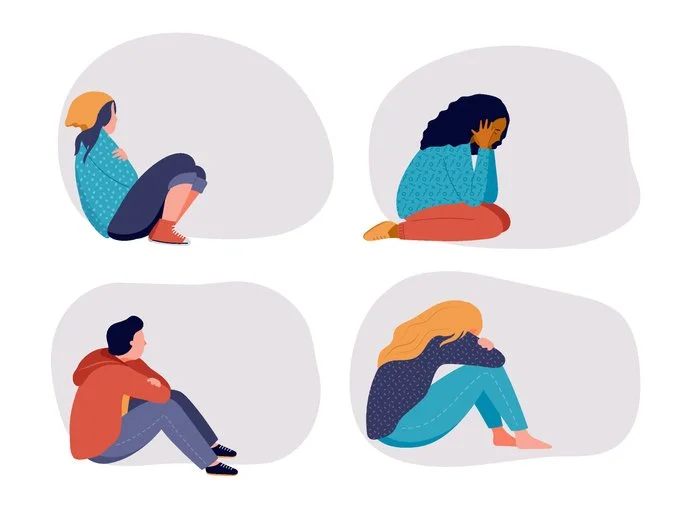
 Most kids and adults just want their anxiety to go away NOW. As parents, we try to anticipate and cope with the fear of our child or teen by trying to protect them from the pain. I don't know about you, but this rarely worked in my family because the worries just came back. Instead, anxiety needs to be addressed head on. We have to teach our kids tools to cope with their own worries. Helping kids learn to manage anxiety will help them feel empowered and confident to take risks and meet unforeseen challenges.
Anxiety relief – beyond reassurance
Anxiety loves reassurance because it offers short-term relief from discomfort. However, telling kids that everything will be okay, or not to worry, only increases long-term anxiety. These reassurances don't work because you are not teaching the necessary coping skills your child or teen actually needs. Instead, everybody benefits when you take a different approach. Although it’s more useful to acknowledge their fears, validate their concerns, and brainstorm solutions–together, let's face it–this can be a tougher road to travel.
Neurodivergent kids: From anxious to resilient
Unlike nervousness, which goes away once a skill has been mastered, anxiety can take over a child or teen’s life. Worry differs from anxiety. Worry refers to how we think about something. Anxiety is a physiological response based on negative thoughts and distorted beliefs. We cannot eliminate anxiety; it’s a natural human response that’s evolved for survival. It thrives in the petri dish of natural child development and also in a culture that is obsessed with comparisons and instant gratification. Without useful self-management strategies, and unable to access the internal resources they need, anxious kids can freak out and refuse to do anything. However, they can learn to talk back to worried, negative thoughts. They can also practice relying on past successes for confident choices in the present. These strategies will help them learn how to tolerate the discomfort of not knowing. They can also learn to accept the possibility of disappointment. This is how neurodivergent youngsters develop the resilience that’s crucial for becoming a competent, successful adult.
How ADHD and anxiety differ and relate
 Despite misdiagnoses, ADHD differs significantly from anxiety. While kids with ADHD wrestle with organization, working memory challenges and impulse control, kids with anxiety struggle with compulsive, obsessive or perfectionistic behaviors, psychosomatic ailments and debilitating specific phobias. Issues related to food, housing or job insecurity, systemic racism or trauma further intensify anxiety. According to the CDC, approximately 7.1% of children aged 3-17 years old currently have an anxiety diagnosis. But, for 34% kids with ADHD, anxiety is often a frequent companion. Neurological patterns and executive functioning challenges make it harder for kids to manage big feelings. Plus, neurodivergent youngsters often miss visual or auditory cues or misread facial expressions. These challenges can foster social anxiety and social discomfort. Concerns about ‘messing up again’ amp up into persistent worry about the next time that they will (unwittingly) make a mistake, say an unexpected comment or forget something important.
How to respond to your kid's worries
Anxiety is a shape-shifter. Just when you think you’ve figured out how to deal with one issue, another one pops up. It’s like playing Whack A Mole. To avoid this frustration, you’ve got to step back. See how your youngster's anxiety operates, and don't react to the content.  It’s the reaction to the worry–not getting rid of it–that makes the difference. Dismissing concerns (“This isn’t that big of a deal. You’ll be fine.”) doesn’t honor the reality of their worry. It will grow. Reassurance (“Don’t worry, everything will work out.”) also doesn’t provide a lasting solution. That's because your teen learns to rely on other people making things okay for them, even though no one really can. Instead, validate their concern by saying, “You’re right to be scared. You’re not sure you can handle that. It’s natural to worry in that situation. What else could you say to yourself?” This lets them know that you heard their worry and acknowledge that it’s real, while simultaneously guiding them towards managing it. Practical tools for helping kids manage their own anxiety is what works best to reduce it. Here are 7 strategies to try.
7 Strategies to help neurodivergent kids manage their anxiety
1. Manage your own concerns first
Kids have incredible radar. They easily pick up when their parents are stressed or anxious, and it increases their own distress–consciously or unconsciously. The first step to helps kids manage their anxiety is to lower your own anxiety. Discuss your concerns with your partner, a friend, extended family member or counselor. Write these down, and then strategize responses or to-do action items for each by creating an Anxiety Decelerator Plan. This ADP will help you feel like you have some control. For instance, if your child needs more academic support, you can contact the school to set up a meeting.
2. Identify their worries
We can’t assist kids in turning down the frequency or intensity of their anxiety unless we know what’s causing it. Worried thinking and environmental triggers can set off children and teens. We want to stop this tumble. During your weekly or twice a week check-in meetings (these are a must), explore what might be uncomfortable or uncertain for them. Write these down. Pick one fear together to address first. When its volume is lower, you can pick another. Remember, people can really only change one thing at a time.
3. Change the relationship to anxiety
Think like Sherlock Holmes, and investigate anxiety like a puzzle. When, where and how does it show up? What are its triggers? Brainstorm with your teen what to say when worry arrives: “Hmm, that sounds like worry. What could you say to size it down?” In addition, separate anxiety from who your teen is. Many kids feel powerless about anxiety and benefit from redefining it as something distinct from who they are.
4. Stay neutral and compassionate without fixing
 Most of the time, your teen needs your support in thinking through responses to tricky situations, but not solving them. (Of course, there will be situations when you must intervene, such as cases of bullying, violence, academic failure or risky behaviors.) Kids of anxious parents are more likely to be anxious themselves. Monitor your reactions about your child’s anxiety, and refrain from discussing your concerns in public. React neutrally, regardless of their irritating, frustrating and sometimes scary behaviors. These behaviors are demonstrating how out of control your child or teen feels inside, which is why anxiety exists in the first place.
5. Start small to build confidence
Anxiety is great at erasing memories of past successes, which is compounded for kids with ADHD and their working memory challenges. Choose a goal that’s within reach, and work on taking a small step first. What would your teen want to do if anxiety wasn’t there? Help them recall times when they took a risk and succeeded. Then, discuss how those strategies can apply to this situation. Offer them language: “I’m willing to feel unsure. I can grab onto my courage and try this.” This helps calm the anxious brain.
6. Opt for curiosity over anxiety
It’s tough to stand in uncertainty, and, frankly, adolescence is filled with unknowns. Kids often feel a distinct lack of control in their lives, which fuels their anxiety. Instead of worried thoughts, though, you can assist kids to shift to curiosity. Where anxiety shuts youngsters down and predicts negative outcomes, curiosity opens them up to possibilities. Help kids manage their own anxiety by working with them to say: “I wonder about...” rather than “I’m worried about...”
7. Focus on building resilience
Resilience is the antidote to anxiety. When your kids identify strengths and people who care about them, and develop interests, they feel more confident. Find ways to connect on things that matter to them, like a favorite computer game or a funny YouTube video. Nurturing this connection will improve their willingness to work with you in tackling anxiety. 
Read more blog posts:
- How to Transform Anxiety in Kids with ADHD to Excitement
- Social Anxiety and ADHD: How to better manage anxiety with supportive planning and preparation
- Beyond ADHD Pandemic Burnout: How to help your family regroup and find strength
Watch on YouTube:
- How to Reduce Anxiety When Parenting Neurodivergent Kids
- How to End Your Teen's Compare & Despair
- ADHD Communication Tips: Conveying ideas, feelings & frustrations
Upcoming Live Webinar with Dr. Saline:

"Beyond High School Graduation: How to help neurodivergent teens prepare for their next chapter"
Wednesday, May 11, 2022, 7:15-8:45pm EDT
Sources: Centers for Disease Control and Prevention. (2022, March 4). Data and statistics on children's Mental Health. Centers for Disease Control and Prevention. Retrieved May 11, 2022, from https://www.cdc.gov/childrensmentalhealth/data.html. Centers for Disease Control and Prevention. (2021, September 23). Data and Statistics About ADHD. Centers for Disease Control and Prevention. Retrieved May 11, 2022, from https://www.cdc.gov/ncbddd/adhd/data.html.

Psychology Today: How Stress and Self-Sabotage Interfere With ADHD Happiness

"Do you notice that when you feel stressed from work, school, or relationships, some of your ADHD symptoms get more intense? When we are stressed, our weakest executive functioning skills are hit first. This means that you may feel flooded by anxiety or anger, or you may panic about estimating and managing time. Perhaps you distract yourself with everything but the task that is actually stressing you out.” Read the full article by Dr. Saline!
"How Stress and Self-Sabotage Interfere With ADHD Happiness"
By Dr. Sharon Saline on Psychology Today


MSN: An ADHD Specialist Explains Why Female Symptoms Are Often Ignored By Professionals Until Later In Life

"Historically, ADHD was been considered a condition for rambunctious little boys who don't listen to their teachers. However, that stereotype is based mostly upon myth. Plenty of boys with ADHD don't disrupt class, and little girls can also have ADHD — as can adults. This stereotype isn't the only reason little girls often grow into adult women without being diagnosed with ADHD, even when their clinical symptoms should have been clear."
Read the full article on MSN!
"An ADHD Specialist Explains Why Female Symptoms Are Often Ignored By Professionals Until Later In Life" by Dr. Sharon Saline


YourTango: An ADHD Specialist Explains Why Female Symptoms Are Often Ignored By Professionals Until Later In Life
"Historically, ADHD was been considered a condition for rambunctious little boys who don't listen to their teachers. However, that stereotype is based mostly upon myth. Plenty of boys with ADHD don't disrupt class, and little girls can also have ADHD — as can adults. This stereotype isn't the only reason little girls often grow into adult women without being diagnosed with ADHD, even when their clinical symptoms should have been clear."
Read the full article on YourTango!
"An ADHD Specialist Explains Why Female Symptoms Are Often Ignored By Professionals Until Later In Life" by Dr. Sharon Saline

Consistent Parenting in ADHD Families: A 5-step plan for improving cooperation and communication
 Many parents who are frustrated with their ADHD children come into my office and complain that “No matter what we do, our child doesn’t change. Nothing works.” As I meet with these families, the heart of the problem usually lies with inconsistency. Sometimes parents can create a plan of action to deal with behaviors and stick with it. Other times, they are improvising moment by moment. Too often, they get stuck and feel defeated. With all of these different scenarios, the ADHD kids, who thrive on predictability, can end up feeling confused and unsure of what is expected of them. How can we change these patterns and create more success? Taking a more predictable, consistent approach to parenting will help improve cooperation and communication.
The pitfalls of inconsistency
 Inconsistent parenting reflects mixed messages and unclear rules that evolve over time and unintentionally. It’s not something people decide to do: it frequently occurs because parents are tired, worn down and out of ideas. And for kids with ADHD, a lack of clarity can feel chaotic and stressful, pushing them to act out or melt down. They just don’t know what to do or how to get there. So, it’s up to the parent to provide a better roadmap.
Inconsistent parenting can look like this:
- One school night, you let your 10 year old ADHD son stay up with you until 11 pm to watch the football play-off game. That way, you didn't have to miss any of the action while putting him to bed. Yet, a few days later, when he wants to watch a basketball game with you past 10 pm, you refuse.
- You tell your teenage daughter that she will lose her phone for the evening when she doesn’t clean up her room, as you both agreed. But then, you let her keep her phone when she goes out so that you can reach her.
From your child’s point of view, if you can make one exception to a rule, why not another one next time?
Parenting consistency for your ADHD child
 Consistent parenting means having the same consequences for the same behaviors over time—again and again and again. They don’t change and can’t be negotiated. It means that you don’t give your ADHD children and teens consequences that you can’t enforce or remember or don’t want to deal with. ADHD kids need to know what is coming so they can learn from their experiences and start to understand that their actions have effects. This is exactly where their executive functioning skills, like self-regulation, are weak and require additional support. These skills require time and repetition to develop. It’s up to you, the parent, to create the space and opportunity for your child to practice these skills. You can help your ADHD child by setting appropriate limits and meaningful consequences. When your child pushes beyond these limits, the goal is to teach them to make better choices, and not simply dole out punishments. Consistent parenting will allow your child or teen to link their actions to consequences. When kids and teens know what to expect, they feel more secure and are more likely to be cooperative.
5 Steps toward more consistent parenting
 You have to lay the foundation for this consistency by establishing clear guidelines for behavior with your child or teen that mean something to them and to you. For example, if they abuse screen time privileges, they lose screen time the following day. Or, if they break a sibling's toy on purpose, they will need to fix or replace the toy with their allowance money. The process to establish behavioral guidelines for your family is collaborative, but ultimately not democratic. You still have the final and most powerful vote because, after all, you are the responsible adult. How can you begin this process?
Step 1:
Get some paper and a pen, and sit down with your family. Start with a fair assessment of the basic rules. Ask your kids what they think the consequences should be for not following them. Sometimes they will come up with ideas that are far more impactful than you will.
Step 2:
Pick the top 3 issues that need fixing and create a plan of action for not cooperating. Write everything down. Be clear and specific about what hasn’t been working. Explain that you’re looking to problem-solve, not blame or punish.
Step 3:
Meet alone with your parenting partner (if you have one) and go through this list. Ask yourselves if you can honestly follow through on the consequences and how you can support each other to do so. If you can’t do them, come up with other ideas that you can enact. When it comes to discipline, both you and your partner must be on the same page.
Step 4:
Meet again with the family to go over the plan. Ask your child to repeat it back to you to make sure they “get it.” Post the plan in a place where everyone can see it and refer to it when needed.
Step 5:
Meet once each week for 3 months to check in and see how things are going. Celebrate and continue to encourage any improvements. If no progress is being made, consider making some adjustments to the plan.  As with all parenting, consistency is a process–there are no quick fixes. When your child sees you holding firm and following through on set expectations, they will, in time, do the same. Greater parenting success comes from clear expectations and predictable consequences.
Read more blog posts:
- 5 Tips for Parenting Neurodiverse Kids on the Same Page
- Beyond Sibling Rivalry: How to Mediate Sibling Relationships Complicated by ADHD
- New Year, New Habits, Same ADHD: How to plan for and maintain new habits together, as a family
Join Dr. Saline's upcoming live webinar:
Watch on Dr. Saline's YouTube Channel:
- Let it Go! When ADHD Kids Just Don't Stop
- ADHD and Emotional Triggers: What to say when you're feeling triggered
- How to Forgive Your Kids for ADHD Symptoms Beyond Their Control

ADHD Online: Understanding Hyperfocus and How to Make It Work For You

"Usually, hyperfocus happens when you’re doing an activity that you find fun or interesting, explains Sharon Saline, Psy.D., a clinical psychologist, author and speaker. But it can also happen when you’re trying to meet a deadline or work through a task you find boring, according to Susan Ciardiello, Ph.D., LCSW, an ADHD coach and psychotherapist. This is what Saline calls “productive hyperfocus,” and it’s the opposite of scrolling for hours. “In a way, hyperfocus is like sustained attention on steroids,” she says."
Read the full article on ADHD Online!
"Understanding Hyperfocus and How to Make It Work For You" by Sarah Ludwig Rausch, featuring Dr. Sharon Saline
 –
–
Intrepid Ed News - Dealing with 'Back To School' Anxiety: 5 Tips To Assist Your Child or Teen Make A Smooth Transition

5 Tips to Assist Your Child/Teen With ADHD Make A Smooth Transition: Kids have an incredible radar. They easily pick up when their parents are stressed or anxious, and it increases their own distress, conscious or unconscious. The first step in decreasing the anxiety your child or teen is feeling is to lower your own.
Take a few minutes and discuss your concerns with your partner, a friend, an extended family member, or counselor. Write these down and then strategize responses or to-do action items to each one by creating an "Anxiety Decelerator Plan." This ADP will help you feel like you have some control.
Read the full article!
"Dealing with 'Back to School" Anxiety: 5 Tips To Assist Your Child or Teen With ADHD Make A Smooth Transition" by Dr. Sharon Saline


Additude Webinar Replay - Start with ‘Hello’: How to Reduce Social Anxiety and Foster Connections


Start with ‘Hello’: How to Reduce Social Anxiety and Foster Connections
An ADDitude Webinar by Dr. Sharon Saline
Watch the webinar here!
Webinar description:
"Do you hesitate to reach out to old friends — uncertain whether they’re eager to hear from you? Do you seldom make new friends — apprehensive about risking rejection or just too exhausted to invest time and energy in social endeavors? Is speaking in public so uncomfortable that you avoid ordering take-out at your favorite cafe? Are you looking for support to reduce social anxiety? Many adults with ADHD struggle with fears of embarrassment, rejection, or criticism and hold back from participating in the relationships they truly desire. Still others are worried about missing conversational cues, and then being mocked or excluded. During these past two years of pandemic isolation and restrictions, social anxiety and rejection sensitivity have increased across the board. In other words, you may feel alone, but many others are sharing this experience. In this webinar, Dr. Sharon Saline — award-winning author, international speaker, and consultant — will help you to reduce social anxiety and learn to participate in social situations with more confidence and less self-criticism. She will explain how social anxiety works and offer tools for reducing your discomfort while improving your communication skills. You will learn how to initiate and maintain friendships, manage rejection sensitivity dysphoria, and improve your ability to connect with partners, peers, children, and even love interests. By developing resilience and shifting your mindset, you’ll be prepared to head out into the world with courage, authenticity, and concrete techniques."
In this free, hour-long webinar you will do the following:
-
- Understand how social anxiety and rejection sensitivity dysphoria impact adults and older teens with ADHD
- Learn to overcome limiting beliefs and behaviors with practical tools based on cognitive behavioral therapy and mindfulness
- Develop effective strategies for managing social situations and personal relationships with ease and confidence
- Improve communication skills to engage in clear, appropriate, and meaningful conversations
- Explore tools for improving resilience and maintaining a growth mindset.
Watch the webinar here!


Intrepid Ed News - Knowing what to do next: Tips for better planning and prioritizing
"Does it ever seem like you and your kids have way too much to do, and every task looks equally important and daunting? Many people, especially those with ADHD, struggle to make realistic plans, figure out what the order of doing things should look like, and wrestle with how to get started. Sometimes folks can make a plan but there’s so much packed in that the only way to do it all is to multitask or give up. At other moments, there needs to be a crisis or the possibility that something unpleasant will occur if you don’t do the task right now."
"Knowing what to do next: Tips for better planning and prioritizing" by Dr. Sharon Saline Click here to read the article!

Emotional Wellness Strategies for Women with ADHD: How to reduce self-criticism & build self-confidence
 March is Women’s History Month, a time to recognize and celebrate women’s strength, accomplishments and contributions. Women carry a lot on their shoulders–from family, community, school and work responsibilities to societal expectations around physical appearance and behavior. That's a LOT of pressure. Women with ADHD, and women who care for neurodivergent children, must deal with yet another layer of stress, anxiety and self-doubt. And all too frequently, women lack much-needed support. Moreover, women are often their harshest and loudest critics, making it all that much harder to feel good and empowered. Emotional wellness for women begins with learning to quiet that negative inner-voice and make more space for confidence and resilience.
The critical feedback loop in women with ADHD
 All too often, women with ADHD find themselves in a cycle of negativity. This self-critical feedback loop is hard to shake because the negative messages come from within. Women are often socialized to please others and take care of them–emotionally, physically and psychologically. Their self-worth is often feels tied to what people think about them and how many friends (real or virtual) they have instead of the uniqueness of their innate talents and personal traits. Women with ADHD, already sensitive to feedback or rejection, often interpret things more negatively and personally than the situation calls for. They are especially vulnerable to internalized low self-worth.
Change your relationship with the negative voice
 While it’s unrealistic to completely eliminate negative thinking altogether, you can learn to reduce the power it holds. This is crucial for fostering self esteem and resilience–two key issues for women. In order to reduce its power, you have to change your relationship to the negative voice. Point out that there is a difference between real life and the stories that you tell yourself about those events. These interpretations directly influence the way someone takes meaning from whatever occurred. Putting negativity outside of yourself reduces feeling wrong or bad. It also helps you acknowledge the critical feedback loops in your mind without being ruled by them.
Make space for confidence and resilience with a positive mindset
The most powerful tool women have to counter negative thinking is self-esteem. Confidence empowers you to make decisions, get through life’s ups and downs and recover after setbacks. So while you’re quieting your inner-critic, turn up the volume on the voice that nurtures you with kindness and support.
1. Identify limiting core beliefs and negative self-talk
 Find evidence that contradicts or supports those beliefs. Remember that no one is judging you as harshly as you judge yourself. Talk to people in your life who love and know you best, and get their perspective on all your best qualities. Consider asking them:
- "Which of my qualities are most meaningful to you?"
- "What do you consider to be my greatest talents?"
2. Separate feelings from being
Feeling bad doesn’t mean you are 'less than' or unworthy. It may be tough, but don’t allow these negative feelings to define who you are. Use self-affirming phrases such as:
- “Mistakes are how people learn, and you’re learning.”
- “Being wrong doesn’t mean you’re a bad person."
3. Create a few helpful phrases to say to yourself
Positive self-talk counter-acts that negative voice so you don’t have to believe it. Build confidence and quiet your inner critic with reminders of your strengths. Sample statements might be:
- “Everyone makes mistakes, including me. What can I do differently next time?”
- “There’s no such thing as perfection. It’s okay to stumble, just keep trying.”
4. Use a growth mindset approach
 Shift away from trying to prove your worth to others using false comparisons or judging yourself as 'less than.' Transition from seeing yourself in a negative light to practicing compassion and kindness toward yourself. This involves taking time for some self-reflection. We are all works in progress, learning and developing at our own speeds. Believe in the power of “YET.” Tell yourself:
- “I may not be able to do this YET, but I am learning.”
- "I might not feel ready YET, but that could change soon."
5. Practice healing meditations
Picture yourself in your “happy place.” Visualize the face of someone whom you love and trust. What supportive words would this person say to you? How would these words comfort and encourage you? Write these down, and meditate on these images and words whenever you need to heal or empower yourself. If you’ve been stuck in a pattern of knocking yourself down, learning to pull yourself back up takes A LOT of practice. Learning to control the volume on that negative voice is a life skill that sustains crucial resiliency and self-esteem. It’s one step at a time so stay patient and persistent!
Read more blog posts:
- Moms with ADHD: Nurturing your power of authenticity
- Reducing Regret as an ADHD Adult with the 4R’s
- Couples Living with ADHD: Healthy practices that focus less on fairness and more on companionship
Watch on Dr. Sharon Saline’s YouTube Channel:
- Moms with ADHD: Why YOU Are the Best Mother for Your Child | Parenting Q&A
- Re-Entry Anxiety in Adults with ADHD | ADHD Q&A
- How Do I Support My Daughter with ADHD? | ADHD and Girls Q&A
Handouts, Videos & More in Dr. Saline’s Store: https://drsharonsaline.com/product/harness-grit/ https://drsharonsaline.com/product/shame/

Reducing Regret as an ADHD Adult with the 4R's
 Do you live with regrets? Regrets for things that you’ve done or things that you wish you had tried? If so, you are in good company. Many adults with ADHD carry around feelings of sadness, remorse or disappointment over something that happened in their lives or something that they did. This regret often acts as a form of self-sabotage: it’s a way to put yourself down that prevents you from living more fully in the present. Since you can’t go back, what’s called for is learning how to accept your actions, forgive yourself for the mistakes you made and pursue opportunities or interests in new ways. In essence, pivot and focus on changing what you can and you'll start reducing regret and improving resilience.
Enduring the many challenges that come with ADHD
When you have ADHD, weaker executive functioning skills frequently show up in daily struggles with verbal or behavioral impulse control, emotional regulation, organization, planning, time management and setting and completing goals. When you wrestle with these challenges over time, it can seem impossible to break old habits and create newer effective ones. To make matters more complicated, you may also criticize yourself for times when you yelled inappropriately, showed up late to an important meeting, missed a friend’s birthday or made a joke that fell flat. Perhaps you’ve engaged in knee-jerk reactions that you wish you hadn’t and lost work or meaningful relationships as a result. Shame and blame quickly set in and band together to lower your self-esteem and your confidence. Now you are living with intense, negative self-talk that seems impossible to change.
Reducing regret with the 4R's
 As adults, though, you can change your behavior by mindfully adopting new skills that create new neural pathways to offer you choices instead of reflexively reacting. Over the years, you, like many others, probably learned to hide your vulnerability underneath defensiveness and anger. What you need are new tools to tolerate your big emotions, manage hurt and disappointment and stop being your own worst enemy It’s not easy, but it is possible to stop “horribilizing” the events in your life and your own actions and start “efforting:” taking incremental, small steps toward doing more of what works. Focusing on the 4R's can help you reduce regret, nurture resilience and rebuild self-compassion.
The 4R's for reducing regret:
1. Radical awareness:
Look at thwarted dreams or disappointing actions and name them. Track when, where and how pessimistic or antagonistic thoughts arise.
2. Recognize:
Identify what was going on in your life at that time. Consider environmental, psychological, social, school, work or family factors.
3. Repair:
Ask yourself what it might take to restore a relationship or situation. How can you make amends, listen to feedback with more interest and neutrality and be (more) accountable?
4. Reconfigure:
Based on comments from others and your own assessment of yourself, reflect on how you can alter reactions or behaviors that hold you back from creating satisfying connections or achieving personal goals. Work on shifting just one thing: something you’ve adopted over time that gets in your way or hurts others. This can be intentional or not. Don’t try to change your whole personality: that’s neither realistic nor achievable. Instead, keep it small and doable.
Reshaping regret takes time, practice and forgiveness
 Regret is a very powerful pattern to reshape. Changing it takes time and practice. Taking responsibility for your part with honesty and humility reduces shame and blame and leads to personal empowerment. It can be tough to be honest with yourself without judgment or to share your feelings and be vulnerable. That’s natural. Take it slow, and start with small things. Notice and validate your efforts by writing down at least one way that you responded differently each day–what went well. Focus on nurturing compassion for yourself, and start the progress of forgiveness–for yourself and towards others. Remember, we all do things we wish we hadn’t when we lack the personal or socioeconomic resources to make different choices in a given moment. Now you are shifting to new patterns of creating healthier coping strategies and living without less regret.
Read more blog posts:
- Taming Emotional Triggers with an ADHD Brain: How to understand big feelings and respond differently
- ADHD and Self-Sabotage: 6 supportive strategies to help you feel more confident and reach more goals
- Family, Forgiveness and ADHD: Loving and letting go, during and beyond the holiday season
Watch on Dr. Sharon Saline's YouTube Channel: https://youtu.be/AZGrbNjUGlo Handouts, Videos & More in Dr. Saline’s Store: https://drsharonsaline.com/product/shame/ https://drsharonsaline.com/product/whats-up-with-all-this-anger/

Psychology Today – Hyperfocus and ADHD: Productivity Superpower or Kryptonite?
New Psychology Today Article by Dr. Sharon Saline
Four strategies for understanding and managing hyperfocus successfully.
"Are you ever so engrossed in an activity that time seems to stop and nothing can tear you away? Does it ever seem like you lose a sense of where you are and what’s happening around you? This can be the experience of hyperfocus for many people with ADHD. Hyperfocus is defined as “a phenomenon that reflects one’s complete absorption in a task, to a point where a person appears to completely ignore or ‘tune out’ everything else.” Read the full article by Dr. Saline!

Women & ADHD Podcast: How do we know if it’s ADHD?

The ADHD & Women Podcast features Dr. Sharon Saline
"Dr. Saline and I talk about how her interest in ADHD as a psychologist was sparked by her own neurodivergent family. We also talk about inattentive type ADHD in childhood and why so many kids — both boys and girls — with inattentive ADHD end up overlooked and ultimately diagnosed with depression and anxiety instead of ADHD. We also talk about the adult diagnosis experience and the best ways for you and your doctor to determine whether you have ADHD as opposed to possibly another situational struggle."


PsychCentral: How Does ADHD Affect Your Time Perception?

"If you live with attention deficit hyperactivity disorder (ADHD), you likely know how challenging it is to be on time. Deadlines can also plague people with ADHD. These challenges aren’t a personal failing, and they’re not solely related to inattention, a classic ADHD symptom. A symptom of ADHD called altered time perception or “time blindness” plays a large role. Folks with typical neurology often have an inner sense of how long minutes, hours, and days are, and how much they can do within each time increment. For those with ADHD, time tends to be amorphous, meaning it’s not well defined. It may feel as if time is passing you by."


Intrepid Ed News: Let’s get started! 5 tips for helping kids get things done
"Do you wonder why some kids struggle with starting things, sticking with them, and finishing up? Whether it’s working on a school project or preparing for their birthday party, many children and teens struggle with getting started on tasks that seem important but can be tedious, boring, unachievable, or overwhelming. Sometimes it takes the urgency and pressure of deadlines to get anything done, and it’s often at the last minute..."

ADHD and Self-Sabotage: 6 supportive strategies to help you feel more confident and reach more goals
 Self-sabotage is the negative self-talk that prevents us from believing we can do things. It can be conscious or unconscious and can keep us from setting, working towards and reaching our goals. It holds us back from doing what we want to do. Low self-esteem and unfounded beliefs about being deficient, not good enough, incapable or unintelligent contribute to self-sabotage. These deep-seated, limiting core beliefs fuel fears about performance and result in procrastination or avoidance. If left unchecked, this can lead to general anxiety, social anxiety and depression. That’s why it’s so important to counter negativity with encouragement, support and self-love.
Self-Sabotage and ADHD
 Feelings of shame and self-doubt often surface early on for those with ADHD. The shame about not being able to succeed at school or handle tasks as well as others starts early in life and continues into adulthood. Children with ADHD feel “different” from their peers, which may fill them with increasing feelings of nervousness, doubt and uneasiness. Over time, personal vigilance grows into anxiety about messing up and not measuring up. Embarrassment and shame lead to a desire to avoid that insecurity and pain at all costs. Attempts to avoid pain or embarrassment often manifest as self-sabotaging behaviors.
Signs of Self-Sabotage
There are a number of behaviors and modes of thought which are indicative of self-sabotage. Take a little time to self-reflect and determine whether you are negatively affected by the self-sabotaging indicators below:
- Avoidance: Staying away from people or situations that cause discomfort
- Procrastination: Putting off getting things done because of a fear of failure
- Fixed mindset: Believing that you can’t change and your abilities will not improve; blaming and shaming yourself for mistakes you may have made
- Exercising control over others: Attempting to control others’ behaviors or situations that seem uncertain and provoke your anxiety

- Pleasing others at your own expense: Making choices to be accepted or liked by people, even if they go against your values or better judgments; depending on others for validation and approval
- Engaging in risky behaviors: Harming yourself through substance abuse, gambling, sexual promiscuity, cutting, eating disorders, etc.
- Using “Compare and Despair” to your own detriment: Looking at what others do, and comparing yourself negatively to them
- Perfectionism: Trying to control outcomes as a way to manage anxiety; "letting perfect be the enemy of good enough"; needlessly getting caught up in the weeds or building obstacles where they don't need to be; looking for the one perfect solution instead of taking steps forward, even if not under ideal conditions
Tools to Address Self-Sabotage
Even though it may seem like self-sabotage is a lot to deal with, it is possible to manage and even overcome self-sabotaging tendencies. Some approaches, like Cognitive Behavioral Therapy (CBT), are longer term treatments. But there are several tools and mindful awareness exercises you can practice any time to help manage self-sabotaging thinking day-to-day.
1. Establish healthier alternatives to limiting beliefs, negative self-talk and safety-seeking behaviors
Practice mindfulness by focusing on being present and aware of your thoughts instead of letting preoccupation and worries what other people think about you distract you. Pay attention to what’s happening around you in the present moment instead of noise in your head. 
Sometimes we find ourselves being pulled into a cycle of negativity, worry, predicted failure or harsh self-judgment. In these cases, reverse course by slowing down and identifying any negative beliefs. Recall positive outcomes that have occurred before, and remind yourself that they are possible again. Encourage yourself to power through.
“If I get stuck, I sometimes do better if I can commit to starting and working on a task for 15 minutes. It is good to negotiate with yourself, and build in rewards for following through."
2. Identify phrases of self-sabotage, and create rebuttals
When your “negative brain” tells you, “You’re not good enough, why bother?” train your “positive brain” to answer, “Don’t underestimate yourself–give it a try and see what happens!” Create your own list of encouraging phrases to use when you want to cut the negative self-talk short. Remember, you are not your thoughts, but you are the one who is aware of them. You can choose not to believe them or push them back with the power of positive thinking. This takes work and a lot of practice, so expect yourself to stumble and have setbacks. Forget about “compare and despair,” and looking sideways at what others are doing. Instead, look at where you’ve come from and where you want to go. “When my brain is working against me, I find ways to increase dopamine or just rest if that is really what I need and eliminate the perceived judgment of other people.”
3. Set small behavioral goals that are low risk experiments to build confidence
 These are learning experiences that test/defy those negative self-beliefs. Take a measured risk based on previous successes. For example, if you are anxious about attending a social gathering, set a small goal for yourself, such as “I’m going to smile at new people.” Once you’re comfortable with smiling, take it up a notch with a goal such as “I’m going to talk to 1-2 people standing alone” or “I will focus on the conversation in the moment and make a reflective or topic-related comment.” Afterwards, assess how the situation went and how you felt. Did you have conversations that may have been awkward but weren’t damaged by them? Write a journal entry or voice memo about your experience and what you learned from it.
4. Adjust expectations to include the natural stumbles of being human; separate your ADHD brain from your character
Because of your ADHD, your thoughts may have a tendency to run away from you, making them harder to get back and control. Train your attention to move away from negativity and internal noise. We can’t turn off these thoughts entirely, but we can lower the volume on them and see them as background noise. You’re only human, so you will make mistakes and feel awkward time-to-time. Your ADHD brain may make things tougher to manage, but you are still a good, worthy and capable person who has a lot to offer. “ADHD doesn’t make me less of a person or less valid. It makes me a different sort of person who is still valid and valuable.”
5. Use a growth mindset approach
 Shift away from trying to prove your worth to others using false comparisons or judging yourself as less than. Transition from seeing yourself in a negative light to practicing compassion and kindness toward yourself. We are all works in progress, learning and developing at our own speeds. Believe in the power of "YET." Tell yourself, “I may not be able to do this YET, but I am learning.” Practice kindness and patience towards yourself.
6. Healing meditation
Picture yourself at a beautiful spot outside. Visualize the face of someone you really love. What encouraging words would this person say to you? How would these words comfort and encourage you? Write these down, and meditate on these images and words whenever you need to heal or empower yourself. Living with ADHD means experiencing moments when you’re aware that you are struggling or have messed up, but you don’t necessarily know why or how to fix it. This can develop into persistent worry and self-sabotage, and this anxiety can overpower us. Focus on building up your reserve of positive experiences, and, in turn, you’ll begin to minimize those pesky negative thoughts. A combination of CBT and mindful awareness practices can help. And, if we go back to basics, self-care is a powerful antidote to self-sabotage. So remember, be kind and loving toward yourself today and every day.
Read more blog posts:
- Perfectionism and ADHD: Why ‘good enough’ is better than perfect
- Productive Procrastination and ADHD: How to stop running in place and start tackling your goals
- New Year, New Habits, Same ADHD: How to plan for and maintain new habits together, as a family
Watch on Dr. Saline’s YouTube Channel: Stop the Self-Sabotage: How to Support Yourself with Love https://youtu.be/nphiSl0ka30 Deeper Dive – Dr. Saline's Store: https://drsharonsaline.com/product/harness-grit/ https://drsharonsaline.com/product/anxiety/

Taking Control, The ADHD Podcast: Call Out Your Stinking Thinking! ADHD & Self-Compassion with Dr. Sharon Saline

Dr. Sharon Saline joins Nikki Kinzer and Pete Wright on Taking Control: The ADHD Podcast!
 "We'd never heard of the phrase stinking thinking until Sharon Saline used it with us on the show this week. But we knew what it meant immediately. We live with it. It's the thinking we use about ourselves when we're compromised or when our reserves of resiliency have been tapped, and when what we need more than anything else is just a little bit of self-compassion. But as ADHDers, finding self-compassion isn't always natural. We have to make a practice of it, integrating the language and behaviors of compassion into our days and hours such that when we need it, it's not so hard to find..." Listen to the episode below, or click here to listen at TakeControlADHD.com.