

Yakima Herald: 'Back to School' Books for Parents


Academic Support for Teens & College Students

School-based interventions improve academic performance and social relationships.
For high school students with ADHD who already run a higher risk for underachievement and dropping out than neurotypical kids, having support services can make all the difference. This recent study also showed that whatever services kids receive in elementary school are often discontinued as they mature. It’s a sad irony I’ve seen too many times: when kids with ADHD have useful scaffolding and are doing better, the services are later withdrawn because of their success. Instead, these interventions need to remain in place to help with the increasing executive functioning demands for independence in middle and high school. When students receive appropriate levels of support during these years, it makes the transition to college or trade school more successful.
For high school and college students who have a diagnosis of ADHD but have never received psychological testing, I highly recommend that you get this because these assessments will identify your cognitive strengths and challenges..... Read More of my advice in Psychology Today.

Anxiety and Food

 Q: What foods might spike anxiety ... and why?
A: Although I am not a medical doctor, I've observed that especially sugary foods or those with a lot of caffeine can increase someone's agitation and then make them more prone to anxiety. Sometimes ginseng can do this as well.
Q: Are there foods we should turn to instead to reduce anxiety?
A: I think herbal teas such as chamomile or those with other calming properties can be extremely useful.
Q: How much should people be eating?
A: Everyone is different, but we should all eat slowly and mindfully! Often when people eat quickly or standing up, their bodies don't have a chance to metabolize the food and recognized that they are sated Often overeating happens with rushing. u
Q: Are there any links between how much you eat and your anxiety or when you eat and anxiety?
A: Yes, some people eat when they feel anxious; others can't eat. It's really an individual response.
Q: Is all of this true for people with diagnosed anxiety disorder only or just regular folks who sometimes feel anxious?
Whether or not you have an anxiety disorder or 'just feel anxious sometimes,' the feeling of anxiety is the same. The difference is one of frequency and intensity. So yes, it's true for both sets of folks.
Read more advice from Dr. Saline on anxiety Purchase Anxiety Worksheet

Strategize Now to Set up a Successful School Year


Gather your strength--it's time to set the alarms, make the lunches and buy the supplies. School is starting again. How can you avoid frustration and arguments to create the smooth transition that everybody wants? By relying on Compassion, Collaboration and Consistency, you can work with your child or teen to set a positive tone for the year.
Many kids with ADHD feel mixed about the return to school. While they may be excited to see their friends, they often dread the return to academics, waking up early and the responsibility of homework. If they struggled last year, they may worry about repeating the same challenges or facing new, unexpected ones.
- Before talking with them, take a few moments to summon your Compassion. Reflect on some of the highs and lows for your son or daughter from last year. How did they meet those challenges? What types of support from you or their teachers was helpful? Jot down some of your ideas. Before moving forward, remember that kids with ADHD are doing the best they can with the limited resources available to them in a given moment. They need you to understand this before approaching any plan for this year.
 2. Make a time to talk with your child or teen about this upcoming year so you can Collaborate on a plan for success. Ask them to recall successes and challenges and, if they can't think of anything, offer some reminders from your notes. Together, make a list of useful supports--anything from setting several alarms in the morning to emailing a copy of homework in case they forget to turn it in to breaking up study periods with timed breaks. Then, make a list of common distractions or obstacles you both anticipate could arise this year.

3. Evaluate both your expectations for the year and theirs. Consistency relies on regular efforting, not perfection. We want to nurture resiliency by acknowledging how kids with ADHD are trying to do stuff and improve themselves. You're looking for progress, not perfection. There are three types of goals to consider: easily attainable (things they can definitely achieve or have already been doing), working on/within reach (things they accomplish but require supervision or help) and mostly reach goals (things that are sporadically achieved). For now focus on one easily attainable goal and one working on/within reach goal. You can expand this list as the year progresses.  By keeping things simple, you increase the chance for success and we want children and teens to feel as positive as possible right now. Feeling successful early in the year has a snowball effect: they notice their competence and want to build on it. Using Compassion, Collaboration and Consistency, you'll create a strong foundation for a great year!

UPJOURNEY: Signs Your Marriage is Over



SheKnows: What Your Kid Needs to Know to Stay Safe in College



22 News Mass Appeal: Summer Screen Time Tips for Families


Recent College Grads: Adjustments, Parents' Role, Jobs and Adult Life
 What are some of the adjustments that recent college grad kids will be making?
Recent college grads have many adjustments to make. Not only are they saying good-bye to many of their friends, a familiar surrounding and a student lifestyle, but they are also facing the uncertainty of what comes next. Even if someone has a job and an apartment lined up (these are huge things to swing for many recent college grads), they are leaving behind a structure of going to school and an identity of being a student. Friends disperse, they are responsible for paying their own bills, and self-sufficient adulthood, while longed for, can be overwhelming. Many new college grads aren’t accustomed to creating and living on a budget, shopping for and cooking meals and making plans to spend time with friends instead of bumping into them at the cafeteria. It’s a huge shift in many areas simultaneously.
How can parents and loved ones can help ease the transition?
It’s important that parents and loved ones acknowledge the enormity of this transition and don’t compare their own experiences with those of their children. Things have changed a lot and many young adults struggle under the burden of huge financial debt, a high cost of living and a tight job market. Staying compassionate, offering to assist them and collaborate on tasks and being available to talk through emotions related to this change is most helpful. Don’t solve issues: offer your suggestions and avoid getting hurt if they aren’t taken. Young adults often like to figure things out for themselves, which means trial-and-error learning. Sometimes the best support you can give is managing your own frustrations, sharing your feelings without blame or guilt and validating their successes.
What are some tips for applying to jobs, moving home, and how to adapt a healthy routine in adult life?
Having a daily routine offers structure and freedom. It’s critical to set aside a specific period of time for applying to jobs each day so this activity has boundaries. Looking for job can be exciting but it’s also tedious and sometimes deflating. It can spread into all aspects of your life as the list of things you should be doing keeps growing. Avoidance accompanies discouragement and overwhelm. Talk with your son or daughter about marking off a few hours each day (preferably in the morning to get it over with) for job hunting online, responding to emails or dropping off resumes. This will assist them in feeling accomplished each day and competent as well because they’ve done something in a time frame that they laid out. Then they can do whatever they want. Help young adults limit screen time: advocate for doing other things that interest them and make them feel good. Exercise, time with friends, shopping and cooking with you--these are all activities that contribute to healthy living. Teach them how to shop, balance their bank account, make a budget and understand their health/car insurances. These skills are not necessarily second-nature and it’s very common for recent college grads to need extra support in learning them.

Anxiety and Resilience

 Anxiety is a physiological response related to a perceived danger and worried, negative thinking. Basic fight or flight responses are triggered from worries and these reactions are usually disproportionate to the concern at hand.
Worry can be productive or poisonous. Productive worry is worry about doing things--completing homework or getting to work on time --and can be helpful in getting things done. Poisonous worry is worry about things you can’t control--the ultimate demise of the planet or whether people like you--and can be debilitating. The first step to dealing effectively with anxiety is to determine which type of worry you are dealing with. Then, engage the thinking brain to slow down the tidal wave of anxiety and emotion volcano by doing two things:
- Rely on past experiences of successfully overcoming anxiety and applying those skills to this moment.
- Engage in a worse-case scenario by asking “And then what?” repeatedly until you land at the illogical end.
This process works with kids and adults. I give you more specifics in this Youtube video and in this handout.

Got an anxious high schooler with ADHD? Help is here.

 Many teens today feel extremely overwhelmed and anxious, especially those who are out-of-the-box thinkers. Life seems constantly demanding and stressful. With the executive functioning challenges that are typical of ADHD brains, it's even harder for them to regulate intense feelings. Routine concerns can quickly balloon into outright panic. Approximately 35% of kids with ADHD have also been diagnosed with an anxiety disorder. In my clinical experience, this number seems higher. After hearing over the years about about the ways that they miss the mark, don't measure up and differ from other kids, these kids develop an internal vigilance--a nervousness--about the next time they will inadvertently stumble, what people will think of them and how to deal with the inevitable consequences. These worries fosters overt or covert anxiety. I've asked teens with ADHD to describe the two things that cause them the most anxiety. Here's what they’ve told me that they wish adults knew:
-
- They can’t keep up with 24/7 demands of their lives--whether it's in real time or on social media. They struggle to regulate themselves regarding technology, understand social nuances and keep track of events and responsibilities. Their parents don’t see or understand all of the nuances they are dealing with.

Solution: Despite their words or actions to the contrary, teens actually want their parents to set limits on technology and help them manage. Parents, befriend your children on all social media outlets and help them manage FOMO. Talk with your teens about appropriate responses to relationship challenges both online and in person. Help them distinguish when to engage and how. Create screen-free family time at meals. Ask them to share an online, Youtube or musical interest or hobby with you so you can understand and participate in their world
-
- They feel enormous pressure about school, the college process and what to do after high school. Some teens with ADHD drive themselves too hard, over-focus on achieving good grades and keeping up with their friends. Going to the ‘right’ college becomes more important than pursuing what best fits their interests. Other kids, in the face of repeated academic difficulties, adopt a "why bother even trying" attitude. They've lost the interest and impetus to make efforts. Too often, in all of these scenarios, parents will push their children based on their expectations of who they think their teen should be. Arguments and disappointment abound.
 Solution: Meet your teen where they are, not where you want them to be or think they should be. Development is an organic process that doesn’t necessarily unfold in a linear fashion. This is especially true for kids with ADHD, learning differences or high functioning autism. Their brains need more time to mature and they may benefit from an alternative path for a while until things fall more into place. Be open to thinking about alternatives. Maybe your son who likes video games and art might be better suited for a vocational program in computer design than conventional academics. Perhaps your daughter who excels at soccer but hates writing might benefit from being an assistant coach for a gap year. Offer guidance and support with an open mind. Of course, you can't erase your teen's anxiety. But, you can help them reduce it by monitoring their overwhelm, showing interest in their on-screen activities and keeping perspective on post-high school options.

Parentology: How Splitting Time Between Two Homes Impacts Children



Your Anxious Child Podcast: Expert Interview with Dr. Sharon Saline

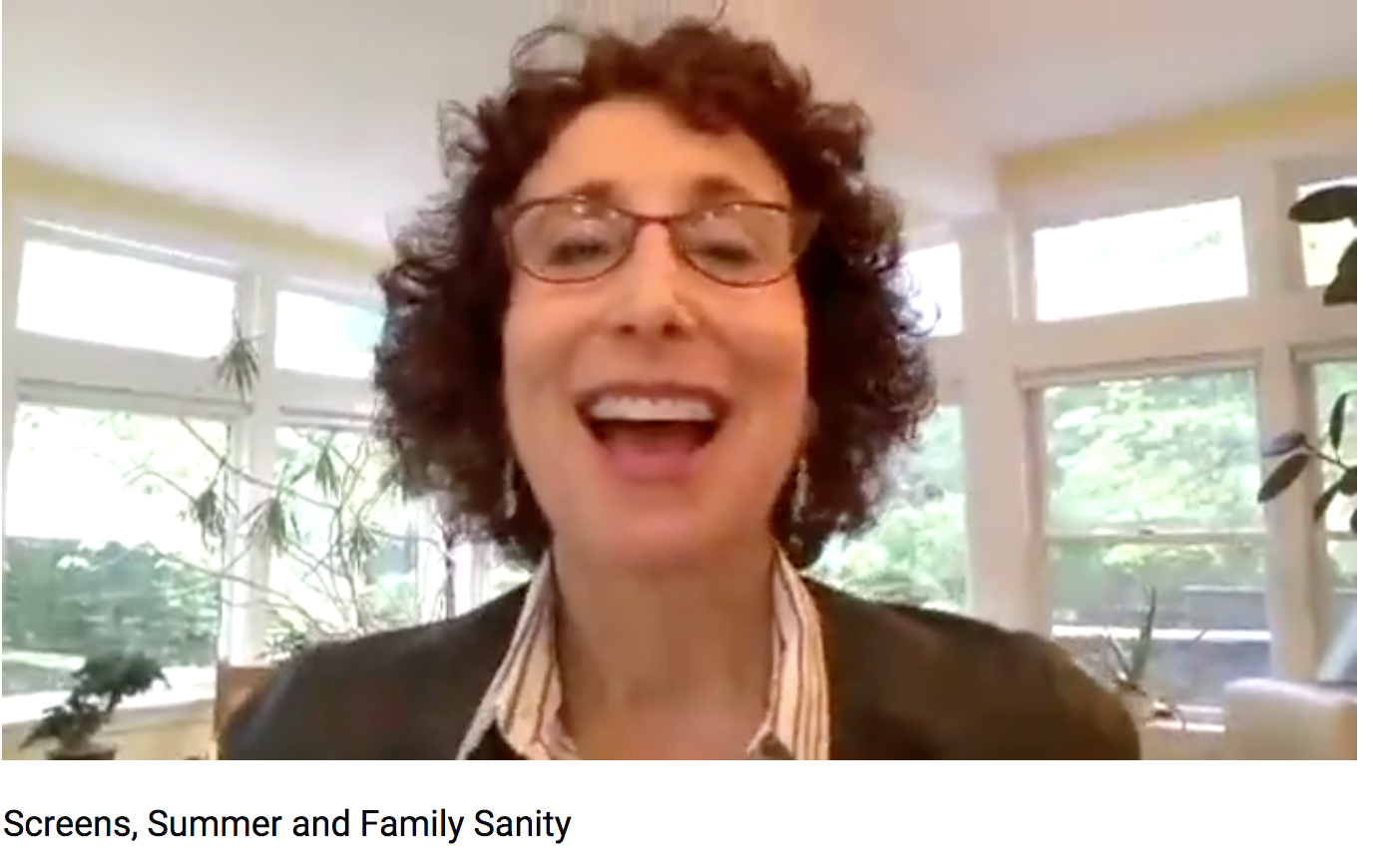
Screens, Summer and Sanity
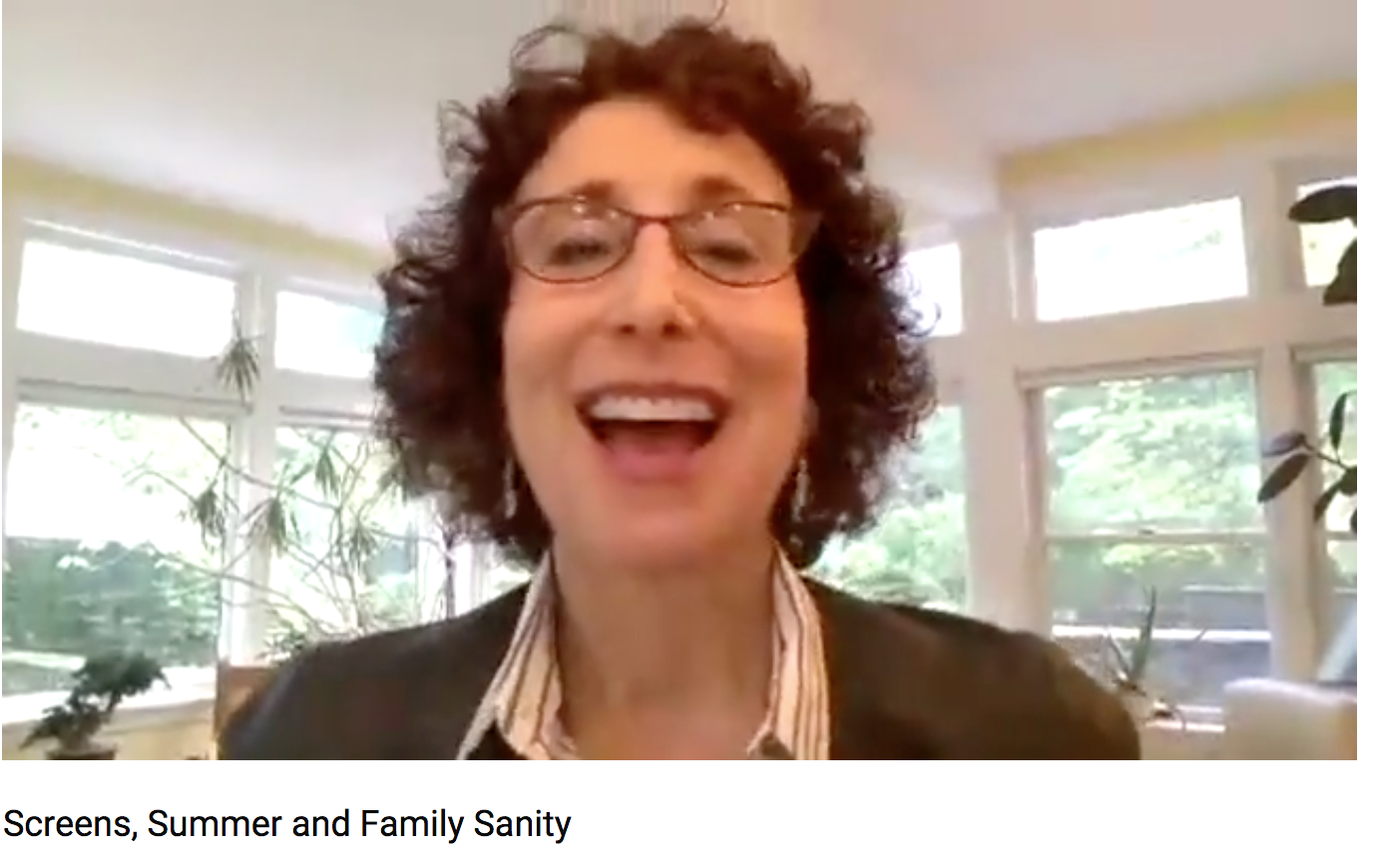
 You are the parent! Repeat. Screens are NOT a right! You are the parent! Repeat. Screens are NOT a right, they are to be earned. Write what you will accept, and then work with your child - now, at the start of summer, to collaborate on a plan that you both agree to. Learn more about my screens and summer advice in this Youtube video.

Want better conversations with your child or teen with ADHD? Use the WAIT-Now Method


Do you ever say something to your son with ADHD, or daughter with ADHD, and wish you could take it back? Most parents feel this way at one time or another. Sometimes, especially when raising teens, I've imagined a cartoon bubble of my words and wish I could suck them back into my mouth just a few seconds after it's already too late. That's why I created the WAIT-Now Method to help take that needed pause when you're triggered. Instead of blowing your cool and regretting it later, you'll say something appropriate and feel good about yourself too.
The WAIT-Now Method stands for "Why Am I Talking Now?" Rather than give into your automatic response in a tense or uncomfortable situation with your kids, you PAUSE by actively telling yourself to WAIT. This is part of the STOP in my STOP, THINK, ACT technique, but it's geared directly to what you say. Notice what you are saying to your child or teen, how are they responding and where the conversation is headed. If it's going downhill, pause your talking and ask yourself these questions:

WAIT-Now Method: "Why Am I Talking Now?
-
What am I saying?
Ask yourself if you are actually communicating what you want to be. If you are, great--keep going. If you aren't, then stop. Take a few deep breaths and pause. Reflect on what you really want to saying, edit your words and try again.
-
How are my words being received?
Notice how your son or daughter is responding. Their body language and their comments are giving you valuable information about the effectiveness of your words and whether or not you need to change direction.
-
Why am I invested in saying these things?
Identify your goals in this conversation. Are you engaged in clarifying a direction, are you giving them helpful feedback, are you trying to keep them safe? Why you are talking to them directly affects how you talk to them.
-
Could I listen more and talk less?
Sometimes we fill in uncomfortable gaps or anxious moments with words. Open spaces in conversations with kids give them time to reflect on what you're telling them and think about what they want to say in return.
This takes time to learn and practice makes progress. Be kind to yourself when you see that cartoon bubble, regroup and try again next time. To give yourself a useful reminder, write WAIT NOW on a post-it and put it on your refrigerator! 
Read more blog posts:
- Parenting Older Teens with ADHD: Land the Helicopter and Focus on Scaffolding
- ADHD and Negativity: Why ADHD kids and teens say "No" and how to help them communicate
- ADHD and Anger in the Family: Manage Outbursts with STOP-THINK-ACT
https://drsharonsaline.com/product/home-seminar/

WebMD: What Is Your Non-ADHD Partner Thinking?

Click logo below to read more.

Blog Post Title One
It all begins with an idea.
It all begins with an idea. Maybe you want to launch a business. Maybe you want to turn a hobby into something more. Or maybe you have a creative project to share with the world. Whatever it is, the way you tell your story online can make all the difference.
Don’t worry about sounding professional. Sound like you. There are over 1.5 billion websites out there, but your story is what’s going to separate this one from the rest. If you read the words back and don’t hear your own voice in your head, that’s a good sign you still have more work to do.
Be clear, be confident and don’t overthink it. The beauty of your story is that it’s going to continue to evolve and your site can evolve with it. Your goal should be to make it feel right for right now. Later will take care of itself. It always does.

Attention Magazine: What's Up With All This Anger?



22 News Mass Appeal: Wedding Week—How to begin your "blended family"
Click logo below to read more.
Psychology Today: Ending the Semester Strong—Going from the homestretch to the finish line
