

Negative Memory Bias and ADHD: Tips to Help Kids and Youth with ADHD Remember the Positives
 Have you ever noticed that your child or teen with ADHD remembers negative comments people say to them more than they do positive ones? While all human brains are wired for the negative memory bias, or negativity bias, the minds of kids and youth with ADHD seem more vulnerable to holding onto what is "bad" more than what is "good." The combination of the negative memory bias and ADHD symptoms such as working memory challenges, emotional dysregulation and low self-esteem can make it even more challenging for people living with ADHD to balance out with positive memories. Let's dive more into the impacts of the negativity bias on people with ADHD, as well as helpful strategies you can use to help the children and youth in your life focus more on the positives.
The impacts of negative memory bias in children and youth with ADHD
This negative memory bias is strengthened for kids and youth with ADHD during childhood. It's common for family members, peers, teachers, coaches and other influential people in children's lives to criticize children and youth with ADHD. Oftentimes, people might intend to offer feedback, but kids still interpret the statements as criticisms. They're not remembering things, not doing things properly, keeping things messy, not controlling themselves, etc. These encounters are opportunities to focus on, remember and learn from as children with ADHD grow up. But focusing on the negatives can contribute to negative self-talk, as well as feelings associated with shame, anxiety and depression.  In addition to the negative memory bias, many people with ADHD experience Rejection Sensitive Dysphoria, which involves having a heightened response - often physical, mental and emotional - to rejection, criticism, mistakes and other negative experiences. Putting more weight on these negative experiences over positive ones can impact behavior and decision making, such as people-pleasing, striving for perfection or avoiding situations that might have negative outcomes (even if those same experiences could also lead to positive outcomes). While our ancestors needed the ability to learn and remember lessons from tough experiences for survival, people today also need to learn how to retain lessons from good experiences. This is especially true for children and young people with ADHD. Beneficial experiences not only serve as the foundation of self-esteem, secure attachment and self-management, but they also nourish inner strengths. How can we help balance the weight of negative experiences with positive ones for children and youth with ADHD?
Working memory, the negative memory bias and ADHD
In order for the good moments to outmaneuver the negativity bias, they have to be installed in the brain's neural structures. This process requires holding the thought in the working memory long enough to be picked up by short-term memory structures and then transferred to the long-term memory. Of course, people with ADHD, by definition, typically struggle with working memory challenges. Therefore, this transfer doesn't occur as frequently as we would like, if at all. So the key issue here is "long enough." While there is no research to give us a specific time for this, "long enough" usually means holding a positive emotion, desire, action or outcome to actually feel it--to reflect on it and let it sink in. I would venture to guess this means up to a minute if not longer. How can you assist your ADHD child or teen to do this more successfully?
5 tips to help children and youth with ADHD focus on and remember the positives:
1. Teach and value the importance of celebration.
 When something good happens, teach them that relishing it is important! In our ultra fast-paced world, everyone moves on to the next thing so quickly. Oftentimes, the important integration needed to consolidate memory can be missed. Therefore, negative experiences, strengthened by negative memory bias and ADHD symptoms, aren't being balanced with positive ones. SLOW IT DOWN, and celebrate positive moments alongside them. It's also important to show your child or teen that "celebration" doesn't have to mean a festive gathering with family and loved ones. Rather, it could mean treating yourself to an ice cream or dancing alone to your favorite song. Celebrations don't depend on other people showing up - you can celebrate yourself and your personal accomplishments in various ways that might change over time.
2. Ask questions about 'highs and lows' at dinnertime
Practice doing highs and lows of the day at dinner with the family. Encourage everyone to say something. Don't ask questions about the statements during the sharing. Instead, if you want to follow up on an issue, ask first. We are trying to create a safe place to hold both the positive and negative occurrences simultaneously; giving them equal weight. This process will create new, essential neural pathways. If daily highs and lows are too much for your family, then do them once a week at regular meal, like Friday dinners. Try to stay as consistent as possible to create the strongest impact on balancing out the negative memory bias.
3. Give genuine, positive feedback daily that is succinct.
Honestly, nothing is too small to be acknowledged. When you do this, make sure you get down to your child's physical level. If your ADHD teen is taller than you are, ask them to sit down so you are at the same level. Put a hand on their arm or shoulder, if that's comfortable. Maintain eye contact with them if you can, and be clear that they get it!  As corny as it sounds, you could even ask them to repeat what they heard you say:
-
- Parent: "Look I really want to make sure that you understood what I said. Can you please repeat it?"
- Child: "Do I have to?"
- Parent: "Yes."
- Child: "Fine, I heard you tell me that you appreciated that I hung up my coat when I got home." Or, "I heard you say that you liked when I got off my computer right after the timer went off."
These exchanges build the neural pathways we are seeking to create and increase inner strengths, balance out the impacts of negative memory bias and foster interpersonal connection. Kids and youth with ADHD often interpret feedback in any form as negative. Be aware of how you word and how they interpret your statement. Try the ADHD Adapted Sandwich Feedback Method to formulate more neutral and effective statements.
5. Explain the subjectivity of criticisms and negativity.

Kids with ADHD often endure frequent criticism, or perceived criticism, from influential people growing up. Your child or teen may be motivated to focus on these encounters so they learn not to remake "mistakes," "improve" their abilities and behavior, rebuild self-esteem, gain acceptance and avoid further criticism.
Children and teens might not yet understand, however, that that criticism can be unwarranted and ableist. In other words, people often make remarks that neglect to accept the differences that come naturally with neurodiversity. Children, instead, deeply value the opinions of - and need support from - their family, friends and community. Instead of questioning the validity of the statement, they tend to trust what they have to say. Review with your child or teen the importance of valuing each others differences. In addition, lead by example by outwardly expressing appreciation for their - and other people's - different strengths and overall differences. Explain how criticisms can be subjective, and why people might make inaccurate statements or remarks without thinking them through. This can be confusing, so remain approachable and check-in when moments are calm to see if they need support with understanding statements and situations.
5. Keep it up, regardless of any unwelcome response that you may receive.
Remember, the pull towards negativity and retaining bad experiences is longstanding and ingrained. Stopping your efforts to counteract it will likely increase its influence. Educating your teen on the impact of the negative memory bias and ADHD symptoms might help them stay motivated to focus on the positives, too. Though you might not see a difference right away, your values and recognition are making important, life-long impacts on your child or teen's thought processes, motivation and self-esteem. Start building the GOOD today!
Read more blog posts:
- Are You Giving Feedback or Criticism? Recognize the Difference and Change What You're Doing
- Raising teens with ADHD: Redefining what ‘success’ means
- 6 Helpful Tips for Dealing with Rejection Sensitive Dysphoria
Handouts, Webinars & More in Dr. Saline's Store:
https://drsharonsaline.com/product/shame/ https://drsharonsaline.com/product/home-seminar/

TDAH Descomplicado Interview with Dr. Sharon Saline
The best way to help your child with ADHD ADHD Coach Yuri Maia, TDAH descomplicado (Brazil), and Clinical Psychologist Dr. Sharon Saline (U.S.) discuss Dr. Saline's experience with ADHD, helpful tips for families, and her book, What Your ADHD Child Wishes You Knew, that is now published in Portuguese in Brazil by Buzz Editora: TDAH!
Watch the interview on YouTube. (Portuguese/ English translations) Purchase TDAH by Dr. Sharon Saline



PsychCentral: 32 of the Best Ways to Get Organized When You Have ADHD

"Staying organized might be a challenge for people living with attention deficit hyperactivity disorder (ADHD), but it is possible. It’s natural for projects and responsibilities to get out of hand once in a while. You may have a busy schedule, or it might be a hectic time of year. Almost everyone feels disorganized at some point in time. Chronic disorganization, however, can be one of the traits associated with ADHD. But living with ADHD doesn’t mean you have to give up on improving your organizational skills. Here are some ways you can get and stay organized."
Click the logo below to read the article.


ADHD and Negativity: Why ADHD kids and teens say "No" and how to help them communicate
 As a parent of a neurodivergent child with ADHD, you might struggle with understanding symptoms of ADHD and negativity. It seems like you're constantly catching your child or teen with a negative attitude. It's 'No' to this and 'No' to that! You might wonder if this is normal during childhood and adolescence or more so for kids with ADHD. Let's explore these 'No's' and see whether they're simply an expression of negativity or something more.
Jared and his family's summer schedule frustration
Recently, I was talking with Jared, an eighth grade boy who was complaining about being bored now that school is over to his mom, Savannah and me. “There’s nothing to do except gaming, and you only let me do that for two hours in the morning and two in the afternoon. What else am I supposed to do?”
 His mom gently suggested going back to some activities that had previously interested him before COVID—piano lessons, basketball, tennis or making movies with his friends. "No, no, no. I don't want to do any of those!” His mom turned to me and said, “I used to do this to my mom. There’s never a right answer.”
I wondered aloud if his ‘No's’ actually meant, ‘Forget about it,’ or, ‘I’m not sure and need to think about it.’ Tennis and making movies were hard ‘No’s.’ Piano and basketball were more of an, ‘I’ll think about it.” I asked him why he doesn’t just say that and he shrugged, “I don’t know...I just can’t think about all that stuff at once."
We talked about how saying ‘No’ flat out like that gives him space to think about something without any pressure. The 'No' seemed to be less of a problem with ADHD and negativity, and more of a request for space to think. The gears in my mind immediately started turning.
The impact of ADHD on negativity
Due to working memory and processing speed challenges, kids with ADHD and negativity challenges are often feeling overwhelmed—emotionally, cognitively or socially. They simply lack adequate amounts of dopamine and norepinephrine in their brains to help them process and recall information efficiently. Over time, becomes hard to keep up with all of the activity around them.
These are mostly unconscious cognitive processes that kids struggle to articulate. Instead, what most kids tell me is that they simply feel flooded and agitated. They lash out and regret their words and actions afterwards. They might also be coping with anxiety or symptoms of rejection sensitive dysphoria. These challenges that commonly occur with ADHD can appear as negativity.
Negativity in public vs. at home
 Kids and teens with ADHD try to muddle through and manage these feelings at school and with friends. However, they don’t feel obligated to make the same efforts at home.
Jared once told me, “I’m not going to be suspended from my family." They don’t have to hold it all together with people they know love them, and whom they love too (despite any actions to the contrary). But this doesn't mean you have to endure inappropriate language, fury and sometimes aggressive behaviors. This doesn't foster a positive connection between you, nor does it teach your child or teen how to manage their intense feelings effectively.
Check in with your child or teen about 'NO.'
In a calm moment, sit down with your child and talk about ‘NO.’ Put on your Sherlock Holmes hat, take out your curiosity and gather some information about your child's challenges with ADHD and the negativity that you experience.
Reasons and meanings behind 'NO' often depend on the situation, so it might help to bring up some specific instances for an effective discussion. Is saying ‘NO’ about setting appropriate limits, expressing their opinion, being contrary, slowing things down or something else? Maybe it’s a combination of things. Brainstorm alternatives to ‘NO,' and come up with a few words or phrases to use when they need time to think about something.
Create a plan with your child or teen on how to address oppositional behavior
To address ADHD, negativity and flat-out oppositional behavior, you have to create a collaborative action plan.
-
-
- Start by discussing some plans and ground rules about explosions or meltdowns in your home.
- Ask your ADHD child or teen to describe what words or actions constitute over-the-top moments, and then offer some of your observations. To avoid blame, use the phrase,"I've noticed that things get out-of-control when..." and be as specific as you can.
- Consider sharing something about what triggers you and how you'd like to change your response. This normalizes their experience which reduces shame about struggling with meltdowns in the first place.
- Together, write down a list of your combined ideas and ask them to link these behaviors to logical consequences. Remember, punishments for kids don't teach any skills. Kids with ADHD and feelings of negativity need tools to help them calm themselves and communicate in these tricky moments.
- Plan to revisit your plan weekly and post it in the kitchen where everybody can see it.
-
Acknowledge your ADHD child or teen's efforts to improve communication
 Shifting away negativity takes time, repetition and encouragement. It involves identifying emotions and needs, and then communicating them effectively. Therefore, it's important to allow your child the chance to process and respond at their own pace. It's a cycle of practice, stumble, try again and practice some more. Regardless of your own frustration, try to acknowledge and validate any and all efforts your child or teen shows.
Managing ADHD and negativity is tough parenting work. Make sure that you practice your own self-care and have support for yourself from close friends, family members, a therapist or coach to assist you. The more you can respond instead of react and regret, the better it will be for everyone in the family.
Read more blog posts:
- ADHD, Defiance and COVID: What can you do instead of yelling?
- ADHD and Anger in the Family: Manage Outbursts with STOP-THINK-ACT
- Create Successful Neurodiverse Family Outings Today: Time to connect with the great outdoors!
Watch on YouTube:
- ADHD and Oppositional Defiance (ADDitude Mag Q&A with Dr. Saline)
- Anger Management with ADHD (ADDitude Mag Q&A with Dr. Saline)
- How to Get Your Teens to Open Up (WWLP 22 News interview with Dr. Saline)
Deeper dive: https://drsharonsaline.com/product/whats-up-with-all-this-anger/ https://drsharonsaline.com/product/home-seminar/

ADDitude Mag: When ADHD Drains and Strains Sibling Relationships

In families touched by ADHD, sibling conflicts often erupt around fairness, inclusion, competition, and avoidance. Here, find parent strategies for creating healthy outlets for strong emotions, enforcing fair consequences, and resolving clashes between children with and without ADHD. Click the logo below to read the article.

Dads with ADHD: How to use your unique strengths to assist your kids

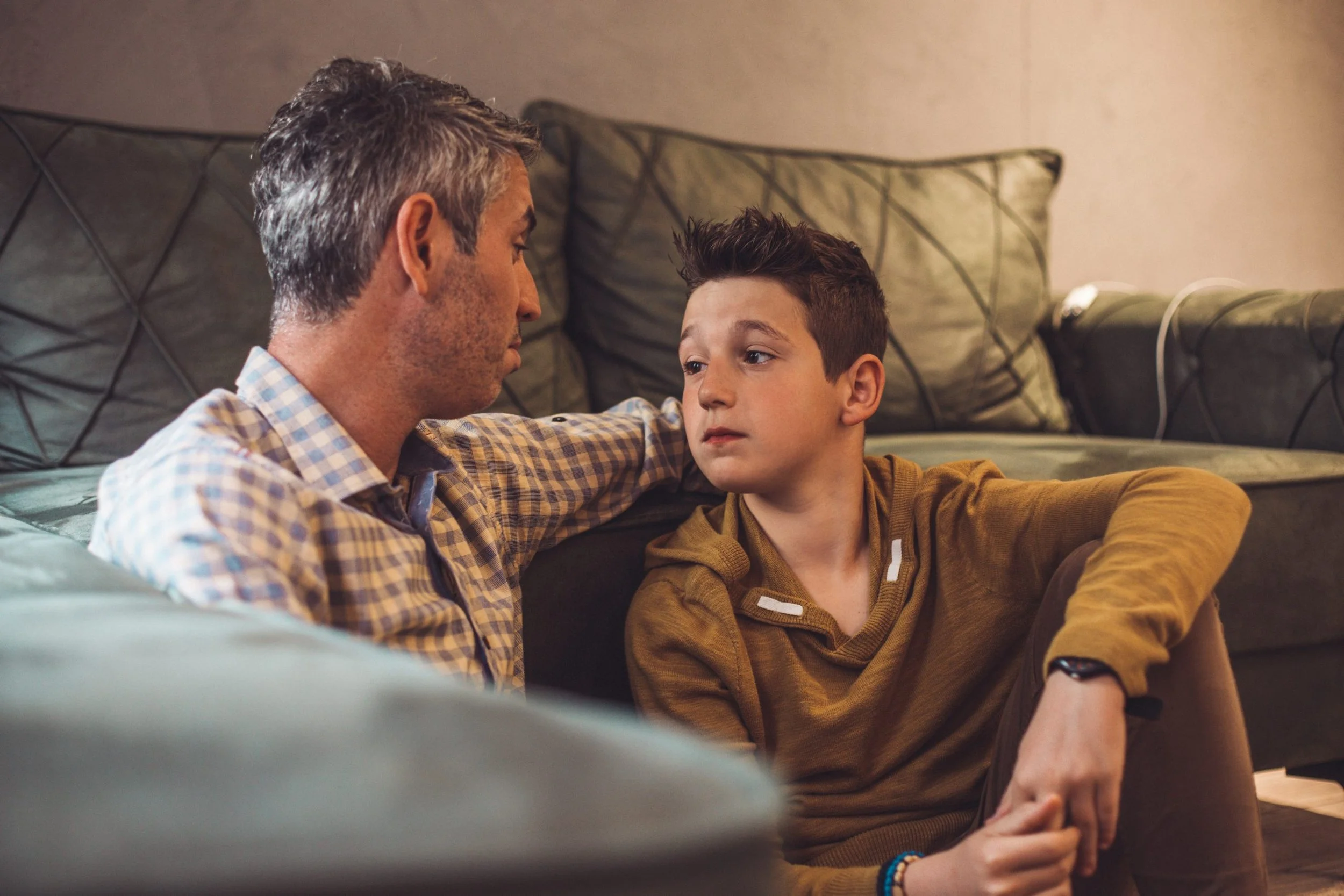
 As a father with ADHD, you know firsthand what your neurodivergent child or teen lives with every day. Because boys are more likely than girls to be hyperactive or impulsive, ADHD in boys is often displayed and diagnosed earlier and more often. But you may or may not have been assessed when you were growing up. And, although you have symptoms and traits of ADHD, you may still not have a formal diagnosis. Whether you've struggled personally or professionally with issues related to concentration, emotional regulation, organization, impulse control or productivity, you may find parenting particularly challenging. It can tough to be collaborative, stay curious and validate what's going well when you wrestle with impatience, frustration and anxiety. Yet, there are many benefits that are unique to dads with ADHD.
Here are 5 ways that dads with ADHD can especially connect with their kids:
1. Dads with ADHD can hyperfocus on their kids.
 Having a parental figure who can zoom in and pay full attention on an activity is very useful for kids with and without ADHD. Dads who narrow their focus on doing something with their children can make them feel like they are the most important person in the world. This intense concentration facilitates meeting kids where they are, engaging in active listening, and working through small difficulties with precision. When you are hyperfocused, your ability to be an ally and your curiosity about your child opens doors to conversation and comforting support. Figure out some activities that you both enjoy, put down your phone and shine your spotlight of attention on your son or daughter.
2. They help to normalize what makes children different.
 Men who have ADHD are learning to cope with their differences through structure, education, and a whole lot of patience. Dads with ADHD are doing this while raising kids who may share similar strengths and challenges. Hopefully, as an adult, you've reached a point where you value your uniquely wired brain and learned to live with it with compassion and pride. Watching their fathers learn to accept and appreciate their quirks in a healthy way can truly help children to develop more positive thoughts around what makes them different and special.
3. They can often better understand their children's emotions.
All children experience frustration, anger, sadness and fear. During these moments, they may well lash out verbally or physically in aggressive ways. These big feelings can be confusing as well as overwhelming. Dads who live with ADHD may well understand those feelings differently than a neurotypical parent. Men with ADHD often struggle with anger management, intense shame and fear about not measuring up. Dads with ADHD have to go deal with these tougher emotions while supporting and guiding their kids towards developing self-regulation tools that are actually hard for them too. Consider joining with your son or daughter on some aspect of self-Control that you could both improve together. When you work collaboratively, you can model and share emotional intelligence and hard-earned coping strategies.
4. They are often natural problem solvers.
Dads with ADHD have experience learning about themselves and, if they're diagnosed, what an ADHD diagnosis entails. Because of this, they have cultivated many tools to manage challenges. They have natural empathy and useful insights that can help with problem-solving. Our children want to feel heard and assisted with their troubles. However, they also need a good sounding board for their own ideas. Whether it's working through math homework, trying to deal with a bully at school, or deciding what new sport to try, you can step up and be the confidante your son or daughter needs. Your support assists them to build resilience and confidence to figure out future issues as well.
5. They can help children develop healthy life strategies.
 When parents develop healthy coping mechanisms for the many challenges that life brings forth, they demonstrate how to engage in self-care. They also show how routines and relationships can bring meaning and satisfaction to life. Children, always watching and listening, will learn these tools and values from early on through adulthood. Parents with ADHD have a unique opportunity to lead by example while not expecting perfection from themselves. As a father with ADHD, you have a chance to help your kids dismantle gender stereotypes and that having strengths and vulnerabilities and asking for help are normal parts of being human.
Here are a few specific self-care areas that dads with ADHD can focus on:
-
-
-
Getting enough sleep.
Sleep deprivation is known to exacerbate ADHD symptoms. Your immune system’s ability to defend you from outside stressors is highly reliant on factors such as the amount of sleep you get on a regular basis. Without adequate sleep, it can be difficult to focus on simple tasks throughout the day. Sleep deprivation can also affect memory and reduce your problem-solving skills, which are already pain points with ADHD. Practice regular sleep and wake times and set up routines (with incentives if necessary) to facilitate this process.
-
Keeping a family planner or calendar.
Many parents use a calendar, planner, or to-do list to stay on top of everyday tasks. Dads with ADHD often integrate planning functions in their daily work life so why not apply this skill at home? Use a whiteboard, Post-it notes on a wall calendar or a chalkboard to set up daily and weekly routines. This helps kids see what's coming and learn how to organize themselves accordingly. When you rely on this and encourage them to do the same, they will improve their own planning and prioritizing skills.
-
Seeking outside support.
If you don't know how to do something at work or at home, you'll probably seek assistance, perhaps online or in person. Kids with ADHD often expect themselves to be able to do things on their own. They also set unrealistically high standards for themselves. Show your child or teen that it's important to ask for help when you need it. Whether it's managing learning issues, ADHD or mental health challenges, find support in your community for your youngster and for yourself. This could take the form of reading books. It might mean finding family or individual counseling or coaching, or consulting with a physician about medications. Talking to educators or other parents at school or taking a parenting class can also be helpful.
-
Engaging in regular physical exercise.
Have you ever seen a dad running at 7:30 am, pushing a stroller, and holding a dog's leash? How about hitting the gym right after work for 20-30 minutes to get their heart rate up before heading home? Many dads who struggle with ADHD develop a regular exercise routine. This helps regulate their emotions and clear their minds. Dads will often work their exercise in with their kids, too. Evening hoops in the driveway, playing catch, and early morning stretches are ways to bond with kids and get some mental clarity.
-
-
What you need to remember, regardless of your circumstance, is that you are the best father for your child/children. You have helped to bring them into the world, you have nurtured them, and you have loved them to the best of your ability and within your personal resources. It's time to start valuing your unique self and the meaningful connections you have with your children. 
Learn more:

Gender, Sexuality and ADHD: Parenting Children and Youth with ADHD Exploring Their Gender and Sexual Identity

Growing, learning and exploring gender and sexuality
Neurodiverse and neurotypical children, teenagers, and young adults are constantly questioning things. As their brain develops, they learn more about themselves and the world around them. Therefore, it's natural for them to be inquisitive. Part of this curiosity and self-reflection include topics related to values, beliefs and morals, as well as questions of all aspects of identity. Many young adults explore race, religious and cultural identities, as well as gender and sexuality. When the child has ADHD, the unique facets of this condition can influence this process. It takes courage and maturity to explore each of these areas. It's especially tricky in our Western culture for any adult to acknowledge that they are questioning their gender or sexual identity. It's a particularly delicate process for children and teenagers. If your child or adolescent approaches you with this topic, they trust you enough to discuss something very personal and possibly uncomfortable.
Supporting your child's exploration
 Talking through everything with your child can be incredibly emotional for both of you. Therefore, it isn't something that should be taken lightly. In neurodiverse children--those with ADHD, ASD, 2E, anxiety and more, natural challenges with executive functioning skills can make these conversations even more overwhelming. Above all, breathe, and stay compassionate. Ask more questions than you give advice. This is a private process of discovery that your child has decided to share with you. It can be tough for both of you but in very different ways. Therefore, you should save your reactions and questions for later. Then, direct them to your primary care provider, pediatrician or mental health professional. Your job is to be steady as they navigate this bumpy terrain.
Language is important
There are a lot of terms related to gender questioning and sexual identity. However, these two processes are not the same and involve different interventions. I encourage you to educate yourself about them. Here's a short introduction to some of the more common terms:
-
-
Biological sex
Refers to the physical anatomy of a person that identifies them as male, female, or intersex. This includes their physiology (genitalia and body type) and genetic differences (hormones and chromosomes).
-
Gender identity
The way someone perceives themself as male, female, both, or something entirely different. A person's gender identity can be the same or different from the sex they are assigned at birth. Cisgender people have a gender identity that matches their sex assigned at birth. In contrast, trans people have a gender identity that is different from the sex assigned at birth. This is where appropriate pronouns - like she, he, and they - can be discussed. However, pronouns don't always match gender identity.
-
Gender expression
The way anyone communicates their gender identity to others. Often, this is expressed through appearance and play choices.
-
Sexual orientation
Defines who a person is physically and emotionally attracted to, based on their own sex/gender. This particular topic can be a little more difficult to work through, though, especially if the parent, guardian, or confidante is less familiar with gender identity.
-
 When your child approaches you with a conversation about their gender or sexual orientation, consider your response before reacting. They are asking you to perceive them differently than you might have before. This can be very difficult to deal with emotionally. No matter how much support and love you give, teens with ADHD quickly pick up on facial expressions and body language that could feel critical. Many kids and teens with ADHD suffer from symptoms of rejection sensitive dysphoria. You should therefore take a giant step backward to look at the entire picture. This will set the tone for your whole family’s response.
Tips to help you connect with your child and uplift their truth
1. Listen to your child.
We have all been taught active listening at one point or another. However, try reflective listening so they feel heard and validated. Repeat what you hear them say, and avoid giving advice or telling them what to do. If needed, this can happen later. Make sure to pay attention to how you respond. Does it feel like positive feedback or criticism? Avoid interruptions or any responses that could indicate judgment. Right now, your neurodiverse child needs to feel accepted.
2. Acknowledge their courage.
Your neurodiverse child is so brave already. Therefore, opening up and sharing this with you - especially if they struggle with ADHD - is a pivotal and beautiful moment. Let them know how much courage you see in them. Acknowledge their resilience, and let them know that they have made the right decision in opening up the conversation with you. Tell them that you love them for who they are.
3. Avoid standards of gender normativity.

Examine how you view gender in your own life, and reach out to specialists and read literature. Meanwhile, really work to allow your child to feel comfortable and open. Be sure to ask about your child or teen’s preferred name and pronouns. Also ask how you can make changes without feeling like you are walking on eggshells. Above all, respect your child's privacy and decisions. Remember, the way you interact with your neurodiverse teen will influence the way their siblings and other family members do, too.
4. Help your child make thoughtful decisions.
No matter how accepting and open you and your family may be with your child's exploration, not everyone is tolerant. Ask them about any times when their gender identity or sexual orientation has been met with nasty, offensive or even dangerous reactions from others. Discuss safety precautions, and explain how hurtful comments and behaviors, no matter how painful they may be, say more about that other person than with your child.
Strategize appropriate verbal and behavioral responses to negative comments and identify caring adults who can offer support. Neurodiverse kids, who may impulsively react to their big feelings that seem unmanageable, will benefit from these solid stand-by tools for heated or hurtful moments. In addition, if things have been tough, and they are feeling particularly overwhelmed, consider letting your child take a mental health day. This can significantly help neurodiverse children and teens rest, regain clarity and regroup.
5. Seek expert help.
You may have questions during this time. Similarly, your child may want to interact with someone else to help them examine their thoughts and feelings. Your usual team of helpers may not have the necessary expertise. Ask trusted health care providers, friends or family to assist you in finding the resources you need. In addition, consider seeking out online resources, parenting groups, therapists, or gender specialists to help your child through this time of self-discovery.
Recommended resources on neurodiversity and gender diversity:

Websites, Organizations & Articles:
- ADDitude Magazine: https://www.additudemag.com/
- American Academy of Pediatrics - Healthy Children: https://www.healthychildren.org
- CDC Resources: https://www.cdc.gov/lgbthealth/youth-resources.htm
- Gender Spectrum: https://www.genderspectrum.org
- GLAAD: https://www.glaad.org
- It Gets Better: https://itgetsbetter.org/
- Movement Advancement Project: https://www.lgbtmap.org
- National Center for Transgender Equality: https://transequality.org
- The Trevor Project: https://www.thetrevorproject.org/
- Trans Youth Equality Foundation: http://www.transyouthequality.org
- Transgender Resources: https://transgenderesources.com
- Trans-parenting: https://www.trans-parenting.com.
- Queerly Autistic: https://queerlyautistic.com/
- Teach.com: "How to Support Gender Sexuality Alliances in Schools"
Related articles by Dr. Saline:
- "How to Support a Teen with ADHD Who Is Questioning Their Gender" By Sharon Saline, Psy.D. and published by ADDitude Magazine (5/12/21)
- "When Children with ADHD Explore Gender Identity: A Guide for Parents" By Sharon Saline, Psy.D. & Julie Mencher, MSW and published by ADDitude Magazine (6/4/21)
Read more blog posts:

ADDitude Mag: Q: Will I Ever Be a ‘Good Enough’ Mother?
How to be a good mom with ADHD: be kind (to yourself and others), be accountable, prioritize your own health and happiness, and value connections over solutions. Click the logo below to read the article.

Kick off the Summer with 6 Easy Strategies for Better Living with ADHD

 A Covid-vaccinated summer is finally here! What a beautiful season, especially for families who can spend a little more time together without all of the classes, extracurricular activities, and other school year obligations. It’s a time of year that people get to feel relaxed and have a little less structure than a school year allows. Yet, routines are still key when raising a child with ADHD, no matter what the season or the stage of development they are in. So what does a balanced summer look like? Abandoning all structure for the summer won't be best for kids and teens with ADHD and will definitely throw the family out of whack. While spontaneity is important (and fun) from time to time, it is important to maintain a simplified routine to set expectations and build good habits. Routines offer organization and predictability to kids with ADHD. They comfort them, even if it sometimes seems counter-intuitive. Some relaxed and effective strategies for starting and maintaining summer routines include:
Establish an appropriate summer bedtime.
 The sunlight dances in your yard a bit longer than usual during this time of year, so it can be very difficult to make sure everyone sticks to a healthy sleep schedule. While bedtime might be between 8 pm and 10 pm during the school year, stick to a similar window in the summer as well. Talk with them about their ideas for this window, share your own and create a compromise solution. Use incentives and consider doing a calming activity like listening to music or reading a book together as part of the night-time ritual. Setting predictable times to slow things down and turn off the lights will not only help their bodies stay healthy but also assist them in feeling refreshed the next day.
Create a summer morning plan.
Many kids want to sleep in as late as possible and do as little as possible in the summer. But they really need a consistent wake-up time, whether that's 7:30 am to make it to camp, work or summer school, or 10 am on the weekends. Let them sleep in a bit longer than during the school year, but collaborate on a range of wake-up times. It could be 8-9 am on some days and, for teens, 10-11 am on others. Consider planning some day trips where an early morning start is essential and they're motivated to rise and get going. Morning light can help their body to regulate their metabolism and optimize cell functioning as well. Use incentives here too: link tasks they have to do in the morning to privileges they desire in the afternoon or evening. Continue to group activities like brushing teeth, washing faces, and eating breakfast so they stay in the groove for when school is back in session.
Limit electronics.

The days can get away from you in the summer. But the sun is shining for much longer, and outside stimulation is so incredibly good for childhood development. Movement is more possible during the summer since they aren't sitting at their desk inside for most of the day. Try to stick to a rule with screen time for all of your kids, and encourage them to be outside for at least an hour on the days that it is nice outside. Join them for family walks, bike rides or explorations. If you need to, consider shutting down the internet or turning off their phones to discourage late night usage.
Stick with family meals.
It's easy in the summer to be looser about regular meals. Some families resort to grab-and-go dinners more than usual. Setting times that work with your child’s hunger patterns can help everyone avoid low blood sugar and emotional meltdowns. Make the effort, at least a few times per week, to have a family dinner. Eating together, however brief it may be, offers a grounding opportunity for connection. Plan special meals together and have them help with the cooking and even the shopping. You're teaching them an important life skill while having some fun. Then, they will have something to look forward to throughout the day when their stomachs start to rumble. If they have a regular eating schedule already established during the school year and are naturally hungry at those times, stick with them.
Fill up your cup
 In the summer, as people are out and about with their families, you may engage in unhelpful comparisons to other parents. Perhaps you question your parenting abilities next to families with neurotypical kids. Cultural standards of parenting are idealized and can cause a lot of stress. As a parent to a child with ADHD, it can be difficult to remember that they always love you and are looking to you for comfort and guidance. (Yes, even when there are disagreements and emotionally turbulent times.) During these warm, sunny months, I encourage you to be gentle to yourself. Take time to fill your cup up and do things that nurture you. When children and teens experience a happy parent, they are more likely to work with them and learn from them.
Build self-esteem with positive reinforcement.
Children are already susceptible to bullying and negative self-talk. A lot of self-esteem-related issues regarding appearance float around in the summer and it can be hard for kids and adults alike to stay body positive. Talk about any body image issues with respect and acceptance, and, if necessary, plan a visit to your primary care provider. Improve self-esteem by encouraging them around daily activities and noticing when they follow through and cooperate. Celebrate their efforts and successes. Something as simple as, “You did such a great job handling your bad mood earlier” or "Nice job clearing the table when I asked" can really make a difference and turn things around. The summer is a prime opportunity to build up their self-confidence and focus on their progress as much as their accomplishments. This will help them thrive and become more resilient when the school year begins again.  As carefree as the summer can be for many, there can still be tense and confusing times for kids with ADHD and their families. Try out some of these additional tips to foster a summer of sanity.
Read more blog posts:
- Regulate Summer Screen Time for Your Child with ADHD and Yourself
- Create Successful Neurodiverse Family Outings Today: Time to connect with the great outdoors!
- Post-Pandemic Self-Care for Parents: 12 Tips for Wellness Practices in a New Normal
https://drsharonsaline.com/product/home-seminar/

ADDitude Mag | When Children with ADHD Explore Gender Identity: A Guide for Parents
It’s natural and healthy for children, teens, and young adults to explore gender identity along with other aspects of identity. When the child has ADHD, the unique facets of this condition can influence that process. Here, understand the intersection of neurodiversity and gender diversity, and how a family’s support is critical. Click the logo below to read the article.

ADHD and Anger in the Family: Manage Outbursts with STOP-THINK-ACT
 Let’s face it: the past 18 months have been rough. For kids and adults living with ADHD, there’s been more challenges than ever managing disappointment, frustration and anxiety. As we transition to a new normal, it’s worth learning from those struggles and angry outbursts that might have arose. It's time to re-thinking our relationship with anger.
Everybody has those moments when a switch suddenly flips and a volcano of angry, negative emotions erupts. Before you know what’s happening, you say or do things that you’ll surely regret later, but you can’t stop. Relationships, school and work are all affected by this emotional dysregulation. Why does this anger occur? What can you do differently this summer to cope with it when it arises?
The Amygdala Takeover
The amygdala is the fight-or-flight organ in the emotional region of the brain. The prefrontal cortex, on the other hand, is the seat of executive functioning skills, often referred to as our thinking brain. When the amygdala becomes activated, it takes over running the brain and the prefrontal cortex goes temporarily offline. Feelings rule the day as adrenalin courses through our bodies, ratcheting up the intensity of our reactions, words and behaviors.
Coping with Anger and the Amygdala Takeover
 To re-stabilize, you have to stop this flood by slowing down your breathing, heart rate and blood pressure and power up the thinking brain.
In ADHD brains, where executive functioning challenges often outnumber strengths, the extra burden of effectively dealing with a rush of strong emotions, such as anger, can be especially tough. Both kids and adults with ADHD may react quickly with volatility instead of responding more patiently with consideration.
When there’s an amygdala hijack, people need enough awareness to keep it from steering them into a tailspin. This is especially difficult for maturing brains with ADHD. Many kids, teens and emerging adults simply do not have the ability to slow themselves down to prevent outbursts. ADHD can make exerting impulse control even more difficult.
Develop and Practice Self-Awareness
Developing awareness of anger starts with body awareness. Help them reflect on and notice the physical signs that let them know they're about to erupt. What is happening inside their body when they're not agitated? What’s different when they're worked up? Maybe their heart starts beating faster or they begin perspiring. Perhaps they speak louder or breathe very fast. Practice this for yourself, too.
We want to teach kids how to identify the signs of anger building up inside of them. We also want to provide tools they can use to slow themselves down before outbursts. Research has shown that it takes the body 15-20 minutes to fully recover from an amygdala takeover. Many children and teens have told me that they dislike the term “calming down” but prefer “slowing down” because it makes more sense to their lived experience with ADHD.
 In order for any techniques to work, kids have to practice regularly and when they're not in a crisis. This is why body scans, meditation, journaling, coloring, listening to music, jumping on the trampoline, listening to stories, etc. are important activities to engage in regularly. Once a day or a few times per week, pick 15-20 minutes of Slow-Me-Down practice sessions. Before bed can be a great time because you get a double win: building skills and slowing down before sleep.
Have Coping Tools Ready for Angry Outbursts
In the moment of an angry outburst, you need a strategy. Having a plan for anger and explosions gives everybody in the family predictability about what will happen and what to do when they occur. This strategy promotes several executive functioning skills that your child or teen really needs, such as impulse and emotional control, shift/flexibility, planning/prioritizing and self-evaluation (metacognition). Instead of being surprised each time emotions heat up and improvising when you’re also upset, rely on my newly updated STOP-THINK-ACT sequence.
Respond to Anger with STOP-THINK-ACT:
1. STOP – Call a break in the action and implement a predetermined 'Time Apart.'
Have a cue ready for angry outbursts. Create a signal for the family so everybody knows when to begin the slow down process. Younger children might be uncomfortable with separation or self-soothing and may prefer being with you for a hug and a story. Tweens and teens will likely be happier to go to their room.
Using Time-Aparts effectively depends on knowing what triggers your kids and YOU when there’s no meltdown. Write down a list of alternative activities or self-soothers and post it on the refrigerator and in your kids’ rooms. Set a timer and take some space yourself.
If you are struggling to keep your perspective, use my secret: go to the bathroom. Take a few minutes to center yourself. Breathe, wash your hands and say something encouraging to yourself like “You can do this” or “You’ve been here before, you’ll survive this too.” Wash your hands and breathe until you’re feeling a bit calmer. This works every time for me, no matter what chaos is happening on the other side of the door.
Once the family volcano has quieted down, the anger has calmed, and your timer has gone off, you’re ready to move to the THINK phase.
2. THINK – This is a time to come back together and listen, really listen, to what your child or teen is telling you.

Ask them to review what happened and what they would have wanted to do differently. Reflect back what you hear them say. See if they can use “I” statements. Ask them to share their experience, feelings or observations.
This is NOT the time to teach anything. Your job is to acknowledge their reality, their feelings of anger and other emotions, and talk about what you noticed occurred as neutrally as possible.
Be accountable yourself, honestly talking about what you might have done differently and wondering with them about possible alternative actions on their end. You can summarize what you hear but there’s no interruptions and no blame. Once everybody has spoken and felt heard, it’s time to figure out how to move on. You are ready to ACT.
3. ACT – This is when you brainstorm ideas and use problem-solving techniques to go forward.
Your focus is on figuring out the NEXT RIGHT THING to do. Ask them, “Where should we go now? What do you think we should do?” Whether it’s an apology, making amends, cleaning up a mess or agreeing to disagree, start by meeting them where they are.
You’re not lecturing them about outbursts or what they did wrong. This isn't the time to discipline them or explain the future pitfalls of whatever poor choice they made. Instead, you're collaboratively identifying the next logical step. You are demonstrating how to practice the self-control and compassion you’ve been preaching, and you're pivoting away from anger together.
The time for teaching a lesson about anger, explaining a logical consequence to outbursts or offering feedback is later. Good times for this can be before bed, when your child is open to talking or at a meal several hours from now. Maybe it's on a walk with the dog later or the next day. You want your child or teen to stay emotionally regulated and avoid another provocation.
When everybody is settled, moving forward like this allows their brains to stay modulated and keeps a recurrence of the recent amygdala hijack at bay.

Read more blog posts:
- ADHD, Defiance and COVID: What can you do instead of yelling?
- ADHD and Negativity: Why ADHD kids and teens say "No" and how to help them communicate
- 5 Tips For Parenting Neurodiverse Kids On The Same Page
Watch on YouTube:
- Anger Management with ADHD (Recorded ADDitude Q&A with Dr. Saline)
- How Do I Manage ADHD and Emotional Explosions? (Recorded ADDitude Q&A with Dr. Saline)
Deeper dive: https://drsharonsaline.com/product/whats-up-with-all-this-anger/ https://drsharonsaline.com/product/home-seminar/

6 Helpful Tips for Dealing with Rejection Sensitive Dysphoria


What is Rejection Sensitive Dysphoria?
ADHD has a large group of companions that like to come along for the ride, whether that's anxiety and depression, learning disabilities, or autism. Rejection sensitive dysphoria (RSD), while not a formal diagnostic category, describes experiences that often occur with ADHD. People struggle with letting go of past hurts and/or rejection and struggle with heightened emotional sensitivity. They may hold onto unkind words or actions directed towards them for months or years. RSD can also reflect a personal belief that you have let someone down. Because many ADHD children and adults may already experience a feeling of otherness, they often already feel like they are at a disadvantage. We live in a society that teaches us to be people-pleasers. This makes it even harder to avoid sensitivities. Here are some great tips to help you work with rejection sensitivity and reduce its tumultuous effects, whether you need a little reassurance or you're helping a loved one who is struggling.
How to Manage Rejection Sensitive Dysphoria
1. Combat rejection by reinforcing strengths
 What everyone needs to remember is that simply having Rejection Sensitive Dysphoria does not make you a human who is weak or incapable. You are just wired to feel things more intensely and replay unpleasant interpersonal interactions over and over. RSD is linked to social insecurity. A helpful tip is to consistently reinforce the strengths of your child or teen with ADHD. What do they love to do? What do they do well? Acknowledging their work, acknowledging their positive efforts and rewarding activities really helps them feel more confident. It can also help them see things from a new perspective and shift from negative self-talk about rejection. This can encourage them to approach future situations bravely as well.
2. QTIP - Quit Taking It Personally!
Many kids and adults with ADHD struggle to separate when a statement is directed specifically at them or when it's something more general. They take things personally that may not be personal. Assist your child or teen to pause before responding to a question or answer by saying, "That's a good question/comment. Let me think about it." Then, they can better assess what's being said. Remind them that other people can say thoughtless or hurtful things sometimes that are more about them than you. The rejection they perceive may not be purposeful.
3. Develop affirmations
Developing mantras or affirmations assists in reducing the noise of negative thoughts that can come with Rejection Sensitive Dysphoria. Try positive phrases like:
-
-
- "I am stronger than I think."
- "My mind is uniquely wired and creative."
- "I can make a mistake and be a good person."
- "I can take risks and see what happens."
-
Sit down with your child or teen and brainstorm some things to say to the negative voice in their heads. Post them somewhere they can see and recall them when they need a boost. Maybe even make time in the morning or before bed when you both say your own affirmations. Starting your day with a positive thought can really help when feelings of doubt creep in. This is also a fun evening activity that can calm them before sleep.
4. Remember that all emotions are valid
As parents, we never want our kids to feel bad. It can be extremely difficult to watch them struggle with sensitivity issues or peer rejection. When someone struggles with Rejection Sensitive Dysphoria, they have often lost hope in their social abilities, been unable to forgive themselves for what happened and feel shame about their experiences and their emotions. It is very important to remind them that every emotional experience is valid. Offer a listening ear to hear about what big feelings they may have. Be supportive without problem-solving.
5. Be prepared to handle outbursts
Anger is a notable side-effect in people diagnosed with Rejection Sensitive Dysphoria. Many people internalize their emotional responses. This can be harmful, especially over extended periods of time. They may lash out as a result, or react in ways that are not as kind as you would like. If you are working with the sensitivities of a child or teenager with ADHD, it could be beneficial to have an action plan when experiencing a notable outburst. Use my Stop, Think, Act tools, pre-arranged 'time aparts' to cool down, or other relaxation techniques to cope with outbursts. There may be some benefit to having a room or area designated for your child to slow down and recover.
6. Emphasize family connection
 As always, connecting with your family is important. Engaging in fun and memorable activities can really help reduce emotional sensitivities related to acceptance. This will allow your kids to rediscover and nurture the joy of being together, instead of perpetuating a sense of rejection and low self-worth. They can also practice their social skills in a safe place. Once in a while, invite a friend to join you. Surreptitiously check out your child's interactions and responses to what the other child is saying or doing. Then you can talk about these at a later during quiet time. Or, just use the information in monitoring dinner table conversation and behavior. Kids with ADHD and Rejection Sensitive Dysphoria really need to feel the consistent, loving presence of their parents as an antidote to the painful social experiences they may be having or perceiving. For those older teens and adults who may be experiencing symptoms of Rejection Sensitive Dysphoria and would like to gain more insight into what it could mean for you, check out this free online test offered by our friends at ADDitude. My ADHD Solution Deck is also a helpful to have on hand, helping you employ strategies that can help your ADHD child or teen in the moment as they face a social or emotional challenge related to RSD.
Read more blog posts:
- Negative Memory Bias and ADHD: Tips to Help Kids and Youth with ADHD Remember the Positives
- Raising teens with ADHD: Redefining what ‘success’ means
- Perfectionism and ADHD: Why ‘good enough’ is better than perfect
Watch on Dr. Saline's YouTube Channel:
- ADHD and Emotional Triggers
- How to End Your ADHD Teen's Compare & Despair
- ADHD and Self-Sabotage: How to Support Yourself with Love
Webinars, handouts & more in Dr. Saline's store:
https://drsharonsaline.com/product/live-adhd-webinar-beyond-high-school-graduation-how-to-help-neurodivergent-teens-prepare-for-their-next-chapter/ https://drsharonsaline.com/product/shame/ https://drsharonsaline.com/product/home-seminar/

Parenting Older Teens with ADHD: Land the helicopter and focus on scaffolding

 Launching older teens with ADHD can be both exciting and nerve-wracking. Your adolescent might be preparing to leave the shelter of high school for college, a gap year, trade school, an apprenticeship or a job. How do you know when to support them and when to let go? What signs indicate they are ready for the independence they desire? Teens with ADHD who often need more support for longer than is typically expected. Therefore, parenting older teens with ADHD might come with even more questions and concern. Above all, for scaffolding to be successful, your kids need to participate in its design. When parents practice compassion, collaboration and consistency with their teens, they foster much smoother transitions to adulthood.
Helicoptering vs. Scaffolding
 There’s a big difference between being a helicopter parent and one who uses scaffolding. Helicopter parents exercise constant supervision and are over-engaged in their teen's academic and social lives. They're directing things to go a certain way. In addition, they're doing things for their kids instead of letting them try more often on their own. In contrast, parental scaffolding helps teens prepare for adulthood by helping them practice independence. Instead of telling older teens and young adults how to do things and what they should choose, you discuss options. Then, when they're 18 or older, they decide what makes sense. Rather than provide the answers to their dilemmas or problems, you offer resources and point them in the right direction. Therefore, you replace reminders with mutually created systems that foster self-reliance. You do this even if it means that your son or daughter may not succeed at something as often as you’d like. Teaching executive functioning skills, facilitating opportunities for self-reflection and exploring obstacles that prevent follow through and completion become your focus now. As the parent of two emerging adults, I know how tough it can be to witness our children struggling and succeeding--on their own terms. Although it’s much easier to say what we think and tell them why we are right, this type of communication doesn’t result in a trusting relationship. Scaffolding strategies will show more respect for their growing maturity.
Fostering Connected Independence
Connected independence is really our goal now. Ideally, our emerging adults see that we can assist them or offer advice when they seek it, demonstrate empathy regardless of the situation, and believe in their abilities to make good choices. Parents are there for you as needed, but they're not running the show. In the meantime, to get to that place, your older adolescent will test all kinds of limits and resist taking directions from you, no matter how right you are. Teens with ADHD really need to learn from experience. For most parents, and for kids themselves, it’s a confusing time. It’s also an opportunity for you to examine your dreams for them and let them go. Take a minute and consider your agenda for your child and the type of pressure you may be placing on them. How is it working? If it’s not, do you know why? Try doing more of what works.
Tips and Tools for Parenting Older Teens with ADHD
Use these tips to foster connected independence in your family and strengthen the scaffolding of growing executive functioning skills to better help teens prepare for adulthood.
1. Listen with genuine curiosity:
 Acknowledge what you hear and use reflective listening tools to show this: “I heard you say X, did I get that right? Is there anything else?” Ask questions using how, what, when and where instead of why. Pause before thinking and reflect on what you are going to say. Are you telling them what to do? If so, how can you reframe that into a question.
2. Separate your anxiety from theirs:
When we are worried about the choices our older adolescents are making, we share our anxiety--out loud or nonverbally. Monitor your concerns, keep them separate from those of your son or daughter and talk about your feelings with someone else--a friend, family member or counselor. Part of maturing into adulthood is knowing that your parents believe in your capacity for resilience. If you need to share your worries with your child, then do so neutrally.
3. Pick your battles:
 Figure out what your bottom line is about certain touchy subjects and negotiate compromises. Perhaps it is setting house limits about substance use, agreeing on minimum GPA, managing finances, or respectful language. Agree on your role for giving reminders and when you will say nothing. In general, waiting 24 hours to process something upsetting lets everybody cool down enough to have a real conversation. Effective compromises usually mean that you give a little, they give a little and nobody is fully happy with the solution. Of course, you need to intervene in matters of health and safety but discuss in advance what those might be.
4. Maintain your perspective:
Negotiating the passage to adulthood takes time, practice and frustration. Take a giant step backwards to look at the entire picture. Should your child stay in college when they're failing 3 out of 4 courses? Similarly, is keeping a miserable job with an abusive boss worth persistent high stress, insomnia, substance abuse or self-harming behaviors? Probably not. Place your attention on who they are more than what they do. Parenting older teens with ADHD often involves given them extra time and space to figure things out without excessive pressure from you. They already feel ashamed of their struggles. Remember, most kids want to grow up and be self-reliant like their peers. Talk about what they envision for themselves and help them find a counselor who really understands ADHD.
5. Facilitate learning life skills:
 The ADHD brain matures more slowly than neurotypical brains, lagging up to three years. Collaborate with your emerging adult on lagging skill areas that frustrate them. Often these involve organization, time management, planning and prioritizing. Let them take the lead on picking the ONE area that needs to be improved. Brainstorm possible solutions, explore the steps needed to work on this skill and clarify how you can help. In addition, talk with them about managing their own healthcare, prescriptions, budgets and transportation. Most young people I work with still need assistance in understanding how to do these things.
6. Stay steady:
Emerging adulthood is a time of great change and instability. Kids come and go from your house, moving around as they try to understand the world around them and what really matters. Be there as a steady force in the midst of all of these ups and downs, loving them with open arms and a zipped mouth. They are learning as they go along: that’s what this developmental stage is all about. Expect them to reject you and your advice and give them the gift of compassion anyway. Remember what you were like at your kid’s age. What would you have wanted most from your parents? Would it have helicoptering or scaffolding strategies? I would have liked fewer questions about how I was going to use my college degree and more trust in the process of my explorations. Ultimately, I figured it out, and I bet you did too. Your teen will too.

Read more blog posts:
- Cooling Down Conversations in Neurodiverse Families: De-escalate and do-over with 'WAIT-Now' and 'Take Back of the Day'
- Personal Project Planners for ADHD Minds: Start managing tasks, time and ideas with this creative tool!
- Teens, ADHD and Procrastination
Articles, interviews & more by Dr. Saline:
- Relearning Parenthood: When Children Reach Adulthood, What Then? (Psychotherapy Networker article by Dr. Saline)
- How to Get Your Teens to Open Up (WWLP 22 News Interview with Dr. Sharon Saline)
Handouts, Webinars & More in Dr. Saline's Store:
https://drsharonsaline.com/product/anxiety/ https://drsharonsaline.com/product/home-seminar/

ADDitude Mag: How to Support a Teen with ADHD Who Is Questioning Their Gender
How can parents support an adolescent with ADHD who is questioning their gender? Does ADHD play a role? Read on for helpful parenting strategies and resources for families parenting gender-diverse children. Click the logo below to read the article.

Moms with ADHD: Nurturing your power of authenticity

 Parents are jugglers. Education, events, extra-curricular activities, hobbies, sports, chores, work--at any given time we've got several balls in the air. On top of managing all of this, women have to deal with the additional issue of cultural standards of motherhood that lead us to comparing ourselves to some idealized version of what being a mother should be. We all do this, and it's harmful to our self-esteem and self-confidence. For moms with ADHD, it can be even more challenging to tackle everyday tasks.
Finding confidence as a neurodivergent mother
If you're a neurodivergent mother, you might feel like you come up short next to neurotypical parents. What you need to remember, regardless of your circumstance, is that you are the best mother for your child. You have birthed or adopted them, you have nurtured them, and you have loved them to the best of your ability and within your personal resources. It's time to stop looking at what you are not doing, and start valuing your authentic self. Our kids are our greatest teachers, and the lessons we learn from them aren't always easy ones. But, regardless of the ups and downs, the most important thing is to nurture our connection with them. We are often judged as parents based on how our children act and what they achieve, instead of who they are as people. Maintaining authentic connections with your neurodivergent child, and conveying your love for who they are, demonstrates what good parenting is all about. Yes, you will get angry and frustrated. Yes, you will laugh and cry with them. And yes, this is what makes you a strong, helpful and attuned mother. Here are some helpful steps moms with ADHD can take to move towards nurturing authenticity in relationships. Let them also remind you of what a powerful mother you truly are.
Four ways moms with ADHD can nurture authenticity:
1. Notice your courageous behavior over the years.
It's important to stop comparing your insides to other people's outsides. You are the best mom that you can be given the resources that you have. As a neurodivergent mother with ADHD, it's unhelpful comparing yourself to neurotypical moms or moms with neurotypical children. Everyone's circumstance is different. Reflect on ways that you've taken risks and done things with your kids that made you feel proud. What are things you do with your child that make you feel good about yourself? Is there a specific family memory that makes you feel happy? Have you advocated for them in a unique or special way, or have they helped you to be an advocate for yourself? Write some of this down so you can keep it for the good times and the bad when it can really help you to reinforce your self-esteem.
2. The key to self-forgiveness is owning your stuff.

No matter who we are, we have our moments and slip up sometimes. Consider giving a genuine apology about a recent event as a surprise gift to your children and to yourself. Express how you are working on changing your behavior to change things in the future. And then work on it. I have worked through many things with my kids, including my reactivity. I try to own my stuff as much as I can and they certainly let me know when I don't. When I've done something that hurts them, I don't make an excuse. I say, "I'm sorry that I did that and that I hurt you." It helps to take the pressure out of a situation and to make everyone feel more at ease with each other. When you do this for your kids, you are directly modeling accountability. This is a crucial lesson in their development and can be so rewarding. Remember, we are all fallible, we are all human.
3. Show up for yourself as much as you do for others.
Many women think that being a good person is about sacrifice. We believe we need to prioritize others before ourselves. We give and give and give and then feel bad when we can't give more. Because of this, it can be so easy to criticize yourself when you aren't showing up the way you think you should. This isn't good for us or our children, to see us stress about things in this way. Sometimes, we (moms) try to control situations or people in an effort to fit our reality into our perfect picture in our minds. My inner critic often says to me, "You know what? You can do this better." It's debilitating because it makes me feel like what I do is never good enough. I know where it's coming from in my family history. Have you considered where your thoughts stem from in your history? What would it be like to show up for yourself without judgment? What does your inner critic say to you? 
For moms with ADHD, it's important to accept yourself with your blemishes, quirks, and all. This takes mindfulness. What can you say to yourself instead of thinking so negatively? Vocalize and acknowledge the aspects of yourself--what works and what could be improved. Acknowledge the beauty in the balance. This helps fill up your emotional bucket.
Having difficulty focusing on the good? Keep a journal every night and write down three things that went well that day. They can be really small. It can be something as small as "I liked the stir fry at dinner," or "My toothpaste was refreshing," but it can move mountains in helping you to focus on the positive.
4. Nurture connections instead of solving problems.
As mothers, we can be quick to find solutions for our children's issues. But it is very rare that people want us to solve their problems for them. Our children want to feel heard and assisted with their troubles, not necessarily told what to do. Meet your kids where they are and brainstorm solutions together. Use your creativity, energy and strategic thinking to guide both of you to options organically. Be an ally. As a mother with ADHD, there are so many unique facets to your personality that aid you in being an adventurous and caring parent. Focus more on those instead of your limitations. No matter what, make sure to nurture yourself so that you can show up for your family. If you don't put your oxygen mask on first, you won't be able to assist anybody else.

Read more blog posts:
- The Truth about ADHD in Girls and 5 Ways You Can Help
- Dads with ADHD: How to use your unique strengths to assist your kids
- Parenting Older Teens with ADHD: Land the helicopter and focus on scaffolding
Watch on Dr. Saline's YouTube Channel:
- Moms with ADHD: Why YOU Are the Best Mother for Your Child
- ADHD in Couples' Relationships (ADDitude ADHD Support Group Q&A with Dr. Saline)
- Dads with ADHD: A Father's Day Special
https://drsharonsaline.com/product/anxiety/ https://drsharonsaline.com/product/home-seminar/

5 Tips for Parenting Neurodiverse Kids on the Same Page
 Parenting with a former or current partner who doesn’t share your views about neurodiversity, including ADHD, learning disabilities, twice-exceptionality or autism, can be very challenging--for you and for your child or teen. Neurodiverse kids really need consistent messages, similar schedules and clear expectations. If they are moving from one household to another, this regularity becomes essential. This can be difficult enough when parents live together and even tougher when they don’t. Perhaps your parents or in-laws help with childcare but don’t believe in neurodiverse diagnoses or understand them. In these situation, parenting neurodiverse kids on the same page as other caregivers can seem nearly impossible.
Aiming to be steady, not perfect, when parenting neurodiverse kids
Your goal isn’t perfection--being consistent at all times--but rather steadiness. Steady household routines and steady parenting help children and teens learn what to expect. Because of this, cooperation improves and anxiety is reduced. Being able to predict what’s coming, more or less, helps them manage their emotions. In addition, it helps them organize their stuff and plan for the transitions.
Shifting from one thing to another and demonstrating flexibility are tough for many neurodiverse kids. They can make these adjustments more readily if there is a repetitive pattern along with helpful checklists. This goes for working on similar executive functioning skills at school and home, too.
When parents are separated or divorced, you're not with with your ex for a number of reasons. However, you are still connected through your child(ren). You may not like each other, and you might not want to be friendly. That’s up to you. You may live with a partner who has totally separate ideas about parenting from you. Either way, you’ve got to find ways to work together when it comes to parenting your neurodiverse kids - it's in the best interest of your children. Research has found that the best measure of a child’s well-being after divorce is how the parents can get along. What can you do to coordinate care across multiple households with less stress and more cooperation?
Follow these tips for more effective partnership parenting:
1. Finding a way to work together:

If you are unable to have civil conversations, find mutual ground or discuss delicate subjects without major arguments, determine how you will communicate about touchy subjects. Practice reflective listening so each person feels heard and understood as a first step towards compromise.
If talking is difficult, agree to send fact-based emails about your child or teen with updates about what’s happened at your house this week, issues with school or friends or any concerns. Perhaps create a general daily routine which can be adapted to the needs of each household and share it online. For some people, even these steps are difficult. I would strongly recommend that you seek counseling with someone who is educated in parenting neurodiverse kids.
2. Prioritize your neurodiverse kid's needs:
Decide what issues are the main priority for your child based on information from school, extracurricular activities and/or medical needs. Identify your child’s strengths and challenges and find a place of agreement or overlap. Lean into the challenges that you both perceive first. Pick something small to address that can span both households. Then, outline how you’re going to address this. If you are unable to figure this out on your own, seek some help from your PCP or pediatrician, or consider counseling. Remember, your child’s welfare is the center of the story not your issues with your (ex) partner.
3. Create similar routines:

Things don’t have to be identical at each household or between each partner in the same household, but they need to resemble each other. When it comes to parenting neurodiverse kids, it doesn’t help your child to play ‘good cop’ and ‘bad cop.’ Supporting routines and collaborating as adults isn’t about control or who’s got the power in the family. Rather, it's about what serves the best interest of your child. Perhaps your son has different sets of chores at each house, but you agree that he has chores. Maybe your daughter does her homework at different times but has comparable bedtimes. Setting related guidelines about screen usage is also important.
4. Parenting neurodiverse kids with a unified treatment approach:
Many parents don’t agree on medication, counseling, coaching or tutors. What do you agree on when it comes to parenting your neurodiverse kids? You may have different opinions because you have different knowledge bases. How can you meet in the middle? Who could assist you with this? I encourage you to talk to your PCP or pediatrician about this or maybe take a webinar together that focuses on parenting neurodiverse kids.
5. Set logical consequences:
We know that punishment is ineffective. Punishment won't help for parenting neurodiverse kids, and it doesn’t teach any skills. Learning effective self-management skills is critically important for them so then can eventually move into self-reliant adulthood. What do consequences look like in each house, and for what offenses?
When there is similarity in how parents deal with issues, and when the adults come together on big issues based on shared values and morals, children and teens respond with more cooperation. Make a collaborative plan as a family for what you are going to do to manage misbehaviors, backtalk, aggression, lying etc. Consider creating a contract that everybody signs so your child sees that you are taking this seriously.
Read more blog posts:
- Parenting Older Teens with ADHD: Land the helicopter and focus on scaffolding
- Couples living with ADHD: Healthy practices that focus less on fairness and more on companionship
- Divorce and the ADHD Family: 3 Essential Tips for Better Co-Parenting
Deeper dive: https://drsharonsaline.com/product/home-seminar/

Beyond Sibling Rivalry: How to Mediate Sibling Relationships Complicated by ADHD

 Are you tired of the arguments between your kids? Our sibling relationships are often the longest we experience in our lifetime. We all develop many integral skills within these core relationships. With siblings, we learn how to relate others, how to practice social skills and learn to negotiate. We also deal with competition, disappointment, jealousy and fairness. Sibling relationships are integral to our lives and sense of ourselves. For kids who do not have siblings, this structure affects them too. Some may be happy to be single children and others may long for a sibling. As parents, our job is teach our kids how to work things out on their own and when to intervene constructively. In families living with ADHD, sibling relationships can be especially tricky to navigate.
The neurotypical child's perspective in their sibling relationships
Siblings who identify as neurotypical often experience feelings of "otherness." They can feel left out while their neurodivergent sibling receives what they perceive as "special care," attention or favoritism. They might not be given the benefit of the doubt as often as their brother or sister. This fosters resentment towards the parents and the sibling. Neurotypical siblings might also receive harsher responses or more demanding behaviors from parents who may have higher expectations for them. They’re sometimes asked to be patient when they really feel angry or ignored.  Often, non-ADHD siblings can struggle with a pattern of negative emotions towards their families which are difficult to reconcile. Kids have shared with me:
-
- Embarrassment (eg. when their sibling experiences public meltdowns, school struggles, and behavioral issues).
- Frustration (eg. if they have been exhibiting patience with annoying behaviors and have politely asked their brother or sister with ADHD to stop unsuccessfully).
- Guilt (eg. when they are thriving and their sibling with ADHD is clearly struggling; this can even lead to under-performance in some areas to relieve discomfort of their brother or sister).
- Pressure to be the "good kid" (eg. to set an example for the rest of their family and avoid causing their family additional stress).
- Hiding true feelings (eg. denial of any uncomfortable or conflictual issues so they remain "healthier" than the sibling with ADHD, in comparison).
Leveling the playing field to discourage sibling rivalry
As parents, you want to encourage role flexibility in your family. No child should the "good" one nor the "bad" one. If there is more than one child in a household with ADHD, learning disabilities (LD), or Autism Spectrum Disorder (ASD), it can be especially challenging for everyone to thrive because of how issues with attention, learning, or processing information manifest differently between family members.  Actively teach your children that we all have strengths and challenges. The goal is creating as level a playing field as possible within the family unit so kids can be both "good" and "bad." In fact, we all have executive functioning skills that run smoothly and need tweaking. Name what they are for each person, and discuss an approach where each person can work on improving one issue. Emphasize this so your child with ADHD doesn't feel stuck as the person who needs all of the help in the family. There are ways to help diffuse the tension in sibling relationships and create a stronger family ecosystem.
1. Choose empathy in your approach.
Working through issues with your ADHD child can set a very important example for how the rest of your family works together. Your children are always watching you, so it's important to practice self-control and figure out what helps you manage yourself better when you are triggered. Take time to look at the big picture, understand every side, and practice compassion. Using humor can help to keep you level-headed and light-hearted. Your other children will follow your lead, and this will set an achievable example for the future.
2. Practice themes of fairness and inclusion.
The world is already designed to make people feel a greater sense of competition. There is no need to overwhelm growing children with more comparison issues. Because children with ADHD often are the focus of more worry and concern, a parent's extra engagement might stir up feelings of jealousy and comparison.
If you start to notice any extra stress or tension in any child, spending quality alone time with each could help boost their esteem. Fairness doesn’t mean equality but rather feeling listened to and included in the plans you create for the family. Use incentives and reward charts for everyone, but the expectations can differ according to age and ability.

3. Handle disagreements with the same finesse as every day conversations.
Practicing fairness with every child, no matter their neurological capabilities, is essential for fostering healthy sibling relationships. It also reduces any built-up tension or feelings of rage a child could experience at feeling less than. Talk with your partner (or a caring friend) about when to intervene in sibling arguments. Safety is a primary concern, of course, but also avoiding unnecessary escalations and hurtful statements is important. Then discuss with your kids about when you will intervene, when you will warn them to take some space and how they can ask for help when they are stuck with each other. Teach kids to deal with their conflict effectively, model how to negotiate problems, set up a plan for taking space when things escalate and come back later to discuss how to move forward and make amends.
4. Spend quality alone time with each child.
Each of your children benefits from alone time with each parent. Whether it's a special activity or doing some errands with a Starbucks at the end, the point is to hang out together. My uncle used to schedule one-on-one time with each of my cousins once a month. One of my clients takes her daughter on errands on Saturdays that involve some stuff for the family and some fun time like going to Starbucks or getting ice cream. These types of quality time make a huge difference in nurturing parent-child connections and fostering healthy communication.
Read more blog posts:
- Dinnertime for the Family with ADHD: How to make family meals more enjoyable for all
- 5 Tips for Parenting Neurodiverse Kids on the Same Page
- Create successful neurodiverse family outings today: Time to connect with the great outdoors!
Learn more from Dr. Saline in the news:
- When ADHD Drains and Strains Sibling Relationships (ADDitude Mag article by Dr. Saline)
- Sibling Relationships Complicated by ADHD (ADDitude Mag ADHD Parenting Q&A with Dr. Saline)
Deeper dive: https://drsharonsaline.com/product/managing-technology-families-video/ https://drsharonsaline.com/product/home-seminar/

Fresh Start Family Podcast: Working to Overcome Anxiety & Frustration in Kids Who Have ADHD, Autism, or Learning Disabilities

Families, are you overwhelmed with the challenges of raising a child with ADHD, autism, or learning disabilities? Or are you like so many families who are wondering if your child may be an alternative learner, but just aren’t sure? Even if you are just looking for some ways to connect with your child and restore some peace and balance to your home... This episode is just what you need to hear. Click the image below to listen to the episode.


ADDitude Mag: Q: Is ADHD or Anxiety to Blame for My Perfectionism?
“There is no perfection. If you think someone is perfect, then you’re comparing your insides to their outsides, which may look very different from what they experience internally. Real is better than perfect.” Click the logo below to read the article.


Additude Webinar Replay - Gender Diversity and Neurodiversity: How to Support a Child, Teen, or Young Adult with ADHD as They Explore Gender
"If every generation of youth finds a way to upend parents’ basic notions of the world, certainly gender is today’s arena for change. With children and teens increasingly declaring a gender different than their sex assigned at birth, and many teens responding to “they/them/their,” nothing short of a gender revolution is taking place. Parents are often left to play catch-up with their children and teens, who increasingly view gender as a spectrum, not a binary. As young people work to understand and define their gender, caring adults may struggle with how to respond appropriately, how to manage their own feelings and reactions, and how to give or find adequate support. For parents of kids living with ADHD, additional concerns about executive functioning challenges — like impulsivity, emotional dysregulation, planning, and focus — may further complicate the picture. It is important for parents, clinicians, and coaches to research how this generation of youth is reframing notions of gender and how neurodiversity intersects with this process. In this webinar, Julie Mencher, MSW, and Sharon Saline, PsyD, will discuss the fundamentals of understanding gender diversity and how ADHD affects the journey. You'll learn how to:
- Understand the process of the gender journey, for the young person and their family members
- Understand and use appropriate, thoughtful language
- Manage your own reactions to the changes in children, teens, and young adults
- Prepare for and engage in empathic, informed conversations about gender questioning and transitioning
- Explore how to read your child’s behavior in relation to gender exploration and ADHD struggles
- Watch for self-harming behaviors or other mental health concerns