Dear Dr. Sharon: “I don’t have ADHD, but my partner does - how do I navigate romance, follow-through, and emotional connection?”

ADHD can shape relationship dynamics in subtle ways. Discover how couples can navigate romance, communication, and emotional balance when one partner has ADHD.
READERS WRITE
Dear Dr. Sharon,
With Valentine’s Day coming up, I’ve been thinking a lot about my relationship, and where we keep getting stuck. My partner and I are both women in our early 40s, and we’ve been together for five years. I love her deeply. She’s creative, funny, big-hearted, and endlessly curious. She also has ADHD.
I don’t think the ADHD is the problem, but it definitely shapes our dynamic in ways I’m still trying to understand. I often feel like I’m carrying more of the emotional and logistical load by remembering plans, managing schedules, addressing conflict and keeping holidays or special moments in mind. When I bring this up, she feels criticized and ashamed. We talk about it, but we keep circling the same patterns. I push, she shuts down; she reassures me, but then nothing really changes.
I would like to deepen our relationship in ways that honor both her neurodivergence and my needs. How can we navigate issues without falling into resentment or imbalance because of ADHD? How do I ask for thoughtfulness, follow-through, and emotional presence without her feeling like a failure?
-Aline, New York
DR. SHARON SAYS…
Dear Aline -
What you're describing is not only deeply emotional but also an incredibly common experience in relationships where one partner has ADHD. In fact, one large national study found that adults with ADHD are nearly twice as likely to report relationship difficulties compared to neurotypical peers. Loving someone with ADHD often means holding two truths at once: you can understand why certain patterns exist, and still feel frustrated and hurt by their impact. Those feelings don’t cancel each other out.
We know that ADHD affects executive functioning skills like planning, time awareness, organization and motivation. But it also affects emotional regulation, metacognition and working memory which can complicate friendships and partnerships. These challenges, as studies show, indicate that relationships for adults with ADHD, especially with non-ADHD adults, are more likely to experience strain as seen in higher levels of conflict and dissatisfaction. This occurs not because of a lack of care, but because so often a quiet imbalance builds over time. The non-ADHD partner may try to compensate for their partner’s challenges by remembering, reminding and anticipating things which leads to a complicated power dynamic. While at first this support can feel loving and practical, over time it may turn into exhaustion, resentment, mistrust and disappointment.
Meanwhile, the partner with ADHD may be experiencing something very different internally. Many adults with ADHD carry a long history of feeling like they “mess things up” or disappoint people they care about. When you raise concerns around issues related to follow-through or emotional control to your partner, it can quickly trigger shame and defensiveness rather than insight and motivation for change. Many adults with ADHD experience feedback with intense negativity because, as research shows, they have higher rates of rejection sensitivity. Their emotions run strong and fast, overwhelming their abilities to respond without overreacting to necessary conversations about issues in the relationship.
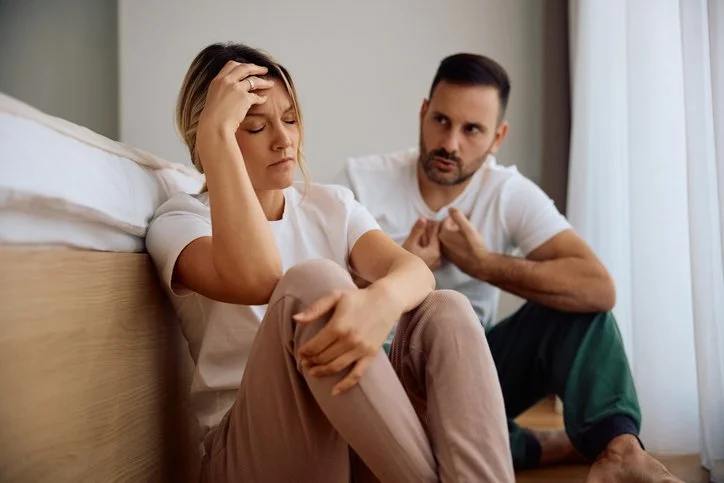
This is how couples end up stuck in the loop you described: one partner pushes because they’re lonely or frustrated; the other shuts down because they feel inadequate. Both people are trying to protect the relationship, but they’re doing it in opposite ways.
So how do you move forward without turning your partner into a project—or yourself into the aggressor or quiet martyr?
Start by shifting where the problem lives
Instead of framing the issue as “you don’t follow through” or “I need you to be more thoughtful,” try externalizing the challenge. Having ADHD isn’t an excuse, but it does provide some valuable context. When couples treat ADHD as a shared obstacle rather than a personal flaw, collaboration becomes more possible.
You might say something like: “I know remembering dates and planning doesn’t come naturally to you - and I also notice I’m feeling more and more frustrated with reminding you about things. I want us to figure this out together so neither of us feels bad.”
This kind of language reduces defensiveness and keeps the focus on the relationship, not the person. You join forces as a couple to deal with ADHD-related issues.
Be specific about what actually matters to you
Many non-ADHD partners talk about wanting “more effort” or “more presence” from the other person but those ideas can be vague and hard to act on. ADHD brains do better with clarity. How can you tell when your partner makes an effort to do something differently? What words of acknowledgement and encouragement can you give her?
In terms of building connections, what does thoughtfulness look like to you? Is it a card? A planned dinner? A reminder in her phone a week before Valentine’s Day? The more specific you can be about any of these things, the better. Concrete expectations and requests reduce conflict and improve follow-through far more than general requests.
Let routines and systems do some of the heavy lifting
Romance doesn’t have to be spontaneous to be meaningful. In fact, many couples thrive when they build intentional routines and systems that support connection. Shared calendars, automatic notifications, regular check-ins and even scheduled “quality time” may feel unromantic. But, by shifting the uneven power dynamic from you being the reminder and her being the reminded, you will create more space for genuine closeness.
One study found that couples who used external supports for ADHD-related challenges reported lower stress and greater relationship satisfaction over time. So, a little structure and consistency goes a long way to help deepen connection and, yes, even romance.
Watch for the invisible emotional labor gap
You named something crucial: emotional labor. All too often, female partners of adults with ADHD regardless of sexual orientation, assume disproportionate responsibility for managing daily life and emotional aspects in the relationship. Over time, this can lead to burnout.
It’s okay to name this gently and honestly. You might explore together which responsibilities truly need to be shared differently and where outside support (coaching, couples or individual therapy, other ADHD-specific resources) could help shift the load.
Keep romance relational, not performative
Holidays, birthdays or anniversaries can reveal whatever is already tender in your partnership. Valentine’s Day can ratchet up expectations. Try reframing it as a conversation starter rather than a test. Instead of hoping your partner will intuit what you need, invite her into co-creating what can be fun and loving on February 14th and beyond. When you collaborate, you reduce rejection sensitivity because neither of you is ‘wrong’. You are naming what helps you both feel loved and engaged with each other.
The bottom line
Healthy relationships don’t require one partner to shrink and the other to change who they are. They ask both people to stay curious, compassionate, and steady. Together, build a life that honors how each of your brains work—the strengths and the challenges. You are both doing the best you can with the tools you have available in a given moment. Some days, you just might need new tools. That’s okay. Practice patience and keep your hearts open to foster the authentic connection you both desire.
Warmly,
Dr. Sharon