
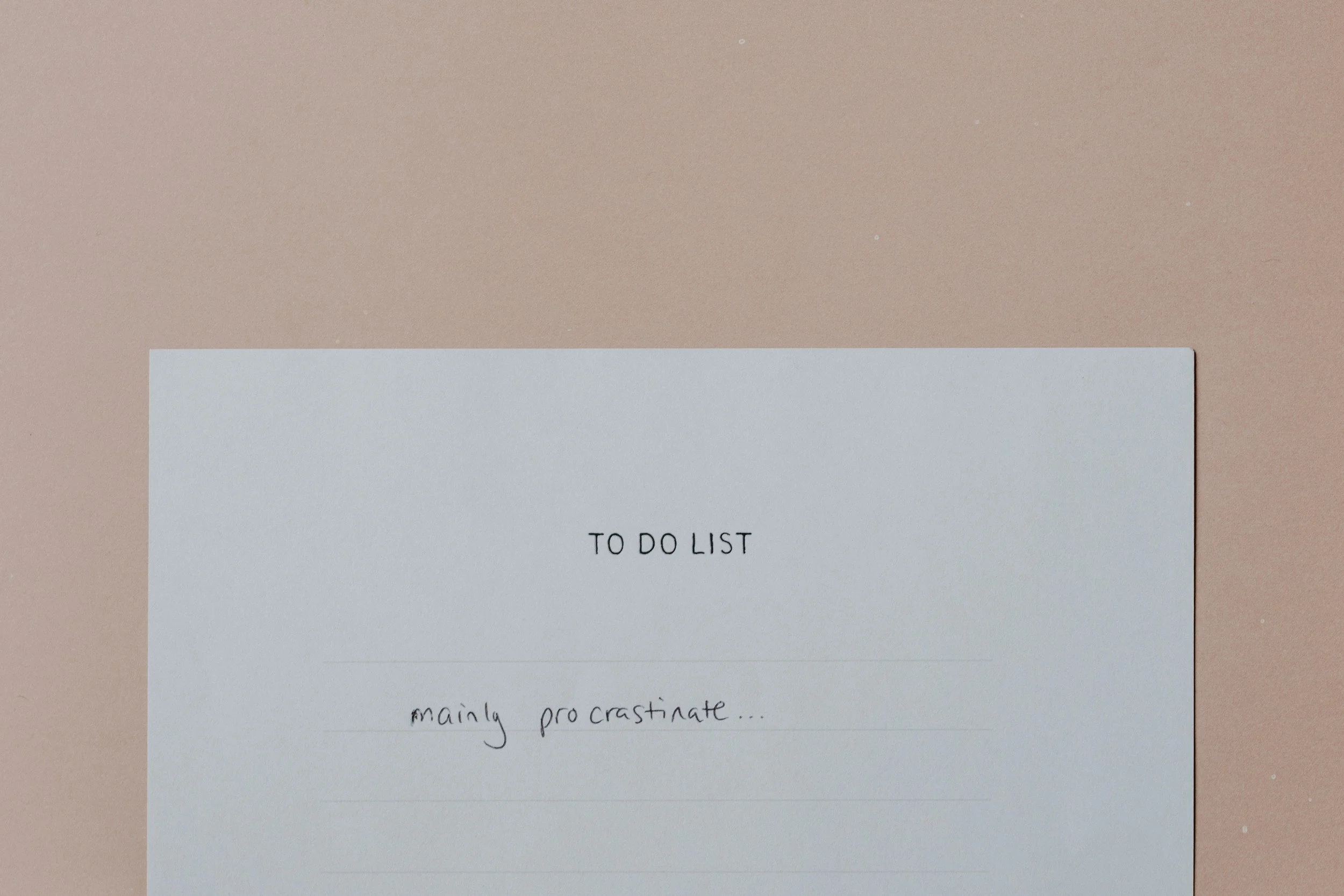
The laundry sits there, the email tab stays open, the homework waits…and waits. Instead of starting, you find yourself scrolling, snacking, or doing literally anything else, all while anxiety and dread start to creep in. Welcome to “ADHD paralysis”—that viral, all-too-real stuck feeling. The good news? Its not about willpower, and you’re not broken! There are compassionate, brain-friendly ways to help get you or your loved ones “unstuck” and on the road to success.
For people with ADHD, starting tasks can feel like one of the hardest hurdles. Planning, organizing, and following through all take mental energy—and ADHD brains don’t regulate motivation or focus in the same way as neurotypical ones. Instead of diving in, you may find yourself stuck, delaying, avoiding, or ignoring the task at hand. The more you put it off, the more stress builds, which only increases the sense of paralysis. This isn’t laziness—it’s an executive functioning challenge that many people with ADHD share. If you’ve ever found yourself caught in a cycle of dread, self-criticism, or endless distractions, you’re not alone.
If this is you—or your child—you’re not lazy, broken, or unmotivated. ADHD paralysis is real, it’s common, and it can be managed with the right tools and understanding.

What Causes ADHD Paralysis?
ADHD paralysis is rooted in executive functioning differences. These are the brain’s self-management skills: planning, prioritizing, time management, and task initiation, among other things. When these skills are underdeveloped or inconsistent, tasks can feel overwhelming before they even begin.
Here’s what contributes to the paralysis cycle:
Overwhelm: When a task feels too big, the brain panics and shuts down.
Perfectionism & fear of failure: Negative self-talk whispers, “I’ll mess this up anyway.”
Boredom: Tasks that feel dull or repetitive don’t stimulate dopamine, the brain’s “motivation” chemical.
Time blindness: A skewed sense of time makes everything feel urgent—or impossible.
Research backs this up: studies suggest that up to 80–90% of adults with ADHD struggle with executive dysfunction on a daily basis. In fact, a recent CHADD survey found that over 70% of adults with ADHD say procrastination is one of their most impairing symptoms. For kids, the impact is just as big: the CDC reports that nearly 6 in 10 children with ADHD have at least one other mental, emotional, or behavioral disorder, which can further complicate task initiation.
The good news is that ADHD paralysis is not permanent—it’s a stuck state that can be shifted by using the right supports.
Breaking Free: Strategies for Kids and Teens
Parents often ask me, “How can I help my child get unstuck without nagging or fighting?” The key is balancing compassion with structure.
Shrink the task.
Large assignments (like “write a paper”) are paralyzing. Help your child break it down into micro-steps: “open Google Docs,” “write the title,” “make a list of three ideas.” Celebrating each step builds momentum and increases self-confidence.Use timers and body-doubling.
The “Pomodoro method” (working in 25-minute bursts with breaks) works well for ADHD brains. Even better—have your child work alongside you or a peer. This “body-doubling” provides accountability and reduces the sense of isolation.Validate emotions before problem-solving.
If your teen is melting down about homework, resist the urge to fix it right away. Try: “I’m sure that this feels overwhelming. Let’s figure out the first tiny step together.” Validation lowers defensiveness and makes problem-solving possible.Add dopamine boosts.
Incorporate rewards or novelty. Study with music, use colorful pens, or race the clock. Small bursts of fun can tip the motivation balance.
Breaking Free: Strategies for Adults
Adults with ADHD often feel deep shame about procrastination and paralysis—especially in work and home life. Remember: this is not about willpower. It’s about brain wiring. Here are a few tools that can help:
Practice the “two-minute rule.”
If a task will take two minutes or less (sending an email, paying a bill), do it immediately. This cuts down on mental clutter and builds confidence.Aim for progress, not perfection.
Making any kind of progress is better than being stuck. Even if you end up heading in a different direction, it’s still better than doing nothing at all. Initial writing or action is generative—you can always edit and refine later. Progress builds momentum.Improve focus by noticing where it is—and isn’t.
Focus is like a spotlight. When you find yourself frozen, your mind is likely spinning while your attention is scattered. Notice where your focus is directed, and gently redirect it to where you want it to be.
Tips for improving focus on the task at hand:
Do not multitask—this only increases overwhelm.
Establish routines that structure your time and reduce interruptions.
Turn off phone notifications to minimize distractions.
Use separate browser windows: one for work, one for everything else.
Why Compassion is Key
Task paralysis is not about laziness—it’s about how ADHD brains process information and regulate motivation. Research shows that people with ADHD are up to 6 times more likely to experience anxiety disorders. Shame and pressure only make paralysis worse, while compassion and structure help create sustainable pathways to move forward.
When you or your child feel frozen, remember: it’s a brain-based challenge, not a personal failure. Small steps, emotional validation, and external supports can transform overwhelming tasks into more manageable ones.
Bottom Line
ADHD paralysis may feel like quicksand, but it’s not permanent. By shrinking tasks, validating feelings, adding structure, and infusing compassion, kids and adults can move from stuck to started—and finished!
You don’t have to do it perfectly. You just have to take the next step. And the one after that. Over time, those steps add up to progress, confidence, and a greater sense of control.
Warmly,
Dr. Sharon Saline
