

Attention Talk Radio: ADHD and Social Anxiety: Point/Counterpoint



"Family Matters" Mask Radio Show with Dr. Sharon Saline



ADHD and 2020: How to Pivot to Positivity as an Uncertain Year Ends

 What a year this has been! 2020 has redefined what it means to bounce back. Just when you think you’ve set up a routine that works and life seems to be chugging along, something comes and upsets the whole apple cart again. Pivoting to these new challenges, everybody has repeatedly been forced to regroup, think quickly and adapt. Bouncing back has been the theme of 2020. I’m so impressed by the creativity, fortitude and persistence I’ve seen in parents, kids and young adults throughout this year. Necessity is truly the mother of invention, isn’t it? I’ve seen children have driveway playdates with a chalk line separating them for safety: teens sit six feet apart on the trunk of their cars to see their buddies in person; college students throw a virtual dance party to connect with their community. Kids have made their own popcorn and watched a movie with their cousins on Zoom while parents have arranged “Mocktini’s” with beloved extended family members and friends. Somehow people managed to host virtual or distanced birthday parties and holiday gatherings that had meaning and fun.
  As parents, you have risen to the enormous challenges of this pandemic. You’ve created effective routines to manage remote learning, homework and chores, often in combination with your own work, and tweaked them as needed. You’ve fought so that the educational needs of your Neurodiverse sons and daughters are met in this new academic environment. You arranged music lessons, safe participation in sports and socially distant playdates. You’ve lost your tempers, wished you had some time to yourself and did the right thing for your kids despite the personal cost. You grieved the loss of loved ones and nursed the sick back to health. You rose to meet this awful pandemic and showed up even when you felt sapped of strength.
  I have been moved over and over again by how you, your children and teens keep bouncing back. You inspire me. While it’s not easy, you’ve all adapted to the many tough challenges that 2020 put in your path. Bravo. Take a minute and let this sink in. You and your family made it this far. This is what resilience is all about. According to the Merriam Webster Dictionary (https://bit.ly/2JaDaq9), resilience comes from the Latin root of salire, a verb meaning "to leap." Everybody has taken leaps this year--sometimes landing on your feet and sometimes falling. But, somehow, we stand up. We pivot, we change direction and move forward.
  During this holiday season, I hope that you and your family acknowledge all of the strides you have made by creating a Wall of Wonder. Get some Post-It’s, open some space on a wall and encourage people to write down (or draw) and post any of the following:
- Something they are grateful for
- One thing that went well
- A memory of a fun experience (maybe an outing to the beach, the time you made pizza from scratch or riding bicycles in the park)
- Something they are proud of themselves for
- One thing they appreciate about someone else
On New Year’s Eve, gather as a family in front of the Wall of Wonder and look at what 2020, with all of its frustrations, sadness and obstacles, was also made of. Seeing these positive aspects of the year will help all of us make a bridge towards a better 2021. Happy holidays! 
Learn more:
- ADHD In The New Year: Grow Something Good
- Negative Memory Bias and ADHD: Tips to Help Kids and Youth with ADHD Remember the Positives
https://drsharonsaline.com/product/home-seminar/

HealthCentral: Let’s Talk About ADHD Treatment



5 Parent Self-Care Ideas: Parenting ADHD in a Pandemic
 Parent self-care is essential during these times in a pandemic. Parenting an ADHD child or teen can add even more complexity to this difficult time. Children and teens with ADHD have symptoms that make remote learning more difficult due to executive function challenges, and they need more support with this new system. Factoring in self-care to an already full life of work, family and now teaching can be complicated. In fact, it’s usually the first thing to go out the window when people are stressed. But it should be one of the last. You have to take care of yourself so you can take care of others.
As you are told to put the oxygen masks on you before your child in order to be a support, the same principle applies here. Exercise, nutrition and emotional support are key elements to helping you run this long, arduous race.
5 Parent Self-Care Ideas during a Pandemic:
1. Get some physical exercise:
Not only will your body and your brain benefit enormously from the endorphins that exercise produces but you will also feel less resentful because you’ve done something good for yourself in the midst of all of the stress in your list. Make a parent self-care list of two types of activities you could actually do: one for home activities and one for safe outside activities. For the first list, include taking the stairs or seated/wall yoga poses to do when you need a break. For the second list, identify times and activities of exercise that you ENJOY and want to do. Decide how often you can do something and put it on your calendar with a reminder alarm. The goal is to use your body to help you let go of stress, not to get into the best shape of your life.
2. Eat well:
Shopping during COVID has become a little more complicated. The good food in your home get eaten first, and what's left may not be what you desire. You need fuel for this marathon, so make a list of healthy snacks that can stay fresh longer to purchase the next time you go to the grocery store.
 3. Shop local:
Consider ordering take out from your community restaurant to bring in a healthy meal. Get your hair done and get a message if you are comfortable with the proximity. Even a box of tasty chocolates can brighten a day. Shopping local is a fun activity for family and parent self-care, but it also provides you with opportunities to support your local small businesses that are likely struggling during the pandemic. In addition, you're fostering connection with your community as a whole.
4. Practice meditation:
Take some each evening before bed or each morning as you awaken to be with yourself. Guided meditations on Apps such as Headspace, Mindful or Insight Timer can be a great way to start or end your day (or both) with a sense of personal calm, insight and hope.
5. Parent self-care includes connection & support:
Consider getting professional help or joining a support group if you need it to get through this horrible time. Stay connected to others but have some ‘me’ time, too. The Pandemic is a great way to tune into your own needs and discover what you can do for yourself to keep moving forward. Self-care is not selfish. It is a requirement for a happy soul and family.
Learn more:

ADHD and Motivation: How stress reduces productivity and what you can do about it
 In October, the American Psychological Association released the results of its latest Stress in America survey. The report concluded that stress about COVID-19, the economy, racism and politics are threatening the mental health of our country, especially young people. In fact, the survey found that Generation Z students ages 13-17(81%) reported a negative impact on their lives from pandemic-related school changes and 51% said that planning for their future felt impossible. If we add to these results the daily stress that neurodivergent students with ADHD already face with remote/hybrid learning, it’s easy to understand why they are overwhelmed, discouraged and fed up. How can we help manage ADHD and motivation in these unprecedented times?
Challenges with ADHD and motivation for kids and teens

Kids and teens with ADHD have trouble regulating their attention. When they are stressed, it’s even harder to concentrate. Flooded by emotions that they can’t process or break down, their brains resort to fight, flight or freeze mode. Distractibility increases and cooperation goes down while procrastination rules the day.
You’ll see more angry outbursts from your child or teen, bouts of irrational anxiety and flashes of hopelessness and helplessness. As a parent, it’s tough to know what to do that’s helpful in these moments. Threats and punishment may get the job done temporarily, but they fail in the long run. They simply don’t teach the lasting skills about motivation that your student really needs. What can you do instead?
Nothing positive can occur when kids are in the middle of a stress reaction. Yes, they need to start their math worksheet, study for the science test or write that history paper. But, in those moments, no clear thinking occurs. Slow things down and do something different. STOP the action.
What’s most important is that your son or daughter feels listened to and cared for. Feeling heard reduces their stress reaction and the isolation that they feel. Once they are calmer, then you can brainstorm how to approach the task at hand. This is how we motivate kids when they are stuck. We honor their struggle and gently shift their direction.
Reduce stress and help kids with ADHD with motivation by using the 3 R’s: reflect, reassess and recalculate.
1. Reflection:
Listen to what your son or daughter is showing you with their behavior and their words. Rather than interpreting or solving problems, just reflect back what you hear and ask if there’s anything more they want to say. Empathize with their struggle. Believe me, they would rather not procrastinate. Many kids who struggle with ADHD and motivation tell me that they hate this cycle and feel defeated but don’t know how to break out of it.

2. Reassess:
Talk through what’s going on and what realistic options look like. Anxiety and depression related to stress distort our thinking and exaggerate negativity. Concentrate on what is really happening here? The calmer you can be, the easier it will be for your child or teen to collect themselves. There are three types of procrastination:
-
-
-
-
- Perfectionism (“If I can’t get do it just right, why bother?”)
- Avoidance (“I hate doing this, it seems like I’ll never finish so I’m not going to try.”)
- Productive (“I’ll do other stuff that needs to get done but not the main thing because it seems overwhelming or impossible.”)
-
-
-
Which one is your child engaging in and why?
3. Recalculate:

Like your GPS, your student needs to pivot and go another way. How can you assist them in breaking down the task into smaller, more manageable parts? The key to getting started when you have ADHD and motivation challenges is feeling like you can do something and there is an end in sight. What is the bare minimum that your child or teen can do right now? Perhaps you need to reset the threshold today, email the teacher and strategize new options tomorrow.
Use meaningful incentives to teach your son or daughter that effort leads to satisfying accomplishment. Incentives change the conversation from “I can’t” to “Let’s try a small step and earn a desired reward.” This extrinsic motivator helps kids get going until the intrinsic motivation system kicks in--by the late teens or early twenties in neurotypical kids with, as much as a three year delay in young people with ADHD.
Over time, your child will learn to put the have-to’s in front of the want-to’s but this lesson takes patience, practice, scaffolding and collaboration. Work together to determine incentives and then stick with whatever you agreed to. When you are faced with that inevitable pushback from your son or daughter, remember that kids freak out when they feel overwhelmed because they lack appropriate coping skills to deal with challenges they are facing. Take a deep breath and meet them where they are, offering love and support for the scary place they are in.

Source: Stress in America 2020 survey signals a growing national mental health crisis. (n.d.). Retrieved December 08, 2020, from https://www.apa.org/news/press/releases/2020/10/stress-mental-health-crisis.
Read more blog posts:
- Perfectionism and ADHD: Why 'good enough' is better than perfect
- Personal Project Planners for ADHD Minds: Start managing tasks, time and ideas with this creative tool!
- 5 Tips to Uplevel Your Spring Cleaning and Decluttering
Watch on Dr. Sharon Saline's YouTube Channel:
-
- Initiating and Completing Tasks with ADHD (ADDitude Mag ADHD Q&A with Psychologist Dr. Sharon Saline)
- Planning and Prioritizing with ADHD (ADDitude Mag ADHD Q&A with Dr. Sharon Saline)
- Kids Feeling Bogged Down? Here are 4 Tips to Boost Motivation (WWLP 22 News interview with Dr. Saline)
Deeper dive: https://drsharonsaline.com/product/motivation/ https://drsharonsaline.com/product/hw-hassle-vid/ https://drsharonsaline.com/product/home-seminar/

Taking Control: The ADHD Podcast: Parenting, Anxiety, and COVID at Home with Dr. Sharon Saline



ADDitude Mag: Why Does Fear of Failure Cripple My Teen with ADHD?


HealthCentral: Let's Talk About ADHD in Children

HealthCentral: Let's Talk About How ADHD Is Diagnosed

How ADHD Is Diagnosed

This content is excerpted from HealthCentral on How ADHD Is Diagnosed. I am one of the panel experts, along with Russell A. Barkley, Ph.D.Clinical Professor of Psychiatry and Rosemarie Manfredi, Psy.D. Licensed Psychologist and Certified School Psychologist Let's Talk About How ADHD Is Diagnosed How ADHD Is Diagnosed. There's no single test that can determine if you or your child has ADHD, but we'll help you get the answers you’re seeking. First, What Exactly Is ADHD?
- Inattention (wandering off task, loss of focus, disorganization)
- Hyperactivity (being in constant motion)
- Impulsivity (acting or speaking without thinking)
People with ADHD may have one of these signs or symptoms, or a combination. Most kids have the type of ADHD that’s a combo of symptoms. More than 6 million children have been diagnosed with ADHD. Roughly 11 million people, or 5 percent of the adult population, have it, too according to a 2016 report from the Centers for Disease Control and Prevention (CDC).
Who Diagnoses ADHD?
ADHD can't be diagnosed based on a 15-minute checkup. A proper ADHD diagnosis involves interviews with the person and their parents or other loved ones—and teachers, if applicable. There are checklists, observations, official questionnaires and a medical evaluation, too. Before calling on a trained ADHD expert, know this: Only medical professionals, like physicians and nurse practitioners, can perform a thorough physical evaluation to rule out other possible medical causes of ADHD-like symptoms. As part of a complete check-up, you or your child should get a vision and hearing test. Your physician may also screen for brain injuries, such as a concussion, and look for an underlying seizure or sleep disorder. In rare cases, individuals with ADHD-like symptoms may have thyroid dysfunction. If this is suspected, a blood panel may be ordered. At the same time, other conditions can masquerade as—or coexist with—ADHD. These include:
- Developmental delays
- Autistic spectrum disorder
- Learning disabilities
- Anxiety
- Depression
- Trauma
- Bipolar disorder
- Obsessive-compulsive disorder
According to the American Academy of Pediatrics, the majority of children diagnosed with ADHD also meet the diagnostic criteria for another mental health disorder. These types of issues are normally screened for during the next step of the ADHD diagnosis process: The comprehensive evaluation (also called a comprehensive assessment).
Read more in HealthCentral for information on:
Where Can I Get an Evaluation?
What’s a Comprehensive Evaluation for ADHD?
The Diagnostic Interview
Standardized Behavior Rating Scales
Interview With VIPs
DSM-5 Symptom Checklists
Are There Other Tests for ADHD?
What About School Evaluations?
What Are the Chances of a “False Positive” or a Misdiagnosis?
FREQUENTLY ASKED QUESTIONS about ADHD Diagnosis
Read the HealthCentral Article
Additional Resources:
https://drsharonsaline.com/2020/10/02/video-going-back-to-school-w-dr-sharon-saline-debbie-reber/

ADHD Teens and Remote Learning: 5 tips for learning success
 Has your ADHD teen hit a wall with remote learning? Many teens with ADHD in middle and high school are struggling with organization, initiation, time management and a limited capacity for self-evaluation. It’s tough as a parent of a teen to know how much involvement is appropriate and when it’s too much. Independent school work--whether it’s attending remote classes or doing homework--require most, if not all, of kids’ developing executive functioning skills. These skills need to be taught directly, and your teen can’t learn them on their own, despite whatever pushback they show you. Today I’m going to discuss how to strengthen a few of the key executive functioning skills needed for school success.
Collaborate with your ADHD teen about remote learning practices, and make a plan together.
First and foremost, you’ll need to co-create a plan with effective interventions to build these skills with less arguing. The key to creating any programs and having them last is to collaborate with your teen.
- Set a time for a weekly family meeting.
- At the meeting, pick ONE skill to address that you both agree on.
- Then, brainstorm solutions and include at least one of their ideas in your new plan.
- Prepare to tweak this plan at your weekly chat. As you live with some of these changes, they will likely need to be adjusted.
Finally, remember to validate and acknowledge ANY cooperation and progress towards the goal. When you notice their efforting, kids feel encouraged and will keep trying. 
5 tips to help ADHD teens with remote learning challenges:
1. Prepare ADHD teens for the remote learning process
While you’re probably not trained as a teacher, and you may not understand the algebra that your teen is learning, you can still set up the home as a meaningful learning environment. Take some time to understand the online school platform. Make sure your teen does, too. They are agile with the internet, but not perhaps with the intricacies of this site.
Tip: Establish appropriate expectations.
Most teachers are very good at letting their students know what they anticipate from them. You must do the same thing.
If your teen has trouble with completing and submitting their work, set up a routine with the expectation that, at the end of doing homework, you see their finished work and confirm that it’s been uploaded correctly. Provide regular check-ins: ask if they are stuck on something and, if you can’t help them, brainstorm who can.
2. Organization:
Everything needs a place and that includes online materials. When a student attends school in-person, they have materials such as pencils or pens, notebooks, workbooks and textbooks. They store papers and worksheets for classes in folders or files. These materials may be messy or neat, but there’s usually some type of system.
Tip: Manage digital information in a systematic way.

Teens with ADHD need a similar storage system for remote learning: files and folders that are clearly marked and accessible for class materials, separate browsers for school and fun stuff and calendars for what’s due when.
These calendars can be digital or paper or both. A weekly online calendar with color blocks of what’s happening when, a whiteboard that changes weekly or a paper calendar with Post-Its of tasks will provide a map for your teen of what to do. Give extra time for organizing materials and work with what systems make sense to your teen (by color, subject, numerical, etc.)
3. Initiation:
Many teens with ADHD struggle with initiation and are excellent procrastinators. They simply can't start with unpleasant or intimidating tasks, either because of the quantity of the task or its content. If something seems too overwhelming and unpleasant, they can’t get started due to three different types of procrastination:
-
- Perfectionism (“It’s got to be just so”)
- Avoidance (“I hate this”)
- Productive (“I’ll do something I like that I have to do instead of the important thing”).
Tip: Help ADHD teens with remote learning assignments by breaking them down and using incentives.
The greatest barrier to initiation is someone’s perception of the task. Most teens with ADHD can see the value of completing tasks, but they may well lack the interest, skill or focus to do it. Make tasks small enough that beginning them is within your teen’s reach. Instead of doing five math problems, start with one.

If your teen doesn’t understand the remote learning material, arrange regular help sessions with the teacher.
To promote follow through, set up timed work periods based on how long your teen can focus before distraction impacts their productivity. For example, maybe they work for 15 minutes, take a planned 5 minute break and work for another study period with another short break, and a final push before a bigger incentive/reward for their efforts.
3. Time management:
It’s very common for people with ADHD to experience time-blindness. They wrestle with how to feel and understand time. This challenge makes it harder for kids to estimate how long something will take and what they can do in a certain amount of time. This misunderstanding of time affects their capacity for organization and motivation. Luckily, time responds very well to direct instruction.
Tip: Make time physical, and use external alerts.

Use analogue clocks or timers to show kids how time moves. Instead of guessing about time, collect information by putting on your scientist’s cap. Post a simple chart of a few dreaded tasks, a guess about how long they will take and then a measurement of the amount of time it actually took. For three days, ask your teen (or work with them) to keep track of these, Then review your findings and adjust your weekly/daily calendar accordingly.
4. Self-evaluation:
Self-evaluation, also known as metacognitive awareness, is the last executive functioning skill to coalesce. Often, this happens in the mid-to-late twenties for people with ADHD. The term self-evaluation refers to the abilities for self-understanding, judgment and decision-making. It’s critical to develop this capacity for self-reflection as children mature. Teens who are naturally more self-focused are primed for this process. Better self-awareness fosters the academic and social competence they’ll need for adulthood. When kids understand what kinds of learners they are, they are more likely to feel more confident in their abilities and solve problems more effectively. This is important for adapting to new situations, such as teens with ADHD adjusting to remote learning.
Tip: Ask open-ended questions to guide self-reflection.
Instead of telling your teen what they’re not aware of, or how they could do something differently, ask them questions such as:
-
-
- “What’s helped you before that you could apply to this situation?”
- "What are some other choices you could make in the future in a similar experience?”
- “When facing something that you dislike, what's one strategy that works to get you started?”
-
Share some of your observations if they are stuck.

Read more blog posts:
- At-Home Learning with ADHD: Creating an ADHD-friendly learning environment
- Feeling overwhelmed by something? Break it down!
- Return to School with ADHD: Tips on Helping Anxious Kids Transition Smoothly
Watch on Dr. Saline's YouTube Channel:
- How to Help Your Children Transition Back to School Smoothly (WWLP 22 News Mass Appeal interviews Dr. Saline)
- ADHD Students: Tips for Transitioning Back to In-person Learning (ADDitude ADHD Parenting Q&A with Dr. Saline)
- Help Your Kid Overcome School Anxiety (Operation Parent Webinar with Dr. Saline)
Deeper Dive: https://drsharonsaline.com/product/online-learning-tips-for-parents-bundle/ https://drsharonsaline.com/product/home-seminar/

Re:Set: How Misrepresentation of Adderall in Pop Culture Impacts People With ADHD



Teens with ADHD Habits that Hurt their Mental Health and How to Change Them
 In the course of the past few months, I’ve seen a few major habits in teens that seem to be hurting their mental health more than help them. Here are my recent observations and some tips to turn these behaviors around.
Too much time on social media
Social media not only seems to suck up time faster than you notice but it also is built so that people compare themselves to others. These comparisons are rarely favorable and people walk away with not feeling positive about themselves. As one adolescent girl told me, “No one ever posts pictures of their face mid-menstrual break-out or of their bombed test grade.” Teens especially feel pressured to keep up with friends, stay in touch and maintain an image that they’ve created. This creates more stress in their lives which interrupts their ability to reflect on themselves, what they think and create a sturdy sense of self. Tip: Schedule screen-free time during each day. Whether it’s during a meal or after-school to take a break, help teens create some screen-free time to give their eyes and their brains some much-need time away from technology to recover.
Eating fast food on the run

We are so much of what we eat and we eat non-nutritious food quickly, we’re not providing our brains or bodies with the appropriate fuel needed to think and function well. Sharing a meal is not only good for adolescent physiology but it also provides an opportunity for them to connect with people face-to-face and talk about our lives. During a sit down meal, our bodies slow down and properly digest our food so we can ::absorbe the nutrients and simultaneously take a much-needed break from the chaos of our lives. Tip: Create regular family meals in your routine. Set aside particular days and times when the family gathers together to share some nourishment. Engage your teen in cooking as well. This is a great opportunity for them to learn a useful and rewarding life skill as well.
Having arguments via texting or emailing

Nobody can take an emotional weather report via electronic communication. If you say something difficult or sensitive this way, there’s no way to perceive how your words affect the other person. You also may not perceive whatever feelings are brewing inside them. It’s easier to disengage and avoid accountability for your words and actions. Teens need to learn and practice interactional skills not only for healthy personal relationships but also for school, work and life situations where they have to deal with others. Tip: Assist your teen in dealing with issues more directly, either by phone call, Zoom or safely in-person. Help them come up with some phrases they can say and role play these conversations so they feel more comfortable and confident.
Giving up before they even start

Many teens with ADHD struggle with low motivation, negative outlooks and avoidance procrastination. They put off activities--homework, chores or hygiene--because they don’t enjoy them and may not see the value in them. Many kids have a history of not succeeding despite exerting themselves. They don’t believe that they can do anything differently now. An adolescent boy told me, “I’ve tried before and failed so why would it be any different now?” Tip: Break tasks down into smaller chunks. This will make projects more manageable. Help kids recall times when they made efforts and succeeded. Clarify what tools and actions they had used. Notice their efforting--their progress towards a goal and encourage them along the way.
ADHD Awareness Month Q&A: Why Should I Consider Parent Training?



ADHD and Anger: Tools for Reducing Family Conflict by Starting with Yourself
 It’s amazing how a small spark of miscommunication or defiance can trigger an explosion in families, especially those living with ADHD. For kids who struggle with executive functioning challenges including working memory, behavioral control and emotional regulation, parents aren't often sure how to prevent or subdue these fires, symptoms of ADHD and anger, consistently. Instead, you end up playing whack-a-mole--going from one crisis to another and feeling increasingly burned out by the stress from these intense interactions. How can you prepare for the unpredictable nature of angry outbursts, without also resorting to unproductive threats, fruitless punishments and yelling?
Step One: Understand the Root of the Anger

The first thing you need to do is look at the process of anger instead of focusing on its content. Your kids can push your buttons like nobody else. It’s almost as if they are wired to know what triggers you and sets things off. You do the same for them. Whether it’s conscious or out of our awareness, family members irritate each other. During this time of hybrid or remote learning with extended and increased family time, everybody’s fuses are short. As parents, we may forget that kids with and without ADHD annoy us and push back for several reasons:
-
-
- To get what they want.
- Because it can be fun to see you get upset.
- In an effort to create space or separation
- When they feel upset and can’t contain their feelings
- To demonstrate independent thinking or actions
-
Kids with ADHD, because of their slower-to-mature executive functioning skills, may engage in these behaviors with more frequency and intensity than their neurotypical peers. We have to help them learn to manage better by monitoring ourselves first.
Step Two: Know the Parents' Role
 As parents, our job, regardless of how provocative our children and teens may be, is to stay steady, centered and neutral. Of course, it’s tough to be calm when your son is cursing at you because you told him to stop gaming now or your daughter is crying because she’s exceeded her time limit on her phone and wants more. Most of us just want the arguing and tears to stop. So we do whatever it takes to make that happen--even if it means giving in to their demands, backtracking on what we say we were going to do or screaming louder to dominate and frighten them. These solutions will not improve your situation.
Step Three: Give Kids the Tools to Manage Emotions
Kids with ADHD need tools to manage the big, tidal waves of emotion that threaten to swallow them up. Sometimes, they will keep on arguing and pushing you even though they know things will end poorly.Marla, age 14, told me: “I don’t want to give in or I can’t give in. Then I’ve lost.” Letting go seems like another failure. Delay tactics, avoidance, and denial are all methods to distract you from holding onto yourself and choosing a different response.
 When young male deer or elk come of age, their antlers are covered in velvet. These bulls need to remove this velvet and they rub against trees to do this. They eat, drink, frolic with comrades and continue to come back to the tree for respite and aide.
  They need assistance taking off their velvet and transitioning to adulthood. Our children do the same. We are the tree: we stay rooted, we weather storms, we offer protection, we may be punctured by a sharp poke from an antler. But we are steady, dependable and strong. The tree never yells at the elk and tells them to back off and go away. The tree may lack the necessary bark to help with the removal of the velvet and may not be able to meet the buck’s needs. That is okay. The bull can roam elsewhere, eventually returning for another attempt to rub away the remnants of adolescence with the bark of that familiar tree.
Now I’m not saying parents should be silent trees, absorbing abuse from their children. Rather, I’m advocating a position of self-Control rooted in self-awareness and patience. Of course, you have to set limits about inappropriate language, aggression and harmful behaviors. You are still responsible for the health and welfare of your son or daughter and your own sanity matters. What I’m suggesting is that you use this example as a metaphor: to actively say to yourself when your child is having a meltdown (as one of my clients does), “I’m being the tree. I’m being the tree instead of exploding.” You use it as an affirmation, as an image of strength, as a comfort that this too will pass.
Step Four: Practice the 4 P's.

Kids have told me over and over that they don’t like conflict in the family any more than their parents do. This is your golden ticket to reducing arguments with them. Follow these steps to change your approach and respond differently when anger rears its ugly head:
-
-
Predict:
Although each situation may vary, the process of how your child or teen responds when they are angry is more consistent. What are the types of responses you notice? How were these issues resolved? Jot down some of your ideas. Then schedule a calm time to discuss the anger pattern with your son or daughter using neutral statements such as “I’ve noticed...” or “It seems like...” Share a few observations about your reactions too.
-
Prepare:
Preparation leads to success. No, you can’t plan for every situation or eventuality but you can have a basic, consistent approach for when someone is showing you with their bodies, words or actions that they are triggered and losing it. Use Stop, Think, Act (see resources) and plan for a Time-Apart until things cool down. Together, make a list of soothers (activities that settle someone down) to assist with this process.
-
Practice:
Collaborate on how you’ll decide to call for a Time-Apart and which activity to use. Set a time-limit for this period of regrouping. Remember that it takes the nervous system at least twenty minutes to recover from an acute stress reaction which includes intense anger. New skills and patterns require a lot of repetition and scaffolding for them to take hold. Stay patient and take the long view.
-
Pivot:
If what you are doing in a given moment to respond to a face-off isn’t working, pivot and try something else. Think outside of the box and leave yourself reminders on your phone or Post-its so you don’t have to come up with something when you’re stressed. You want to let your child or teen know that you mean business without yelling or escalating. To that end, make sure you’ve agreed to a fall- back plan that everyone agrees to. The aim of the agreement is collaboration towards changed family dynamics. Set up a non-cooperation clause from the start.
-
 Good luck, breathe deeply and remember: stay rooted to rise up.
Read more blog posts:
- Tone of Voice Awareness in Neurodiverse Families: How to practice self-regulation in family conflicts
- ADHD and Anger in the Family: Manage Outbursts with STOP-THINK-ACT
- ADHD and Negativity: Why ADHD kids and teens say “No” and how to help them communicate
Watch on YouTube:
- ADHD and Oppositional Defiance (ADDitude Mag Q&A with Dr. Saline)
- Anger Management with ADHD (ADDitude Mag Q&A with Dr. Saline)
- How to Get Your Teens to Open Up (WWLP 22 News interview with Dr. Saline)
Deeper Dive: Anger Management and ADHD https://drsharonsaline.com/product/home-seminar/
VIDEO: Going Back To School w/ Dr. Sharon Saline & Debbie Reber
My friend Debbie Reber and I discuss going back to school during this unprecedented time with ADHD children. [embed]https://www.youtube.com/watch?v=NPdPNnSfX64[/embed]
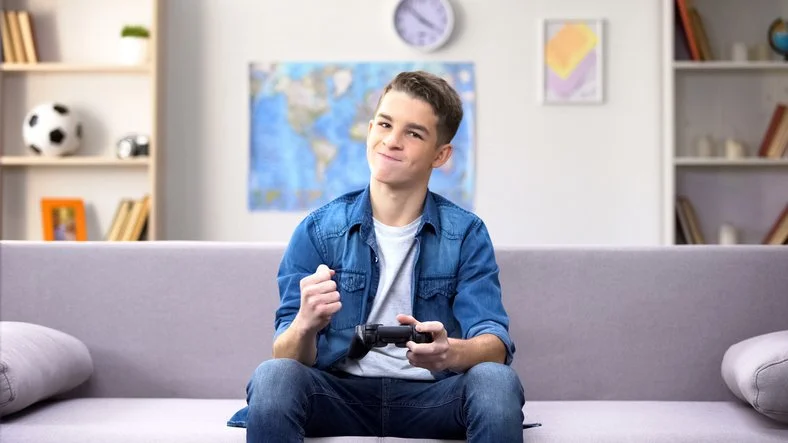
ADHD and Screen Sanity: Why a digital break is good for everybody right now
 For many students, families and educators this fall, school as we’ve known has changed. Hybrid or remote learning means spending up to seven hours daily online for classes and then more time for homework. Many kids like to relax and connect with their friends via gaming, social media apps or FaceTime. Can overusing technology be a problem for the mental health of kids with ADHD? Can it lead to emotional and/or behavioral difficulties? How can you help your family better manage ADHD and screens at home?
Concerns about ADHD and screen overload
Mood and social connections
When kids with or without ADHD spend too much time on screens, they often become more irritable, lose skills for entertaining themselves and develop fewer critical relationship skills (such as reading facial cues and body language, even with masks on).
Movement and exercise
Risks for obesity increase as the lack of physical exercise and fitness goes down. Exercise, on the other hand, would produce important endorphins and hormones that improve emotional as well as physical well-being.
Anxiety and FOMO
Many of kids and teens with ADHD are already prone to anxiety or dealing with anxiety disorders: 34% of kids with ADHD have a diagnosis of an anxiety disorder. They can become more anxious--worried about FOMO (fear of missing out)--about what they are missing online or how to engage with peers virtually. Many feel pressured to upgrade to new and better equipment. In addition, isolation from less in-person peer contact intensifies the possibilities of depression and social anxiety. The combination of ADHD and screen overload makes it hard to learn and practice skills such as reading facial cues or body signals, having casual conversations or nurturing friendships. 
Manage ADHD and screen time with regular digital breaks
A daily, if not weekly, digital break is an effective tool for improving mental health and giving technologically overtaxed eyes and brains time to recoup. By taking a break from being online, children and teens with ADHD can focus on other areas of their lives. They can nurture interests, activities and interpersonal relationships. They’ll connect to and develop other parts of themselves that improve self-esteem and foster positive moods. Whether it’s cooking, shooting hoops, listening to music or walking the dog, their brains and their eyes need time to recover from processing visual information.
Aim for consistency
Set aside some time each day or maybe once per week without technology. Meals are a good place to start. Then, if you can, expand this to a few hours or even one day a week.
 Include the whole family
Creating a digital break doesn’t have to incite meltdowns and explosive family arguments. If you make it something everybody does, then it’s more likely to go over better. What kids, especially those with ADHD, can’t stand is when parents tell them to get off their devices while their parents stay on their own phones or iPads. Of course, you may need to make a plan with extended family or work for handling emergencies. Clarify this exception right from the start.
Make it fun for everyone!
 Instead of “doing nothing” during this time, or only dreaded chores, plan a fun family activity that may include raking leaves followed by ice cream. Or, ride a bike or take a walk to a favorite taqueria. Even thirty minutes daily can offer much-needed relief and give you a chance to interact as a family. If you’re lost about ways to start a conversation, try asking about “a happy and a crappy” of the day or week. One of my clients shared this with me and I laughed aloud. It sounded more fun than my simple “a high and a low.”
Maintaining ADHD and screen sanity in the long run
By taking these breaks from various types of digital life, you can give your family and yourself some space to do something else without FOMO. Everything--social media, gaming, surfing the net--will still be there when you return. While managing ADHD and screen time with a digital break will be challenging at first, the long-term pay-offs are worth it. Stick with it, and negotiate the terms of how and what screen-free time looks like. Expect pushback, and do it anyway. You've got this!
Learn more:
- ADHD and Technology: Sensible Solutions to Screen (In)Sanity
- Kick off the Summer with 6 Easy Strategies for Better Living with ADHD
https://drsharonsaline.com/product/managing-technology-families-video/ https://drsharonsaline.com/product/online-learning-tips-for-parents-bundle/

Additude Mag: Distance Learning Meets ADHD (Again): Smooth the Transition Back to Remote Schooling


Additude Mag: Q: Why Is My Child with ADHD So Angry and Violent Now?