
At-Home Learning with ADHD: Creating an ADHD-friendly learning environment
 Studying in bed? Doing homework on the couch while watching television? Hybrid and remote learning are challenging for so many kids and parents. If you want your child or teen with ADHD to show up for their remote classes with focus and concentrate on their homework/classwork, they’ve got to have a designated study space. For many students with attention or learning challenges, going to class in their rooms with their doors closed may well mean that they are multitasking, distracted and switching from school to social media or gaming. Despite their pushback and complaining, they need an ADHD-friendly environment to help them thrive with at-home learning with ADHD.
School is still in session.
While it’s important to empathize with your kids' boredom or frustration, you’ve also got to make sure they can get their work (or some of their work) done each day.

In addition to establishing a thoughtful daily plan, you can facilitate academic focus and participation by putting together a home study spot. These study spaces don’t have to break the bank. What’s most important is that you’re clarifying what it means to be working versus what it means to be off-duty and where this activity will occur. When kids with ADHD and learning challenges have routines and areas that are dedicated to learning, it’s easier to begin and stick with academic tasks.
Of course, you can’t reproduce school at home. But you can set up an environment that mimics school as much as possible. This aids kids to enter a space that is conducive to thinking and study while simultaneously fosters the organization of their materials, books and technological devices. Remember, you’re entitled to having IEP and 504 accommodations during this time, so ask your school for any resources or tips you may need.
Create a supportive at-home learning environment for kids and teens with ADHD:
1. Create a weekly family meeting.
This is a time to discuss expectations, concerns, review routines and study plans and explore options for things that aren’t working. When you have a weekly meeting, everybody knows that they talk about what they like and what they don’t at a specific time just for that purpose. Some families do this twice a week for shorter discussions; others do it once a week for longer check-ins. Brainstorm what will work with your kids: when they participate in creating a plan, they’ll have more buy-in. Of course, as the parent, you get to make the final decision but please take their opinions into consideration.
2. Make a daily routine and post it.
Kids with ADHD especially benefit from some structure and knowing what to expect. Break up the day into blocks of time forgoing to classes, studying on their own (worksheets, projects, assignments), movement and snack breaks, lunch, going outside, homework, chores and fun screen time.

Be as specific or general depending on what suits your child or teen. Some kids like having activity periods and they can choose what to do from an agreed upon list; others like a more predictable plan. There's no one-size fits all for at-home learning with ADHD.
Whatever you choose, post write it down and post it in the kitchen and in their bedroom. Visual reminders are key for these alternative learners. Try to work alongside your kids or in their presence so it’s clear that certain blocks of time are family work time. Then you can observe their level of participation, take breaks together or offer academic support.
3. Name a study space and personalize it.
 Whether it’s the same spot at the kitchen table, a folding tray that you set up each morning or a desk in a common office, decide where your child will study. Make sure your kids have headphones and are separated into different rooms or different areas of the same room.
Consider getting desk dividers if you have more than one child at home are they are sharing a table. Adjust their screen height so it’s at eye level to avoid neck and back pain, the brightness to reduce eye strain and make sure their feet can reach the floor so they are grounded.
Put together a special storage space like a locker for their books, notebooks or other supplies: use a plastic box, milk crate or make a cubby. This will help them organize their stuff. Discuss how they can personalize or decorate their home study space to make it more comfortable and inviting.
4. Foster time management.
Kids with ADHD often struggle with time blindness. They don’t understand what time feels like, and they’re not aware how to keep track of it. Purchase an analogue clock or timer to teach them this skill. They  need to see time move to grasp it.
Help kids engaged in at-home learning who have ADHD use technology to their advantage--set up alerts and alarms on their phones, or use banners on their devices as reminders. Put these clocks and timers in their study space.
If your child or teen has trouble with time management or completing assignments, talk to the school and ask for assistance.
5. Practice empathy.

Just as it is hard for you to get things done at home sometimes, it’s even harder for your child or teen. Instead of anger and resentment, go with compassion. Most kids don’t want to learn from home any more than you want them there.
In those tough moments, manage yourself before dealing with your son or daughter. When you’re calmer, you can be more open and caring towards them. They simply don’t have the mature brain that you do to process all of this disappointment, isolation and distress.
If they are getting upset, they are showing you that they lack the personal resources needed for the task at hand.Acknowledge their frustration first; problem-solve later. Your empathy will go a long way to diffusing the intensity of their situation and build deeper, lasting connections.
Read more blog posts:
- ADHD Teens and Remote Learning: 5 tips for learning success
- Back to School with ADHD and COVID Uncertainty (again)
- Returning to School with ADHD: Tips on helping anxious kids transition smoothly
Watch on Dr. Saline's YouTube Channel:
- How to Help Your Children Transition Back to School Smoothly (WWLP 22 News Mass Appeal interviews Dr. Saline)
- ADHD Students: Tips for Transitioning Back to In-person Learning (ADDitude ADHD Parenting Q&A with Dr. Saline)
- Help Your Kid Overcome School Anxiety (Operation Parent Webinar with Dr. Saline)
Deeper Dive: https://drsharonsaline.com/product/online-learning-tips-for-parents-bundle/ https://drsharonsaline.com/product/home-seminar/
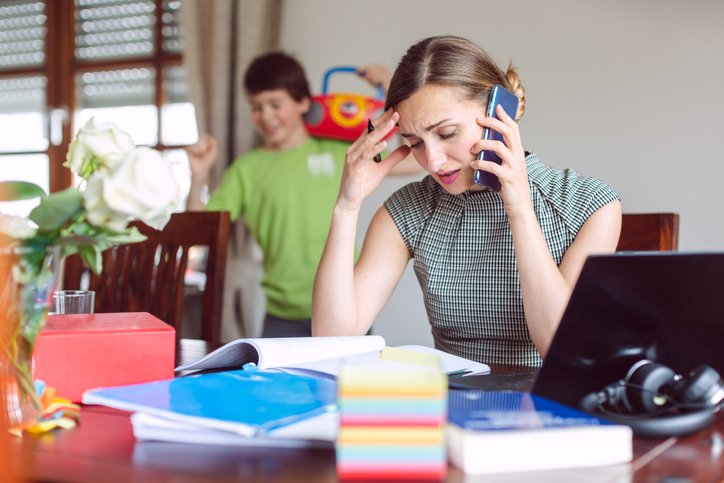
Dealing with Defiant ADHD Teens and Tweens in this Strange COVID Summer
 Now, more than ever, there seems to be very little we can predict and hold onto. Everyday, we hear new reports about climbing COVID cases as we struggle to practice safety measures, keep up with work, manage bored kids and keep our sanity intact. It can all feel too much to handle. Of course, in the midst of trying to keep your head above the water, there’s nothing like a defiant ADHD teen or tween to put you over the edge. How do you cope with the overwhelming stress? What can you do to help your child manage their big feelings and reduce family conflict?
Why teens and tweens with ADHD are engaging in more defiant behavior
Angry and frustrated with the many changes to their lives wrought by COVID, and feeling helpless to do anything, many kids are acting out in ways that are often inappropriate. It seems that they’ve taken a giant step backwards in managing their distress. With their executive functioning challenges related to emotional and impulse control, scattered kids are prone to intense pushback and aggressive anger.  Teens and tweens with ADHD, whose brains mature more slowly than their neurotypical peers, are particularly torn between what they would like to be capable of doing and what they can actually accomplish. They’re often very frustrated with themselves, and, unable to tolerate their shame, act out their personal dissatisfaction towards others--often their parents. They unconsciously want you to make it better for them, just like a young child would. Teens are still struggling with how to tolerate disappointment appropriately and how to pivot when faced with limits they don’t like. With all of the changes surrounding COVID and losses of familiar and beloved activities, the natural challenges with shifting, flexibility and planning for transitions for many kids with ADHD are intensified. Of course, when they are triggered, emotional and verbal impulse control fly out of the window.
 Underneath all of their bluster, many defiant ADHD teens and tweens suffer from low self-esteem and shame. They need tools for expressing themselves appropriately and signs of parental support for their attempts to use these techniques, even if they're not completely successful. You've got to remember that, while they may seem to enjoy the sense of power in the moment, they really don't like the conflict any more than you do. It's just that they lack certain skills which could help them.
Steps to disrupting cycles of defiance for ADHD teens and tweens:
1. Acknowledge their frustration:
Instead of convincing your defiant ADHD teen or tween why things aren't the way that they perceive them, validate their feelings. Mirror what you hear them saying with language like, "I hear that you are upset about X" or, "What you're telling me is Y." When kids feel seen and heard, they'll begin to slow down.
2. Set ground rules about acceptable behavior:
Discuss with your kids what ways of expressing anger or displeasure is appropriate and what are not. Be specific about language and physical actions. In addition, set up incentives for cooperating and logical consequences for obstruction. For instance, "If you curse at me, you will not earn the privilege of your phone for the rest of the day." Or, "If you can go through a day and not scream or break something, you'll earn extra screen time." Work with incentives that matter to them.
3. Plan for arguments:
Let's face it, you will get into fights. Instead of being surprised each time this happens, identify signs that you are heading into the red zone and how to take a planned, timed break. Make a list of acceptable choices for this "Calm-me-down" time and post it in the kitchen and bedrooms. Separate for an agreed-upon time until you can re-convene without hot tempers from defiant ADHD teens or tweens. For some kids, this break may need to be a few hours. That's okay.
4. Decide what's next:
 Instead of trying to teach a lesson, talk about what's needed to move on. Ask questions, listen and reflect back what you hear. Wonder about alternative choices you both could have made in that instant or could make in the future. Collaborate on an action for moving on. Refer back to your agreement about ground rules while staying compassionate but firm. You can talk about any lessons at another time, perhaps the next day in the car or perhaps at a scheduled hour. It's really important to notice and validate the activities and emotions that your defiant teen is becoming triggered. This type of validation will lower their rage and shame. Your goal is to cool the flames in the moment and follow your collaborative agreement. Teaching lessons will come later.
Learn more:

Body Image and ADHD: How to help kids who dislike their bodies

 It's heartbreaking when your son or daughter shares that they don't like their bodies. They may dislike their shape, their height, their hair color, their fingernails, their nose or their feet. All too often, kids (and adults) compare themselves to an unattainable ideal of beauty put forth by mainstream media and culture. We see actors, models and social media icons who look polished and seemingly perfect. It seems impossible for us to measure up because their images are carefully crafted and maintained with lots of money and support staff. Kids also perceive other kids as prettier, stronger and more popular. Sometimes family members may criticize us in particularly cruel and painful ways which makes it even more difficult to love who we are. For kids with ADHD who often get on a hamster wheel of negative thinking and may already feel diminished academically or socially, it's especially tough to stop the repetitive, critical thoughts in their heads. Shifting your views about your body means accepting who you are, what you look like and appreciating our differences. We need to remind kids that yes, they're not perfect but no one is. Of course, the work is really about what's inside as much as what's on the outside. We all have to learn to fill up our own approval cups instead of holding them out for others to fill with compliments and reassurance. This is really tough for kids with ADHD who want to fit in and be accepted by their peers. They want something about themselves to be "normal" since their learning styles are different. Outer appearance, however, may give them some relief but it won't mend the insecurities inside of them. You really can't compare your insides to someone else's outsides. We have to teach our kids and teens that people may look one way but have something entirely unexpected going on inside of them.
 To challenge distorted or negative perceptions about body image, start by helping your son or daughter create a supportive team of caring friends, teachers, mentors and family who love all parts of them.
- Help them take stock of the parts of themselves that they like, make a list and post this in their room or keep in a journal.
- Make a second list of things they don't like and what, if any, action they could take to change those items.
- Name a positive aspect of these parts. For instance, if you don’t really like your feet (like me--they are flat and I have small toes), you could think about what a great job they do of holding you up each day and helping you walk places. Since I can't change them, I try to polish my toenails with a fun color to make them look nicer and deal with them as they are. Your daughter might not care for your straight hair, but it's healthy, shiny and looks good in a ponytail. Your son may feel overweight but is very strong and his size is useful on the football field.
- Go through their clothes and keep the items that they love and make them feel good to wear. Each day, encourage them to dress in something that makes them feel good or boosts their mood. I had one nine year old client who told me: "I dress in the color that I feel that day. Like, if I'm feeling purple, then it's a purple day." Go with it. Perhaps ask a caring friend or relative to come over and help your child or teen purge unwanted items or shop online for some new, fun stuff that you can afford.

If people around your youngster are critical of their appearance, brainstorm ways they can deal with these comments appropriately. In a calm moment, create one or two comebacks that are witty and easy to remember and then practice using them. If you need to intervene with teachers or school administrators to set limits because of suspected bullying, talk this over with your son or daughter and protect their safety. It’s not okay for someone to criticize your body and kids need tools to convey that it has to stop. Saying it was a joke or they were just being sarcastic is also unacceptable. These are simply passive aggressive ways to put someone down. If necessary, encourage your son or daughter to take a break from interacting with this person for a while. Sadly, it’s typical for many kids, especially tweens and teens, to dislike some parts of their body. Sometimes dissatisfaction with one's appearance can have serious and disturbing consequences. Body dysmorphic disorder, bulimia and anorexia are serious mental health conditions that require immediate attention. There's a difference between casually disliking how your bottom looks in a certain outfit or wanting a smaller nose or wishing your torso was more muscular and actively trying to change your appearance or manage uncomfortable feelings with obsessive thinking and self-harming behaviors. If you notice that your child is seeing bodily defects or malformations that do not exist, if your child is showing changes in how, when and what they eat or if they tell you that they are throwing up on purpose, consult their pediatrician or primary care provider immediately.  In the meantime, focus on healthy living. Offer positive body-affirming comments and monitor how you talk about your physique. Our kids notice everything and take in what we say and do. Accepting ourselves, warts and all, is a process that benefits everybody. Empathize with their feelings and also remember to, as the song says, "Accentuate the positive!" without being a pollyanna.

Bare Slate: Living With ADHD At School, At Work & At Home with Dr. Sharon Saline PsyD



ADDitude Mag: ADHD Fatigue – What It Looks Like, How to Motivate



Getting ready: Tips for preparing for school in uncertain times

 After a spring semester with remote learning and its many complications for students, parents and educators, schools are reopening in the fall. While each state is dictating its own guidelines for this reopening, it looks like many independent schools and public school districts will opt for some type of hybrid learning--a mix of in-person and online instruction. These hybrid models differ according to age groups but the details have yet to be ironed out. The general consensus is that primary school students need more face-to-face instruction that allows for safe distancing and mask-free breaks. Secondary school students, those in middle and high school who tended to adapt better to online learning, will likely face some classroom time alternating with virtual instruction. It’s quite possible that these students won’t attend school daily to accommodate recommendations about social distancing and class size. But, with so much still unknown about the fall semester and information about COVID changing daily, parents, kids and educators are understandably anxious and uncertain about what to expect. How can you prepare yourself and your child or teen for the start of school in this constantly shifting situation?
 School closures in the spring and the quick shift to virtual learning combined with job, housing and food insecurity for many people led to high levels of stress and frustration for families. Kids faced losses of daily routines that kept them on track and organized, extracurricular activities that brought them self-confidence, fitness and fun, and regular social interactions with peers and caring adults. They felt angry, discouraged and lonely. As parents, you did the best you could in a tough situation: you managed work, health and safety concerns while making sure your kids with learning differences kept up with their schoolwork. You became their teachers, tutors and advocates--roles, frankly, you were simply not trained for. It's hard to imagine repeating this scenario again this fall, especially for those of you who have returned to work outside of the home.
  Although many things about school remain in flux, now is a good time to begin preparing your kids and yourself emotionally and mentally for the re-entry. Start with these steps:
- Empathize with their anxiety: As children and teens face returning to school, they’ll have mixed emotions. On the one hand, they look forward to seeing friends, reconnecting with teachers and embracing a ‘normal’ structure to their lives. On the other hand, many kids will be nervous about the changes to school, possible COVID contamination and social interactions. You can best assist alternative learners by empathizing now with whatever feelings they have and normalizing them. It's hard for adults to understand what's happening; it's almost impossible for kids.
- Expect an adjustment period: When kids with ADHD feel anxious and nervous, they can be more inflexible than usual. They may act out their concerns with increased anger, aggression or isolation. Talk about the specifics of their worries, explore possible solutions together and offer pertinent information to answer any questions. Facts and knowledge when shared appropriately alleviates anxiety. Talking about the process of adjustment amidst this unfamiliar of this situation will help them understand that adapting to this new normal takes time and practice.
- Collaborate on weekly family meetings: Although the specifics of school are still unknown, you've got to explore and plan for options. When parents and kids collaborate on setting up a learning plan for this fall, the transition back to the new academic picture will flow more smoothly. Make a date and time for a short weekly family meeting to check-in. This is when parents and kids discuss what’s going well, what could be different and how to make those changes.

I'll be addressing specific tools for the transition back to school in future blogs. In the meantime, focus on the present. Things are unfolding so quickly that it's important not to get ahead of yourself. Try not to worry. You'll have the information you need soon enough and then we can figure out what to do next.

More Tips for Dealing with Defiant ADHD Tweens and Teens in This Strange COVID Summer
Now, more than ever, there seems to be very little we can predict and hold onto. Every day we hear new reports about climbing COVID cases as we struggle to practice safety measures, keep up with work, manage bored kids and keep our sanity intact. It can all feel like too much.
Of course, in the midst of trying to keep your head above your water, there’s nothing like a defiant tween or teen with ADHD to put you over the edge. Angry and frustrated with the many changes to their lives wrought by COVID and feeling helpless to do anything, many kids are acting out in ways that are often inappropriate. It seems that they’ve taken a giant step backwards in managing their distress. With their executive functioning challenges related to emotional and impulse control, scattered kids are prone to intense pushback and aggressive anger. What can you do to help them manage their big feelings and reduce family conflict?
Coping with ADHS and the dramatic changes from COVID pandemic
Teens and tweens with ADHD whose brains mature more slowly than their neurotypical peers are particularly torn between what they would like to be capable of doing and what they can actually accomplish. They’re often very frustrated with themselves and, unable to tolerate their shame, act out their personal dissatisfaction towards others--often their parents. They unconsciously want you to make it better for them, just like a young child would. Teens are still struggling with how to tolerate disappointment appropriately and how to pivot when faced with limits they don’t like.
With all of the changes surrounding COVID and losses of familiar and beloved activities, the natural challenges with shifting, flexibility and planning for transitions for many kids with ADHD are intensified. Of course, when they are triggered, emotional and verbal impulse control fly out of the window.
Recognizing shame in ADHD tweens and teens
Underneath all of their bluster, many defiant tweens and teens suffer from low self-esteem and shame. They need tools for expressing themselves appropriately and signs of parental support for their attempts to use these techniques, even if they're not completely successful. You've got to remember that, while they may seem to enjoy the sense of power in the moment, they really don't like the conflict any more than you do. It's just that they lack skills.
Follow these steps to change the cycle of defiance:
1. Acknowledge their frustration
Instead of convincing your tween or teen why things aren't the way they perceive them, validate their feelings. Mirror what you hear them say with language like "I hear that you are upset about X" or "What you're telling me is Y." When kids feel seen and heard, they'll begin to slow down.
2. Set ground rules about acceptable behavior
Discuss with them what ways of expressing anger or displeasure is appropriate and what are not. Be specific about language and physical actions. Set up incentives for cooperating and logical consequences for obstruction. For instance, "If you curse at me, you will not earn the privilege of your phone for the rest of the day." Or, "If you can go through a day and not scream or break something, you'll earn extra screen time." Work with incentives that matter to them.
3. Plan for arguments
Let's face it, you will get into fights. Instead of being surprised each time this happens, identify signs that you are heading into the red zone and how to take a planned, timed break. Make a list of acceptable choices for this "Calm-me-down" time and post it in the kitchen and bedrooms. Separate for an agreed-upon time until you can re-convene without hot tempers. For some kids, this break may need to be a few hours. That's okay.
4. Decide what's next
Instead of trying to teach a lesson, talk about what's needed to move on. Ask questions, listen and reflect back what you hear. Wonder about alternative choices you both could have made in that instant or could make in the future. Collaborate on an action for moving on. Refer back to your agreement about ground rules while staying compassionate but firm. You can talk about any lessons at another time, perhaps the next day in the car or perhaps at a scheduled hour.
It's really important to notice and validate the activities and emotions that your defiant teen is becoming triggered. This type of validation will lower their rage and shame. Your goal is to cool the flames in the moment and follow your collaborative agreement. Teaching lessons will come later.
Read more blog posts. https://drsharonsaline.com/product/home-seminar/

EsaCare: Top 3 Benefits of an Emotional Support Animal on ADHD by 14 Renowned Experts
People suffering from mental health conditions experience multiple emotions that change through the day daily. Support animals for them are meant to help their owners keep their emotions in check and remain calm. It helps if the animal you choose to support you is cuddly and cute. ADHD is among the most severe mental health conditions. It affects a patient’s brain and progresses to affect different areas of his/her life in tangible ways when struggling to keep its symptoms in check.
One of the ways that experts have come up to deal with some of the symptoms of ADHD is by having an emotional support animal {ESA}. A few people are nonetheless still unconvinced about the impact of the same on the control of their ADHD symptoms.
We asked fifteen experts; ‘’if you had to list the benefits of an ESA for patients who have ADHD, what are the three leading answers that you will qualify in your list?’’ Here are tidbits on the experts we chose to answer this question.
Click logo below to read more.


Tired of Adolescent Pushback? Here's how to Understand and Cope with Defiant Teens

 Teenagers can push your buttons like no one else. Teens with ADHD--living through the hormonal turmoil of adolescence in addition to struggling with executive functioning challenges such as impulse and emotional control, organization and motivation, can simultaneously need your support and reject your concern. Unable to skillfully self-regulate, small issues can escalate into volcanic eruptions within seconds. The conflict is as frustrating for you as it is distressing for them. Nobody wants to live in a home marked by anger, yelling and unhappiness amidst frequent provocations. How can you reduce your family's arguments and find better alternatives? Teenagers push back against their parents as part of their quest to answer the two major developmental issues of adolescence: “Who am I?” and “Where do I belong?” When teens are defiant--rebelling and questioning adult authority--their behavior reflects their burgeoning efforts to separate from their parents and other caring adults while still maintaining their connection. Learning to navigating these attachments while forming your own identity is extremely complicated. It’s a push-pull dynamic inside of them. They want to exercise their independence by making their own decisions and rejecting parental directives but they also rely on their folks for support, guidance and acceptance. They feel confused and resentful but lack the self-awareness and maturity to make more effective choices.
 Defiance is a relationship problem: communication has broken down and no one feels listened to. Teens become increasingly defiant and reactive when they feel like their needs or opinions are unseen and unacknowledged. They are still struggling with how to pivot when faced with limits they don’t like and tolerate disappointment. As their parents, they need you to meet them where they are: to focus more on your relationship than being right. Expect their pushback and create a predictable plan for dealing with it--regardless of the content. It’s okay for teens to feel angry at their parents for saying “NO” but it’s not acceptable to rage at them, to break things, to damage the house or threaten others. Defiant teens often feel bad about themselves after these episodes. They regret their outbursts but will frequently hide their shame rather than let you see their vulnerability. What they need are tools to manage their intense feelings:
- Increase their body awareness when they are becoming activated: Identify the signs that things are heating up.
- Discuss clear actions for calming down (listening to music, going for a walk or run and texting with a friend): Write these down and post them.
- Review options for what to do or say when they are upset instead of acting their feelings out. Create a few “If this, then that” phrases such as “If I don’t like what you are saying, then I’ll say that instead of cursing at you or calling you names.’
- Acknowledge their efforts whenever they try to make different choices and when they succeed in behaving in alternative, more effective ways. “I see that you really tried to manage your temper for several minutes. That’s progress.”
- Use incentives that matter to your adolescent and link these to the behavioral changes you want to see. When defiant teens have input, they have better buy-in.
 Remember, they don’t want conflict in your home any more than you do. They just don’t see other ways to get what they want. Working collaboratively and using STOP, THINK, ACT can further reduce your arguments and their surliness:
- Plan for disagreements: STOP: In a calm moment, acknowledge that you will inevitably clash over issues. Instead of heading towards WWIII, create a plan for calling a STOP in the action. The goal of this Time Apart is to cool down before brainstorming any solutions. Set a specific amount of time for this Time Apart, usually around 15 minutes is long enough for the adrenalin-fueled system to calm down. Describe signs and behaviors that indicate this is needed. Make a list of what your teen can do during this break to regulate themselves.
- Re-group for listening: THINK: This is a time where you listen and reflect what your teen tells you is going on for them, how they could make a different choice and share what you can do better too.
- Move forward: ACT: Together, figure out what the next right thing to do is. How can each of you move on from what’s happened? Brainstorm possible solutions and validate any cooperation you receive. This encourages teens to participate in the future.


Full Prefrontal Podcast: Ep 112 Dr. Sharon Saline – Counterbalancing Patterns of Failure

Click the logo below to listen.


Want a summer of sanity? Here are five tips for living better with your ADHD kids today!

 With some schools already closed and others finishing up for the summer, parents of kids with ADHD are all asking the same question: What do we do now? Most in-person camps and activity programs have been cancelled and many families have lost necessary childcare, much-anticipated vacations and fun social gatherings. Instead, you are facing weeks of more time spent sheltering-in-place, supervising your children and teens while trying to work from home or scrambling to find safe alternatives so you can go to your job. You’re tired, they are bored and everyone is frustrated. What are your options for salvaging your summer? Before doing anything else, offer empathy to your kids for their disappointment. They’ve lost a lot and kids with ADHD, who tend to have a low frustration tolerance anyway, are particularly worn down. They can be more reactive, less cooperative and increasingly discouraged about their isolation from friends and family. Children and teens are fed up and you are the likely target. The more you try to enforce safe guidelines for preventing exposure to COVID-19, the angrier they can get. They just want it to be over. Other kids are very anxious about re-connecting with the outside world in spite of taking adequate safety precautions. Listen to their concerns and opinions, validate their experiences and acknowledge their positions. When kids feel seen and heard, they are much more willing to work with you rather than against you.
  Collaboration and consistency are the keys to a successful summer for all of you. When you work together on brainstorming ideas, try out possible solutions and aim for steadiness rather than perfection, you can make this challenging situation work. Set up a time for a weekly family check-in. It doesn’t have to be long but everybody needs to participate. Motivate reluctant teens to join you by offering this as a solution to unwanted conflict and ‘nagging.’ These discussion will give you a space to review what’s been happening and tweak plans instead of dealing with spontaneous arguments where nothing can be reasonably discussed. Now that you’ve got that piece in place here are five tips for your transition to summer:
- Create a daily routine: Divide the day into chunks of time and allocate these
 periods to various activities including exercise, projects, screen time and rest. Include meals and snacks. This doesn’t have to be rigid but it needs to be consistent. Think like a camp counselor. For example, maybe there’s wake up by 9, breakfast, getting dressed, activity period #1, snack, activity period #2, lunch, quiet time for reading or listening to music--something that promotes calm, activity period #3, screen time, dinner, family game or television show, bath or shower, pajamas and lights out by 10.
 - Use guided free choice: Give the choice between 2 options during the activity periods that you come up with together. When kids with ADHD can make decisions about what they do, they feel more empowered and have more buy-in. Generate a list of possibilities and then assign two to each activity period. Ideas can include: projects they can do with their hands including crafts, building models or constructing a fort, riding bikes, gardening or just playing in the yard, making a movie, recording a song, playing music, any sports, drawing, painting something including a piece of furniture for fun, cooking, taking action to help others, interactive screen time like visiting a museum, zoo or aquarium, doing puzzles, playing with building blocks or Lego, online games like Fortnite or Dungeons and Dragons, etc. Stick with what engages them and schedule their screen time for the afternoon as much as possible. This is when kids tend to flail around the most, especially as their medications wear off.

- Worry less about the ‘summer slide’: Your son or daughter needs a break from school for the next few weeks. They’ve been slogging through with online learning that’s probably been unpleasant and difficult for them. Take a month off. While reading texts and writing messages may seem fruitless, kids are still reading and writing. You can put free reading into the daily schedule and let them pick the materials including the sports page in the newspaper, graphic novels or any text of interest. Maybe they like to play Soduku or do word searches. These are all ways that they are using academic skills. After they’ve had enough time to recover, if you want to add some studying time to the summer schedule you can but keep it limited to a few times per week for no more than two hours.
- Foster family technology and/or social media breaks: If you don’t put your phones or computers down, your kids won’t either. They will call out your “hypocrisy” and get angry that you can answer your phone or be online and they can’t. If you must leave your device on for work emergencies, then make that very clear and keep it on vibrate in your pocket. Figure out a time each day or each week when everyone goes screen free. Meals are a good place to start. The goal is to create a family ritual that encourages engagement away from texting and social media.
- Arrange and discuss safe social interactions: Kids with ADHD need very
 explicit guidelines for practicing social distance with peers and family members. Take a tape measure and show them what six feet looks like. Explain the basic science of why and how COVID-19 is so contagious and the risks that exist not only for them but for others too. Talk about how and where children and teens can safely hang out with friends--a park, a driveway or a backyard. Help younger kids set up get-togethers and offer assistance to teens if they are struggling. Work with them to find safe and fun outlets and activities to connect with peers. The other day I saw four teen boys playing frisbee in the park with masks and gloves. I was very impressed!
This summer is uncharted territory for all of us. Make sure that you get some time for self-care too. Take a rest period for grounding yourself when your kids are taking theirs--even if it’s just five minutes for a cup of tea, some yoga stretches or a catnap. You need to regenerate this summer too!
Psychology Today: Graduating Seniors with ADHD


Navigating Re-integration for Kids with ADHD: Four Essential Tips

 As things start to open up, we are now faced with dozens of new challenges. Kids want to see their friends, go to carry-out restaurants, be outside and have some fun. How can they safely socialize with peers, play outdoors or visit with extended family? For tweens and teens who are eager to experience “freedom” from parents, how can you monitor what they’re doing to make sure they are safe without being overly intrusive or micromanaging their activities? Kids with ADHD who struggle with impulsivity, emotional control and sound judgment have higher risks for abandoning their masks and social distancing guidelines in the service of doing what feels good RIGHT NOW. This is worrisome but actually manageable. The keys to successfully re-integrating are starting to re-engage slowly (with supervision) and keeping the COVID safety rules clear and simple. Despite our desires to go back to ‘normal’ life, there’s still a lot of uncertainty in our world. Without a vaccine, wide-range testing and public cooperation around safety precautions, there remains a high risk for all of us in terms of contagion, even if the nice spring weather fools us into thinking we are safe. This means that there’s no real rush to re-integrate except in our kids’ minds. They are so fed up with being isolated, attending school online and missing their friends.
  It’s hard normally for kids with ADHD to be patient: now, it’s almost impossible. They want aspects of their lives back and you also want them to. It’s just a question of how, what and when. Plus, transitioning back into the world when there’s no dependable solution for combatting or managing COVID-19 is naturally anxiety-provoking. For kids with ADHD and anxiety, this can feel overwhelming. Collaboration is the key to a successful transition for your family. Work together to create a plan that opens your family up in ways that feel safe to you but include some of their ideas and desires. As the adult, of course, you have the final say. Strategize with them about how to re-integrate in stages, so they can exercise their needs for autonomy and you can see if they are following your guidelines.
Here are four tips for easing this transition in your family:
Use guided free choice:
 Many kids, especially tweens and teens, really want some authority over their lives after having no space from their parents. Brainstorm ideas about how to transition and stay open to their ideas. Narrow these down to solutions you agree on. Create a list of appropriate activities and behaviors. Let them pick one of these to try. When kids exert choices over their lives, they feel a greater sense of maturity and responsibility. We want to nurture this right now. If they can’t follow through or refuse to work with you, then they are showing you that they aren’t ready for the freedom they say that they want. Going out and being with other people is an earned privilege.
Start slowly:
It will take some time to build your trust of their consistency and follow-through on your agreements. Decide in advance how you can monitor their actions without being a helicopter parent. Consider trying social interactions where you can see them: in your backyard, going to a park together, outside on the front steps. Are they wearing a mask? Are they staying six to eight feet apart? You can review how things went afterwards and appreciate their efforts when they cooperate.
Share important facts:
This generation has the world at their fingertips. They can research anything they want to know and often they do. But they are also susceptible to misinformation and rumors. Stay informed about the latest COVID safety recommendations and how the virus is spread.  Share these basic facts with your kids (and the sources with tweens and teens who may doubt you). This will help reduce their anxiety and give you a chance to answer their questions. Talk about what recommendations make sense for your family, regardless of what other people are doing. Remind them that people have different levels of comfort with risk and we need to respect that.
Plan for setbacks:
Rather than being surprised when kids violate your guidelines and beginning World War 3, predict and explore the difficulties you foresee. Ask them to do the same. Discuss possible consequences for their choices in terms of accountability and learning new skills. If your teen son drives other kids in his car without your permission, even if they kept their masks on, then maybe he’s not ready to drive alone yet.  He’ll need to sanitize the car and have friends over the backyard for a week or two to hang out until he re-establishes your trust. If your sixth grader goes rollerblading and you spot her whizzing by without her mask, then maybe she’s not ready for excursions to the park like that and has to practice activities with her mask on. Be prepared for times when your son or daughter comes up with the most creative ways to work around the rules as only kids with ADHD can do. If this happens, take a deep breath, wait to respond until everybody’s cooled down and then have a calm conversation. Go back to your agreement and review the family’s guidelines. Hang in there. With your practice, you'll figure this out!
Grown & Flown: Psychologist Offers 5 Ways to Help Reduce Your Family’s Stress and Anxiety

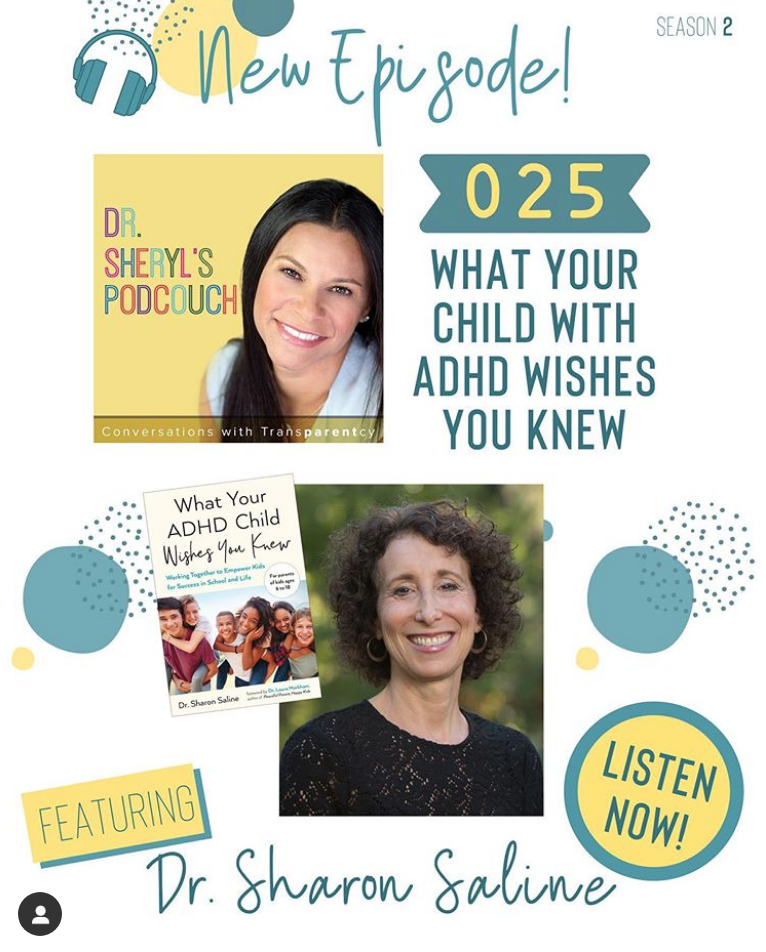
Sheryl's Podcouch Episode 025 - What Your Child with ADHD Wishes You Knew with Dr. Sharon Saline


Improving Time Management COVID Challenges for Kids with ADHD

 Now more than ever, it seems like kids of all ages are wrestling with understanding, budgeting and managing their time. One parent tells me: “My 10 year old daughter dawdles for over an hour at night before going to bed. It takes her forever to get ready.” Another one shares: “My teenager will spend hours online gaming or surfing the net. He forgets to eat or use the bathroom.” Sound familiar? In a world of no schedules, kids with ADHD have lost the typical markers for knowing when one thing stops, when something else should begin and how long a task should take. Why do they struggle with time and how can you assist them in improving this key executive functioning skill? Many kids with ADHD develop their sense of time more slowly than their neurotypical peers. Their brains live primarily in the present: whatever is happening now matters most, with little concern for what comes afterwards. As kids mature into young adulthood, they are better able to consider the implications of their current actions with future endeavors, situations and consequences. But for now, the unhappiness and boredom of the COVID confinement make it incredibly difficult to consider what’s coming down the pike. They are bored and confused, wandering around in a vast expanse of unstructured time.
  Start by providing basic structure to their days and using alarms and alerts to mark the beginning and ending of school blocks, snack, water or meal breaks, exercise or outside experiences and socializing. Do this for yourself too. Since stress hits weaker executive functioning skills first, many kids with ADHD are at an additional disadvantage in terms of organization, planning, persistence and time controls. Many of them will overfocus on tasks which further complicates matters. Prolonged periods of hyperfocus actually deplete the glucose centers in the brain, raise cortisol levels and increase internal stress. Taking planned breaks at agreed upon points (anywhere from thirty to ninety minutes depending on age) helps us reset. Luckily, time management responds extremely well to direct instruction. This means you can work on improving this issue successfully and see progress rather quickly. You’ll need to expect to rely on cueing and make agreements about reminders with your child or teen. We want to improve this skill together based on what makes sense to their unique brains and what you’ve observed about their habits. Follow these tips for teaching your son or daughter how to understand and manage time better:
- Externalize time: Kids with ADHD struggle to feel time: they don’t have an internal sense of minutes or hours passing. Use external, analog clocks or a Timed Timer so that kids can see time moving which will lead to them feeling it.
- Build awareness about time: Neutrally point out how their actions relate to time by verbalizing things like “Look at this, cleaning up your toys took five minutes” or “Let’s set the timer and see how long it takes to put on our pajamas and brush our teeth.” Create games to see who can pick up 20 items from their bedroom fastest or who can monitor the timer when the cookies are backing.
 Model how to refer to clocks to check on the time.
 - Teach estimation skills: Being able to estimate how long something will take is a valuable tool that is never too late to learn. You have to show your kids how to think backwards about time because this is how they can figure out how to plan accordingly. For instance, let’s say they need to be in their online class at 9 a.m. Work backwards, listing the activities they need to do beforehand and guess how long each task will take: getting out of bed (15 minutes), using the bathroom (5 minutes) putting on clothes (10 minutes), brushing their teeth and hair (10 minutes), eating breakfast (15 minutes) and setting up the computer with necessary school items (10 minutes), messing around (10 minutes). If you add these together and subtract 75 minutes from 9 a.m., then you've got to set the alarm at 7:45 am.
- Consider the Now/Not now brain: Kids with ADHD are engaged in the moment. Whether it’s compelling or tedious, what’s happening now is what they are focused on. Because it’s tough to shift from one thing to another, they face challenges with following alarms, alerts and reminders. Talk with them about how they can make transitions more successfully. Use simple breathing exercises (alternate nostrils or hands on the stomach), body awareness techniques (noticing heart rate or tension) or statements to direct themselves (“I need to stop gaming now. I can return tomorrow” or “I have to begin my math homework but I can take a break in fifteen minutes.” These tools will aid them in leaving one activity and going to something else.
 Be patient. Keep these scaffolding tools in place longer than you think. Most of all, cut yourselves and your kids some slack during this strange situation. Some days managing time will go better than others. That's okay! Focus on working together to learn this important skill.

ADDitude Mag: Is My Child’s Distress Normal? Or Do We Need Help?

ADDitude Mag: My ADHD Teen Always Blows Me Off — How Do I Get Through to Her?

ADDitude Mag Free Webinar Replay: Fix My Family’s Morning Routine! Expert Solutions to Your Worst ADHD Schedule Problems
In this hour-long webinar-on-demand, learn how to fix your family’s morning routine problems with real, specific solutions, with Sharon Saline, Psy.D.
Your morning routine is broken — and exhausting. Your morning routine is broken — and exhausting. Your child stays up too late and sleeps half the morning away, or drags their feet over the slightest bit of work. Even without an early school bell, it’s nag nag nag to get your child to engage with remote learning. A high-protein breakfast of fresh eggs and fruit? Ha! You feel accomplished if no one is screaming. In this webinar, ADHD expert Sharon Saline, Psy.D., will solve the new, specific problems with your family’s morning routine. Use the comments section below or email customerservice@additudemag.com to ask questions about the following:
- How to get your child out of bed at a reasonable hour
- How to get your child to follow a morning checklist without nagging
- How achieve ADHD symptom control first thing in the day
- How to get learning underway without battles
- How to integrate exercise and/or mindfulness into your morning
Click logo below to watch!

IECA Insights: Female Students With ADHD: How IECs Can Help