

RSD Depth Model™
Understand Rejection Sensitivity Dysphoria, Break the Cycle of Self-Doubt, and Build Emotional Resilience
Overview of the RSD Depth Model™
Living with ADHD and rejection sensitivity can mean experiencing criticism, disappointment, or perceived rejection with an intensity that feels difficult to manage. A passing comment, an unanswered message, or a change in someone's tone can trigger overwhelming emotions, self-doubt, or the urge to withdraw. These reactions can feel immediate and confusing, especially when you aren't sure why something has affected you so deeply.
I developed the RSD Depth Model™ as a practical, compassionate educational framework to help people understand what's happening beneath these emotional responses and recognize the patterns that keep rejection sensitivity going over time. Rather than focusing only on the reaction itself, this model explores the underlying beliefs, emotions, interpretations, and protective behaviors that contribute to rejection sensitivity.
The RSD Depth Model™ has two interconnected components: the RSD Iceberg™ and the RSD Loop™. The RSD Iceberg identifies the underlying beliefs, emotional experiences, and protective strategies associated with rejection sensitivity. At the same time, the RSD Loop illustrates how these elements interact, reinforce one another, and perpetuate recurring patterns of emotional distress.
Together, these components help people understand why rejection can feel so powerful, what keeps these patterns going, and where they can begin to make changes.
This approach is especially helpful for people navigating ADHD, anxiety, rejection sensitive dysphoria (RSD), perfectionism, people-pleasing, and persistent self-doubt. By understanding what lies beneath their reactions, they can recognize familiar patterns, respond with greater self-compassion, and develop more effective ways to manage emotionally challenging situations.

1. The RSD Iceberg™: Understanding What's Beneath the Surface
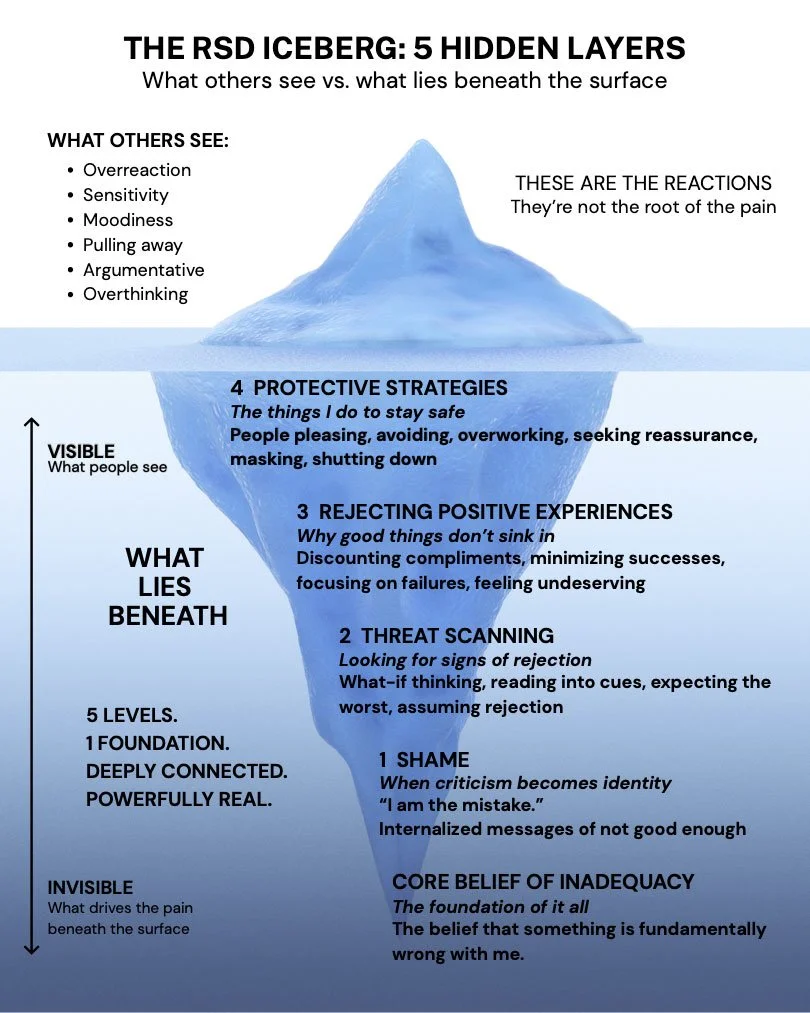
The RSD Iceberg™ illustrates the hidden layers beneath the emotional reactions and behaviors we often associate with rejection sensitivity. On the surface, someone may become defensive, withdraw, overthink, seek reassurance, people-please, or react strongly to perceived criticism. Beneath these visible responses are five interconnected layers that help explain why these experiences can be so emotionally powerful.
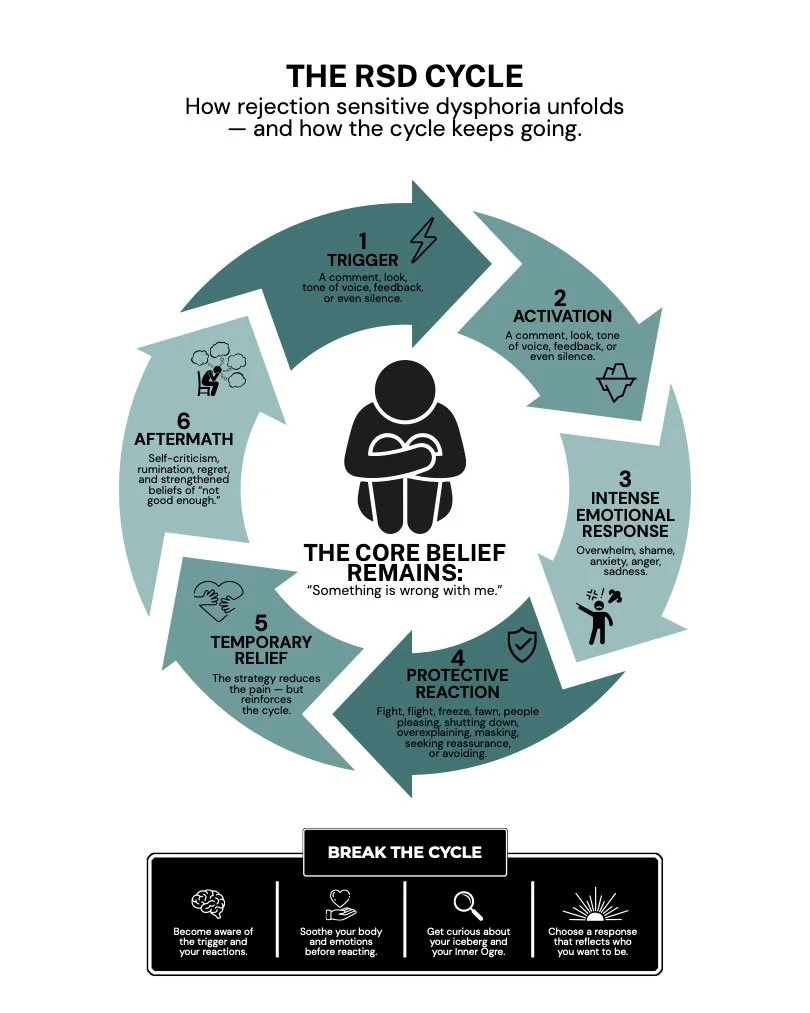
For example, someone with ADHD may interpret an unanswered message as evidence that a friend is upset with them. Feelings of inadequacy and shame emerge, followed by worries about what they may have done wrong. They start reviewing past conversations, discounting positive interactions, and looking for signs the friendship is in trouble. They may send repeated messages seeking reassurance or withdraw to avoid further disappointment. These responses can increase anxiety and reinforce the expectation of rejection the next time a similar situation occurs.
The RSD Loop™ helps people recognize how these patterns become self-reinforcing and, importantly, where they can interrupt them.
Rather than viewing rejection sensitivity as a single emotional reaction, the model illustrates the ongoing relationship between underlying beliefs, emotional responses, interpretations, and protective behaviors.
The Two Components of the RSD Depth Model™
1. The RSD Iceberg™: Understanding What's Beneath the Surface
The RSD Iceberg™ illustrates the hidden layers beneath the emotional reactions and behaviors we often associate with rejection sensitivity. On the surface, someone may become defensive, withdraw, overthink, seek reassurance, people-please, or react strongly to perceived criticism. Beneath these visible responses are five interconnected layers that help explain why these experiences can be so emotionally powerful.
The five layers of the RSD Iceberg™ are:
Core Belief of Inadequacy: Deeply held beliefs that you're not good enough, are flawed, or fall short of expectations. These beliefs may develop from repeated criticism, misunderstanding, disappointment, or feeling different from others.
Shame: Painful feelings of embarrassment, inadequacy, or personal failure that reinforce negative beliefs about oneself. Rather than thinking, "I made a mistake," someone may believe, "There's something wrong with me."
Threat Scanning: Heightened attention to possible signs of rejection, criticism, or disapproval. A person may closely monitor someone's words, facial expressions, tone of voice, or behavior, anticipating that something negative is about to happen.
Rejecting Positive Experiences: Discounting compliments, reassurance, acceptance, or positive feedback that contradicts existing beliefs of inadequacy. Someone may dismiss praise as insincere, minimize accomplishments, or focus on one negative comment despite receiving several positive ones.
Protective Strategies: Learned behaviors intended to prevent or reduce emotional pain, such as people-pleasing, perfectionism, withdrawal, avoidance, masking, overexplaining, or seeking repeated reassurance. Although these strategies may provide temporary relief, they can also reinforce feelings of insecurity and fear of rejection.
These five layers are interconnected and don't necessarily occur in a fixed sequence. They influence how people interpret experiences, respond emotionally, and attempt to protect themselves from future hurt.
What looks like an overreaction may reflect deeper feelings of not being good enough, expectations of rejection, or learned attempts to avoid emotional pain. The RSD Iceberg™ encourages people to look beneath visible behaviors with curiosity and compassion instead of judgment.
How the RSD Depth Model™ Works
When people understand both the hidden layers of rejection sensitivity and the cycle that keeps it active, they can create space between an emotional trigger and their response.
Instead of immediately believing every self-critical thought or reacting out of fear, they can pause, notice what's happening, and consider another interpretation or response.
The RSD Depth Model™ helps people:
Recognize underlying beliefs and emotions connected to rejection sensitivity.
Identify patterns of shame, self-criticism, and perceived inadequacy.
Understand how anxiety and threat scanning influence interpretations of social experiences.
Notice when they are discounting positive feedback or experiences.
Recognize protective behaviors such as avoidance, people-pleasing, perfectionism, and reassurance seeking.
Develop emotional regulation skills and respond with greater self-compassion.
Identify opportunities to interrupt recurring patterns of rejection sensitivity and build greater confidence and emotional resilience.
The goal isn't to eliminate emotional sensitivity. It's to understand these experiences more clearly and develop tools that support healthier responses to criticism, uncertainty, and disappointment.
Incorporating the RSD Depth Model™ into Daily Life
The first step in working with the RSD Depth Model™ is recognizing when rejection sensitivity has been activated.
Notice what happened before your emotional response. Was it a comment, an unanswered message, a disagreement, or a situation where you felt overlooked?
Next, consider what's happening beneath the surface. Are you questioning your worth, feeling ashamed, anticipating additional rejection, or overlooking information that might offer a different perspective?
Pause and give yourself time to regulate before responding. Ask whether your interpretation reflects what you know for certain or what you're afraid might be true. Look for positive or contradictory evidence that you may have dismissed.
Finally, consider what would genuinely support you in that moment. Instead of automatically withdrawing, overexplaining, or seeking reassurance, you can practice responding with self-compassion, curiosity, and greater emotional awareness.
These shifts take time and practice. You may still experience intense feelings, but you can learn to navigate them without allowing every moment of perceived rejection to define how you see yourself.
This isn't about becoming less sensitive. It's about understanding your sensitivity and building a healthier relationship with your emotional experiences.
Professional and Educational Applications
The RSD Depth Model™ is an original educational framework developed by Dr. Sharon Saline to help individuals, families, and professionals better understand and address rejection sensitivity, particularly in the context of ADHD and anxiety.
The framework is designed for educational presentations, professional training programs, workshops, publications, companion workbooks, and related teaching materials. It may also be used to support psychoeducation and therapeutic conversations about rejection sensitivity, emotional regulation, and patterns of self-doubt.
Its two interconnected components, the RSD Iceberg™ and the RSD Loop™, offer a structured way to understand the underlying emotional experiences associated with rejection sensitivity, recognize recurring patterns, and identify opportunities for change.
Drawing upon Dr. Saline's clinical experience, research-informed psychological principles, and practical approaches to emotional regulation and self-compassion, the model translates complex emotional experiences into accessible concepts that people can understand and apply in everyday life.
Learn More and Work with Dr. Sharon Saline
Would you like to better understand rejection sensitivity and learn practical strategies for managing its impact on everyday life? Dr. Sharon Saline offers educational workshops, webinars, professional trainings, and consultations featuring the RSD Depth Model™, including the RSD Iceberg™ and RSD Loop™.
Designed for individuals, parents, educators, mental health professionals, and organizations, these programs provide practical tools for recognizing patterns of rejection sensitivity, reducing self-criticism, improving emotional regulation, and building greater confidence and resilience.
Contact Dr. Sharon Saline to inquire about scheduling an educational presentation, workshop, professional training, or consultation featuring the RSD Depth Model™.
Dr. Sharon's Philosophy
I believe that people living with ADHD, anxiety, and rejection sensitivity deserve to understand their emotional experiences without shame or judgment. Intense reactions to criticism or rejection don't tell the whole story of who you are or what you're capable of.
The RSD Depth Model™ is rooted in compassion, curiosity, and practical strategies for everyday life. Drawing from decades of clinical experience and my work with individuals and families navigating ADHD, this framework encourages us to look beyond visible reactions and understand the beliefs, emotions, and protective patterns underneath them.
When you understand why rejection feels so powerful, you can also begin to change how you respond to it. With emotional regulation, self-compassion, and greater awareness of your thinking patterns, you can reduce the hold these experiences have on your confidence and relationships.
You deserve to feel secure in who you are, even when facing criticism, uncertainty, or disappointment. My goal is to help you develop the understanding and tools to get there.