

Habits that Hurt Mental Health

I see a few major habits in my clients that hurt their mental health more than help them.
-
Spending too much time on social media: Social media not only seems to suck up time faster than you notice but it also is built to so that people compare themselves to others. These comparisons are rarely favorable and people walk away with not feeling positive about themselves. As one adolescent girl told me, “No one ever posts pictures of their face mid-menstrual break-out or of their bombed test grade.” People feel pressured to keep up with friends, stay in touch and maintain an image that they’ve created. This creates more stress in their lives which interrupts their ability to reflect on themselves, what they think and create a sturdy sense of self.
-
Eating fast food on the run instead of preparing healthy meals and sitting down to eat them: We are so much of what we eat and we eat non-nutrutious food quickly, we’re not providing our brains or bodies with the appropriate fuel needed to think and function well. Sharing a meal is not only good for our physiology but it also provides an opportunity to connect with people face-to-face and talk about our lives. During a sit down meal, our bodies slow down and properly digest our food so we can absorbe the nutrients and simultaneously take a much-needed break from the chaos of our lives.
-
Having arguments via texting or emailing: You can’t take an emotional weather report via electronic communication. If you say something difficult or sensitive this way, there’s no way for you see how your words affected the other person or perceive whatever feelings are brewing inside them. It’s easier to disengage and avoid accountability for your words and actions. People need to learn and practice interactional skills not only for healthy personal relationships but also for work and life situations where they have to deal with others.

Forget Freaking Out: How to parent panic attacks in kids with ADHD

 Does your child or teen ever tell you that they are having a panic attack? Or, do they describe symptoms such as shortness of breath, a pounding heart and the sudden feeling like the world is closing in on them? Panic attacks are awful for everyone who experiences them. Kids can feel terrified, unsure about what is happening to them. Parents, desperate to assist their kids can be freaked out themselves and confused about what to do. Kids who live with ADHD typically struggle managing their big feelings anyway. In these moments of acute anxiety, they told me that it's like flailing around in rough waves with no raft. Since there's no rational thinking in the midst of a panic attack, it doesn't work to trying to talk to your child reasonably in these moments. Yelling at them to calm down is equally ineffective. Panic attacks are best managed by having a concrete set of steps to follow that you and your child or teen have figured out beforehand. When you work together to name the triggers and notice the warning signs, it's easier to create an effective strategy to use in a panicked moment.

The goal isn't to eliminate panic attacks: that may be unrealistic for now. Instead, the immediate goal should be to teach your son or daughter techniques for self-soothing in uncomfortable moments. Focus on becoming familiar with the clues that anxiety is rising and how to respond to those signals to lessen their intensity. We want to turn down the volume on the anxiety so it doesn't mushroom into a panic attack.
Following the plan that you've previously created and practiced together instead of trying to find a solution in the middle of a heated, emotional moment keeps things from escalating even further. Over time, by learning how to use tools to reduce anxiety, kids become more confident about what to do to soothe themselves when they start to feel agitated. The frequency of panic attacks goes down.
While the following suggestions are meant to be helpful, they do not substitute in any way for taking your child to see their physician to rule out any physiological issues that could be causing panic. Please check out other causes too, such as bullying, learning disabilities, problematic teacher dynamics or other environmental factors.  Here's what you can do: In a quiet moment, sit down with your son or daughter and talk about how you can work together as a team to cut down panic attacks and reduce anxiety. Ask them what internal changes signal that they are feeling anxious and later panicked. Share some of your own too. Increased heart rate, shortness of breath, perspiration, a knot in the stomach or sudden headache are common signs that anxiety is rising. Write these insights down. Next, show them the list of tools below and customize each option for them. Put the final document on both of your phones, computers, iPads, etc. and make a copy for the kitchen, the car and their room so everybody can refer to it when necessary. Consider sharing this with your child's school counselor or teacher as well so you are all on the same page.
- Breathing exercises: Alternate nostril yoga breathing calms you down quickly. Put your index finger on your right nostril: breathe in and out of your left nostril. Now switch and breathe in and out of your right nostril. Do this on both sides for 4-6 times until you start to settle down.
- Make a playlist of songs that you love, soothe you or just make you smile. Give the playlist a fun title like “Cooling down tunes.”
- Change your environment: If you are inside, go to a different room or step outside. Notice what’s happening around you as you are inhaling in for 4 counts and exhaling for 4 counts.
- Go to the bathroom and wash your face and hands. Tell yourself something encouraging such as: “You’ve got this.” “This has happened before and you’ve survived.” “It’s just your fears trying to run the show. Slow down so you can calm down.”
- Physical movement: Walk, run, ride a stationary bike, jump on a trampoline, etc. Get the body moving so kids move their attention from out of their heads and into what's happening around them.
- Comfort activity: Reading, drawing, coloring, Soduku, playing with a pet, Lego's, listening to a story, receiving a hug--these can also quiet the system until the storm passes.


uh-PARENT-ly: Parenting a child with ADHD: How to develop daily skills to improve communication and reduce frustration



Impact of Watching Scary Shows

 Stranger Things is back on Thursdays.
Watching anything scary on television or at the movies before a child is cognitively, psychologically and emotionally ready to understand and process the visual information can lead to increased fears, phobias and nightmares. Adult themes, violence, inexplicable events and cruelty are simply not appropriate for many kids.
It’s important that parents examine why they are allowing their children to watch such shows and if their kids are really ready for it. Kids will show by their behavior, words and facial expressions how they respond to information that is overwhelming them and unpleasant to watch.
If kids need to verbally discuss the themes for reassurance about their safety and the fabricated nature of the show, then they aren’t ready for it. I personally think there is NO rush to expose kids to frightening shows. Kids today are more anxious than ever so why exacerbate the possibility for unnecessary worries.

22 News Mass Appeal: New Year, New You Week– Four ways to keep your positive habits and goals

- Make a resolution buddy
- Aim for daily contentment rather than happiness
- Stay mindful of how much social media you consume
- Schedule time for yourself
Click logo below to watch the video.


Are You Giving Feedback or Criticism? Recognize the Difference and Change What You're Doing

As a parent, your motivations and intentions behind a statement might greatly differ from how your child interprets it. How do you know when you are giving feedback or criticism, and who is to decide? For example: Your 16 year-old daughter, Layla, agrees to clean her room and picks things up nicely except for the balled up pair of socks and crumpled tee shirt she leaves on her bed. Instead of simply saying, "Wow. Great job!" you want her to notice what she's missed. You say, "That's pretty good, but to be fully clean you missed the socks and tee shirt on your bed." Your daughter loses her cool and starts screaming at you about how she's never good enough and demands that you leave her alone. What happened?
How your child might view feedback or criticism:

You may think that you're making an innocent comment aimed to teach your teen what a cleaned room really looks like. But, in reality, what she heard was only the negative part: what she missed on the bed erased the value of the rest of her good work.
When I was doing interviews with kids for my book, they told me repeatedly that there's no such thing as positive feedback: it all feels negative to them. Fed up and frustrated with consistently missing the mark, despite well-meaning efforts to do things, kids with ADHD blow their tops- just like Layla.
There is a big difference between feedback and criticism. Ideally, feedback takes into account intention, effort and progress. It's a teaching tool. Criticism just looks at what isn't right and often adds a mixture of blame, anger and disapproval. Nobody feels good after criticism, no matter how carefully it is worded.
How to use the ADHD Adapted Sandwich Feedback Method to formulate feedback instead of criticism
To make the shift from veiled or direct criticism to feedback that works more effectively, reframe your thinking. Use the ADHD Adapted Sandwich Feedback Method to prepare your statement like you would make a delicious sandwich. When you are hungry, you consider what might be tasty and which foods you want to place between the slices of bread. It's a thoughtful, deliberate process with a yummy, anticipated outcome. Giving feedback can be similar. You start with positive observations as doughy top and bottom pieces, throw in an encouraging condiment, place a neutral piece of observed information in the middle and top it off with a piece of compassionate cheese.

Here's how this approach could go with Layla: "Nice job cleaning your room, Layla. I like how you arranged your books and notebooks by color on your desk. Although it's no big deal, I see that you missed a few pieces of clothing on your bed. Great work on picking up all of the items from the floor so I can vacuum your rug. Thanks!
My guess is that Layla will have a very different attitude about the socks and tee shirt with this "sandwich of feedback." She'll feel appreciated more for her efforts and respond to that validation, rather than focusing on the one thing she overlooked. It will be more likely to be interpreted as feedback than criticism.
The influence of the negativity bias on the value and memory of criticism.

We've got to remember that the negativity bias in human brains naturally overshadows positive information. For neurodivergent kids with ADHD, LD or ASD, they hear so many more negative statements in a day than positive ones. We've got to make concerted efforts to give them feedback they can actually absorb and use. That's why we have to add extra validation and encouragement when we are responding to kids's efforts for change, following through on tasks or taking risks.
I encourage you to try the ADHD Adapted Sandwich Feedback Method this week and see what happens. For an extra boost, ask them to repeat back one of the positive things they heard you say. This will help their working memory encode it and send it down the memory line for long-term storage. Be kind to yourself as you try to make this shift. It's easier to blurt out something critical (even if you don't mean to) than it is to thoughtfully generate useful feedback.
Learn more:
- Negative Memory Bias and ADHD: Tips to Help Kids and Youth with ADHD Remember the Positives
- Parenting Older Teens with ADHD: Land the Helicopter and Focus on Scaffolding
- ADHD and Anger: Tools for Reducing Family Conflict by Starting with Yourself
https://drsharonsaline.com/product/home-seminar/

YourTango: 5 Reasons Why Having Bored Kids Can Be A Great Thing For Their Development



Fatherly: 5 Ways Boredom Is Actually Great for Kids



NBC News: Want To Be Happier This Year?

Want to be happier this year? Mental health experts share their resolutions for a less-divisive, healthier 2020

Remember to Celebrate Your Strengths as a Parent This Holiday season
 Recently I read an article in the New York Times about Tom Hanks as he was doing interviews for the release of his new movie, “A beautiful day in the neighborhood.” He talked about a lot of things but also discussed how it’s “not easy being a parent for any of us.” He went on to say: “Somewhere along the line I figured out, the only thing, really I think a parent eventually can do is say I love you . . . I hope you will forgive me on occasion and what can I do for you? . . . I will do anything I possibly can do to keep you safe. That’s it. Offer that up and just love them.”[1] Wow. Profound advice. Just offer up your love, give them assistance in staying safe, and ask for forgiveness sometimes. I don’t think I could have articulated those core aspects of respectful, caring parenting any better. Add in a strength-based, positive psychology approach and you’ve got all the ingredients you need for terrific parenting except for one: self-Compassion.
  This holiday season, give yourself the gift of appreciating who you are as a parent. Acknowledge that every day you are doing the best you can with your available resources and within the demands of your busy, complicated life: the pressures of work, the family responsibilities you manage, the frustration of raising a child who is an outside-the-box thinker. Regardless of those low moments, you’re doing so much more good with your child or teen than you may ever realize. Kids tell me repeatedly about their gratitude towards their parents, even while admitting they don’t show it often enough.
Take a quiet moment to celebrate YOU this holiday season and the many ways that you’re a terrific parent to your son or daughter with ADHD. Write down three things you feel proud of and put it in a safe place so you can look at in dark dark moment.
 May you end this year with contentment for who you are and start 2020 with confidence and hope. No matter how you celebrate, I’d like to wish you health, happiness, fun and connection during this festive season.
  [1] Brodesser-akner, Taffy. “This Tom Hanks Story Will Help You Feel Less Bad.” The New York Times, The New York Times, 13 Nov. 2019, https://www.nytimes.com/2019/11/13/movies/tom-hanks-mister-rogers.html.

Upjourney: How to Stop Thinking or Obsessing About Someone You Hate



Plan Now for A Happier Family Holiday Season


As the holidays descend upon us, it's time to sit down and consider how you would like the holidays to with your family. We are seduced by the Hollywood ideal of stuffed stockings hanging above a glowing fire while people joyfully drink their hot cocoa. But, is this what really happens for anyone?
When you live in a family with ADHD, the holidays can be especially complicated. Parties, sugary treats and unstructured time can combine into overwhelm, meltdowns and unpleasant conflict. How can you avoid these testy times and create a positive experience for your family?
Instead of being surprised when an eruption occurs, a little forethought can go a long way. With some preparation and some accurate predictions, you can create a plan that maximizes fun and minimizes stress. Follow these steps:
- Name the triggers: Consider what sets you and your kids off during this time of year? Write these down. At a quiet moment, perhaps before bed or in the car, ask your children for their opinions. Try starting with: "What are two things you are looking forward to over the holidays and two things you're not that excited about?" Make note of their answers.
- Look for overlaps: See what, if any, situations, interactions or activities people find stressful. You want to focus on reducing the intensity of these events or, if possible, eliminating them.
- Call a family meeting: Set aside fifteen minutes and call this meeting the NO-STRESS (your family name) HOLIDAY GUIDE. Share the similarities in everybody's responses. Brainstorm alternative options and create reasonable BACK-UP Plans for when things are crashing. Agree on clear signals or statements for when a person wants or needs to take a break, leave the situation and benefits from adult input.
- Expect to remind everyone about your agreement: Before you embark on those tricky situations, review the BACK-UP Plans and remind them about the signals.
- Create your own strategy: Remember to have a strategy for yourself when you're nearing the end of your rope. Make a knot and hold on. Breathe in for a count of four, hold it for four and breathe out for four. Go outside for a breath of fresh air or visit the bathroom to splash some water on your face.
- Have fun! You've got this!

Psychology Today: Finishing Your Semester Strong


Yahoo Lifestyle: Experts Explain How to Tell If Your Nerves Are Actually an Anxiety Disorder

Feeling nervous is a natural - though certainly unpleasant - human emotion that we all experience from time to time. Although some people are more prone to nervousness than others, everyone has dealt with that pit in their stomach before a job interview, a first date, or an important test. But while the words "nervous" and "anxious" are often used interchangeably, there's a big difference between feeling nervous and having an anxiety disorder.
"Feeling nervous is different than feeling anxious in terms of intensity, frequency, and focus," Sharon Saline, PsyD, a licensed clinical psychologist and author, told POPSUGAR. She explained that nervousness is similar to anxiety in the sense that it's experienced both cognitively and physically, but that's about where the similarities end.
Click logo below to read more.


22 News Mass Appeal: Surviving the Holidays: How donating can benefit your children
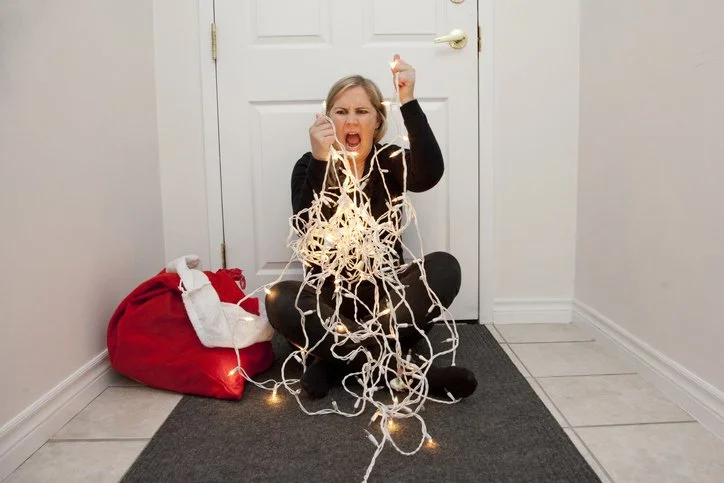
Feeling Holiday Stress? Start caring for your mental health today!


Happiness during the holiday season for your family really depends on your ability to stay sane and stable in the midst of all of the shopping, planning and parties. When you are able to manage yourself with as much calm and clarity as possible, your son or daughter with ADHD will regulate better too. You are not only modeling for them how to regulate but why it's helpful during busy times like these.
Good mental health during the holiday season starts NOW for the best results. The goal is to establish do-able routines for self-care now, so you will be in the habit when the stress intensifies later. Our brains need time to process the myriad of stimulating activities during this time so we don’t feel perpetually stressed, overwhelmed or burned out. Follow these tips for better self-care and, if you can, expand them to your kids too. Everyone will benefit from some time to slow down, plan ahead and focus on the important stuff.
Follow these steps:
- Create a daily routine for connecting with yourself: Whether it’s going to the gym, stretching before bed, meditating, taking a hot bath, listening to favorite music or walking outside, set up a plan for doing something at least twice a week. You need this time for integration and letting go throughout the year but, during the holidays, when the emotional, physical and psychological demands are greater, it’s more important than ever. Make this activity achievable by starting off with something small that you can actually accomplish. You'll feel nourished in a way that only you can give yourself.

- Take a moment and set goals for the holidays: Instead of trying to be everywhere and everything for all of the people in your life, take a few quiet moments to reflect on what you would like to get out of this holiday season. What are your goals? What are your limits? What happened last year that worked and you’d like to repeat? What do you want to avoid?

- Write these down: Look at them when you’re feeling frenzied, overwhelmed or discouraged. Ask your children and partners the same questions, identify shared intentions, add those to your list and focus on making these things happen.
- Plan for what’s most important before shopping: You are only one person and you can’t do it all. Most people become overwhelmed because they’re not able to formulate a strategy for getting things done. Sit down with your partner and/or kids and make a list of who you want to make or purchase gifts for and what those items are. Ask your children to assist you in ways that are appropriate for their age and capability. Then assign days and blocks of time for shopping or creating. When you have an action plan, you’ll feel more empowered and less freaked out.
Good luck on your holiday escapades!

The Benefits of Experiential Gifting

 Black Friday, Cyber Monday Alternatives
People Over Stuff! Giving experiences benefits people in several ways.
First, you are offering them something unique that will provide them with lasting memories. Perhaps it’s an experience they’ve wanted to do but not been able or willing to arrange for themselves. You are showing your caring support by both noticing this desire and making it happen.
Secondly, experiences offer people opportunities to stretch themselves in ways that objects may not. By giving an experience, you are offering someone the opportunity to go beyond their comfort zone with the encouragement of a kind friend.
Thirdly, if you join them on the activity, that might be even more fun. You’re demonstrating how the two of you can engage in something meaningful together. This deepens relationships and fosters closeness.
Finally, experiences can alter both someone’s perspective about themselves and about the world around. When you engage in an activity, you are participating and this action-oriented gift have a rippled effect in ways you can’t necessarily see.
Read about Great Holiday Gift Ideas for Kids with ADHD Shop for "The Gifts That Keep Giving" at the Dr. Sharon Saline Family Support Store

RenaFi: ADHD Parenting Tips with Dr. Sharon Saline



4 Tools to Manage Panic Attacks

 Panic attacks are best managed by having a concrete set of steps to follow that you’ve figured out beforehand. When you can identify the triggers and notice the warning signs, you can ground yourself more effectively and won’t be thrown off course as much. In a calm moment, think about what internal changes signal that you are feeling panicked and write these down. Increased heart-rate, shortness of breath, perspiration, knot in the stomach are common signs that anxiety is rising.
Next, create a list of the following tools and put it on your phone, computer or post-its so you can easily refer to it.
- Breathing exercises: Alternate nostril yoga breathing calms you down quickly. Put your index finger on your right nostril: breathe in and out of your left nostril. Now switch and breathe in and out of your right nostril. Do this on both sides until you start to settle down. It might be as many as 10-20 times.
- Make a playlist of songs that you love, soothe you or just make you smile. Give the playlist a fun title like “Cooling down tunes.”
- Change your environment: If you are inside, go to a different room or step outside. Notice what’s happening around you as you are inhaling in for 4 counts and exhaling for 4 counts.
- Go to the bathroom and wash your face and hands. Tell yourself something encouraging such as: “You’ve got this.” “This has happened before and you’ve survived.” “It’s just your fears trying to run the show. Slow down so you can calm down.”
Read More about Anxiety Purchase handout: You Can’t Stop Anxiety. You Change Your Relationship with It

22 News Mass Appeal: Dealing with social anxiety in children and teens