It's been a long day and you finally make it home from work with a car full of groceries which have to be unpacked and then, somehow, magically transformed into a tasty and nutritious meal. You trudge into the house, bags in each hand, and your ADHD son rushes towards you, waving a pink piece of paper in your face. "You need to sign this so I can go on the field trip on Friday. It's really important, my teacher said so. Can you sign it now?" You are amazed that he not only can't see that you have no hands to sign anything but that he also doesn't offer to take one of the grocery bags and help you. You can feel yourself about to lose it. What should you do? You can react and and shout at him, "What are you doing? Can't you see that my hands are full?" In all likelihood, you will get a bigger reaction in return. OR, you can respond by saying, "Hey, I can see this is important but my arms are full. Why don't you give me a hand and then we can take care of it right away?" By doing this second option, you will probably avoid a blow-out and maybe even get some cooperation along the way.
  The big difference between reacting and responding is how you manage yourself. Did you ever have one of those moments when you say something in frustration and wish that you could suck it back inside to make it go away? We all do! Most likely, those words are part of a knee-jerk reaction--a time when your emotional brain has hijacked your thinking brain. As adults, our developed pre-frontal cortex (located behind your forehead)--the seat of the thinking brain, can re-establish control and figure out how to put those emotions back into their place. Our ADHD children and teens, whose pre-frontal cortex is still maturing (until at least age 25), need extra assistance with managing emotions. Our self-management behaviors and our ability to talk about their choices and actions can show them how to do this. Responding requires you to acknowledge what your child is expressing, either verbally or non-verbally, in a non-judgmental way. It's not dismissive and it doesn't exacerbate tension or stress. It relies on patience, clear communication and paying attention to what is going on around you. This is why responding can be so challenging for people with ADHD. When someone responds, they validate whatever is going on and then create time for a solution. This can be especially tough in ADHD families when things happen very quickly--often escalating within seconds. You have to slow things down that are moving too fast--either for yourself or for your child or teen. Here's how you can do MORE responding and LESS reacting: 1. When people react, they act first, think second and breathe last (if at all). When we respond, we breathe first, think second, and act last. Switching the order of our actions and thoughts in this way offers the opportunity for things to be done differently. Do this yourself first a few times to see how it feels. The, you can start to talk your ADHD son or daughter through the steps in moments when they could use the help.
  2. Responding does not involve blaming or name-calling. Use "I" statements and teach your kids to do this too. For example, "I get scared when you don't come home at the time we agreed because I don't know where you are" or "I don't like when you call me 'stupid.' We don't talk to each other like that in this family." These words reflect your sentiments about yourself and offer an opening for your child to reply more thoughtfully than defensively. 3. Try to practice active listening. "I heard you say that this permission slip is important to you. It's important to me too and I will sign it once I have fully arrived home." This recognition is reassuring to your child and teen and lowers his or her anxiety that their needs will be met. ADHD kids often worry that they won't remember things and don't expect others to either. This anxiety often fuels their insistence that things have to be done now and their frustration when they have to wait. Restating what you perceive as their concerns and offering a plan for dealing them helps them calm down. I invite you to try this approach and see what happens. Reducing the frequency of reactivity in any ADHD family will create more calm in the midst of our busy, demanding lives and relationships.















 When the crocuses start to send up their green shoots and the snow finally melts into massive puddles, excitement about the spring infects everyone. Kids happily shed their heavy coats in favor of galoshes and move enthusiastically into the warmer weather. I have been thinking about how this extra spring energy reflects the natural levels of enthusiasm and activity that many children and teens with ADHD possess. Typically, these kids move quickly into action, often saying or doing things without pausing to think about what will happen next. We have to teach them how to do this. Imagine what would happen if a crocus or a daffodil didn't have its winter pause to fuel its spring arrival? Instructing kids how to pause and reflect before they 'spring' into action is one of our greatest jobs as adults. The ability to consider choices and predict the results of decisions matures over time, developing fully around the age of 25. So, you have to teach these skills NOW in order for them to grow stronger as your child matures. Your efforts will insure that the tools for self-control, self-reflection and good judgment are evolving in tandem with muscles, height and weight.
  In order to teach "STOP, THINK and ACT", frankly, you have to be able to do it yourself. Pause for a minute right now and ask yourself: "How do I stop myself from interrupting others? How easily can I refrain from impulsively eating a treat that I should avoid or purchasing something that I don't really need? What do I tell myself in these situations?" Being aware of how you monitor your own behavior will provide you with insight and patience for supporting your children. It works best to start teaching "Stop, Think and Act" by having a conversation with your child or teen. Do this in a calm moment; not in the heat of frustration. 1. Ask when are the most challenging times for him or her to consider making better choices. At the playground? In the cafeteria during lunch? After school waiting for the bus? At a party on Saturday night? 2. Recall a situation when he or she contemplated a choice, acted on it and had positive results. Then recall a situation when he or she impulsively behaved without reflection where the results were not ideal. 3. Rewind the tape for this latter situation: ask how it could have gone differently if your child or teen had paused, mulled over the pros and cons of various choices and then selected one. Together, explore how to create such a pause that would work for him or her. Some effective solutions are concrete and ideas could include taking off a hat or jacket and putting it back it on; taking 5 deep breaths; going to the bathroom; taking a brief walk; asking someone's opinion. 4. Speculate about similar circumstances in the future where this process could be practiced and how it would be done. Make a time each day to check in and see how and when your child using it. Now, try this process out at home to hone the skills. For example: Your ADHD teenage daughter comes home from lacrosse practice and wants to watch TV before dinner. Your younger son is already watching a baseball game. She marches into the room and is about to grab the remote from him when you remind her, "Stop, Think and Act". She halts; she hovers; she removes her hands. Success! You have helped her to interrupt the impulsive behavior and make a different, better choice. She took a small pause before springing into an action other than the one she had originally intended. Repeat, repeat and repeat your efforts so that she will soon start to do this on her own. Notice when she does (with or without your help) and remember to give specific, positive feedback as often as you can.

 When it gets this cold and snowy, there is always extra work at home to do. How can you get your ADHD son or daughter to help you and not hold you back? Whether it's shoveling snow, clearing off cars or carrying wood, parents need help from their children but often choose to do the chores themselves. Involving your child can require extra work for you (and sometimes extra irritation) resulting in less productivity. So, most likely, you would rather just head out alone. Doing a chore alone has its benefits for a parent: no hassling with a reluctant teen, no reminding a child to stay with the task at hand and no one asking twenty times "How much longer will this take?" This choice, however, is problematic for everyone in the family. You wind up being more tired and perhaps even resentful that you are working alone--again. Your children or teens don't learn the skills associated with the chore. They also don't gain the value of helping someone. Lastly, no one gets the satisfaction of completing something together.
  In order to create a win-win situation for everyone (the work is done jointly and correctly with minimal arguing), there have to be clear expectations about the tasks at hand. These simple guidelines need to be established before--way before you embark on the chore itself and will assist all of you in creating a successful experience: 1. In a calm moment that you set aside for a family conversation before the first snowflakes have fallen but after the temperature has already started to drop, brainstorm with your child or teen how you as a family want to approach the winter chores. Who wants to do what and for how long? What is the incentive that your child or teen needs to participate (help with a project that matters to him or her, an extra chunk of computer or television time, hot chocolate and a special baked treat, etc.)? What are the consequences for not participating or arguing while working? 2. Talk about obstacles that have impeded working together on winter chores in the past and strategize about how to deal with them if they re-occur this year. 3. Make an agreement about a time limit for the chore and stick with that. Discuss how you will keep track of time and how you will handle redirecting your child when he drifts off and slows down. Inject some fun into the task. Try doing something goofy like playing music she likes on her iPod out loud. Make snow angels. Play catch with snowballs. Build a fort or snowman. 4. If, at the end of the time period, there is still some work to do and your young assistant has run out of cooperation, patience and concentration, set him or her free and finish it yourself. (Of course, he or she can stay longer if desired.) Remember, that you are contributing to the development of his or her executive skills by planning, participating and sticking with tasks that have to be done but may not be much fun to do. Plus, you are building lifelong memories of doing chores with a parent (remember being outside in the cold when you were a child??). 5. Share a yummy hot chocolate, warm cider or steaming tea when you are done and marvel at your accomplishment. Maybe even play a game, watch a movie or read a book together! So, grab your gloves and shovels and get started. It's a winter wonderland out there!


 Each time I give this talk, I am always curious what the audience members will find most interesting and relevant to their lives. Sometimes people are curious about the recent findings in brain research that the pre-frontal cortex continues to develop until the mid-twenties. Sometimes people are interested in learning more about teens and sleep. And sometimes, people would just like to what is ‘normal’ teen behavior and what is not. At both of my talks in Jamaica, the attendees were especially interested by two issues that are related to executive functioning skills. 1. A 2011 NIMH-funded study about emotional recognition found that adolescents showed a 50% accuracy of correctly naming emotions versus the adults in the study who showed 100% accuracy. This finding means that adolescents misinterpreted the facial expressions that they were shown in half the cases. When I emphasized that this result implies that teens are reading situations incorrectly about half of the time and then responding to that misreading, people were amused but also concerned. We talked about how understanding facial expressions correctly relies on executive functioning skills which are still developing. Teens wondered if they could speed up the course of development. “Miss,” on young man asked, “Is there any way to speed up the development process if I work really hard? I would like it to be finished by the time I am 20, not 25.” “Well,” I said, “You can work hard on strengthening your executive functioning skills like planning, organizing, judgment and self-awareness but your brain will grow at its own rate and you can’t really make that go any faster.” He was visibly disappointed.
  2. Time management: I talked about backwards design, which seemed to be a new concept. We looked at how challenging it can be to get ready and out of the house on time for school in the morning. With the eager participation of one mother and daughter, we traced their morning routine as it unfolds now with all of its bumps and then rearranged it by going backwards from the time of arrival at school. The audience found this technique very useful. I really appreciated the frank feedback that the Jamaicans gave right after my talk—“I liked the part about learning how to make better decisions but not so much about the brain cells”—and their warmth and humor. It was refreshing (and a bit comforting) to see that parents and teens in the Caribbean have many of the same questions and concerns that we have here in the USA.


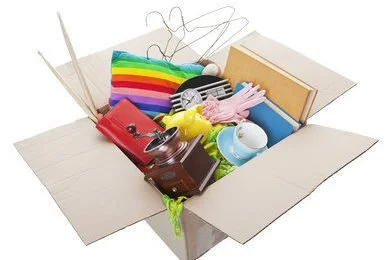
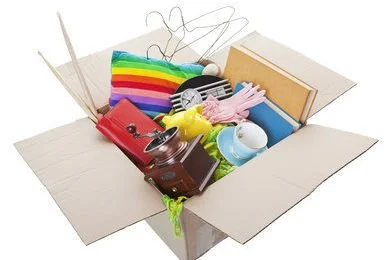
 As the trees and flowers begin to bloom, many parents take a look around their homes and long to clean out the family nest. Sometimes, the task seems just too overwhelming and you don’t get any further than a big sigh. At other times, you start with the best intentions but can’t get past the battles about what to keep and what to get rid of. Here are some simple steps that you can use to organize the belongings of your children or teens this spring (and maybe even your own)! The path to organizing success involves the 3 P’s: patience, perseverance and practice. It requires a sense of humor and the ability to keep focused on your goal. Improve collaboration with your son or daughter and avoid power struggles by using the following steps:
  1. Choose your target carefully. Make it manageable and give it a specific period of time. For example, go for cleaning out JUST the closet and give yourself a limit of around an hour. Or, concentrate on picking things off the floor and do the closet on a different day. Keep track of the time so you don’t run out! 2. Engage your child or teen in the process, using incentives. This means offering your child or teen something s/he may want to do as a reward for working with you on this project. Examples may include extra screen time (tv or computer or gaming systems), fun activity (biking, board games, playing sports), time with friends or a special food treat. 3. Get 4 bags and label each one: “keep”, “trash”, “give away”, “unsure”. Divide the STUFF into these bags. If your child or teen has trouble with letting go of belongings, help him or her make choices by talking about what is really being used and how someone else might want what your son or daughter does not. When you have your 4 bags, go through the “unsure” bag carefully one more time, putting its contents in the other 3 bags. Then put away the “keep” items immediately and deal with the “trash” and “give away” bags. Remember it is critical to value what you have done together. Look at your accomplishment and congratulate yourselves on the success of your efforts!!