

5 Essential Emotional Survival Tips for Families Living with ADHD during Confinement

 It’s hard to believe that we’re halfway through April and we are still living in confinement—all around the world. Although you may have established daily routines (and I hope you have because structure is comforting for kids with ADHD), emotions are probably running high. Each day, we face the same persistent stressors: home-schooling kids who are alternative learners, managing screen time, living with social distancing, trying to do your own work and getting chores among other things. While you manage the daily ins and outs well enough, you and your kids likely deal with the emotional fallout related to this situation regularly. Underneath any anger and anxiety lie sadness, disappointment, loss, frustration, and depression. Confusion about when this unpleasant period will end adds to the intensity of these feelings. What can you do to maintain calm, reduce conflict and offer support to your family?
Thinking all of the time about decisions and actions that used to be second nature is exhausting. How do we grocery shop? Who can I talk to and when? When can I get a minute to myself? Living in uncertainty adds to everyone’s fatigue and fosters helplessness. Sitting all day and spending a lot of time on screens may be necessary right now but it increases feeling sluggish and being cranky. We want to nurture an outlook for your son or daughter that encourages tolerating what’s tough without frequently acting out their frustration and hopelessness.  Follow these steps to improve your family’s emotional stability and foster resilience:
- Accept where you are and what you feel: It’s natural for people to have low morale and feel stuck right now. Acknowledge these uncomfortable feelings without trying to fix them. Counter negativity with gratitude. Find one thing your family members appreciate every day, no matter how small: The privilege of eating a yummy dinner, seeing the tulips bloom, riding a bike or playing a game. It’s easy to dismiss what we have in favor of longing for what we don’t. Shift your perspective and help your kids zoom out like a camera to see the bigger picture without dismissing their real feelings about what’s been lost.
- Expect friction and strategize: When stuck in situations they don’t like and don’t see ending, people will rub each other the wrong way. Instead of expecting unrealistic harmony, plan for friction between siblings, your partner if you have one or other extended family members living at home. In a calm moment or planned family meeting, create two strategies for dealing with conflict: Option one and the back-up plan.
 Notice the signs when things are escalating and call a time apart for 10-15 minutes to cool down and regroup. Post a list of acceptable activities and tools to use to regain self-control. Build negotiation skills and practice forgiveness tools by relying on reflective listening (“I heard you say X, is there anything else?”) and focusing on moving forward through making amends and right action. What can your kids do for each other that shows they’re sorry rather than just saying it?
 - Control what you can: Limit your exposure to the news by checking it no more than once a day. Things don’t change that much and all of the statistics can be frightening and depressing. Consider past difficulties and write down how you overcame them. Do this with your kids too and post this in the kitchen. They just may glance at it when they’re having a snack and you can remind them about their survival skills if they don’t. Do something zany that injects some levity into
 the family and breaks up the monotony of our days. Set up a weekly ice cream or movie night; dance while cleaning up after dinner, dress up in costume for dinner one night. Do anything that brings some joy and laughter to your clan. This is what you can control so go for it.
 - Give people the benefit of the doubt: No child or teen with ADHD wakes up in the morning and thinks “What can I do today that will really irritate my mom or dad?” They are trying their best with the limited resources of their developing brains and executive functioning challenges to get by. Take planned time-aparts: create specific short periods of low stimulation and calm for people to disengage from each other, rest and refuel. Focus on what really matters and shift your standards a bit.
 Neither kids’ homework nor home cleanliness has to be perfect and previous goals extracurricular activities can be lowered some. It’s okay to make adjustments and then ramp things up when we return to “normal.” We are living in an extended crisis that’s a marathon. Practice compassion for yourself and your kids.
 - Connect with your posse and help your son or daughter do the same: Reach out to a circle of friends and family at specific times rather than checking Facebook, Snapchat, Instagram, texts and emails throughout the day. Instead, set a few specific times to do so and then you can really enjoy your connections. We want to reduce media multi-tasking as much as possible which stresses our brain and leads to further exhaustion. Help your kids go for quality in their peer interactions by encouraging contact with one or two people at a time so there’s a better depth to the connection. Seeing caring faces smile back at you reminds you that we are all in this together: you matter to them and they matter to you.


ADHD Essentials Podcast: COVID-19 & What to Do When You and Your Kids are Stuck in the House


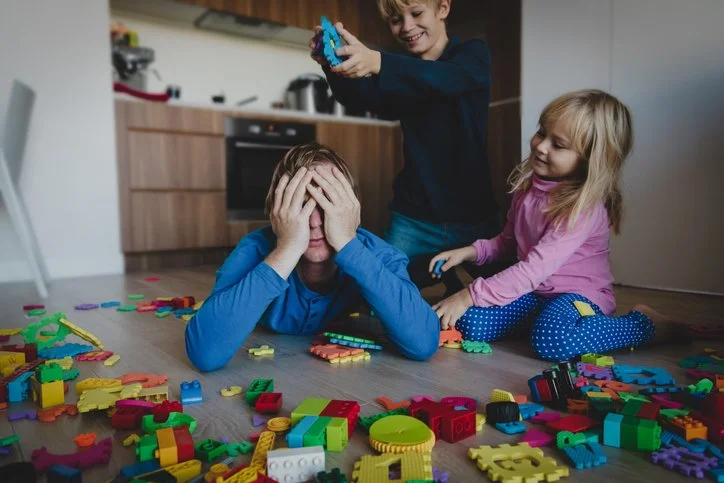
Set Up Routines Now! Tips for being home with kids with ADHD during COVID-19


Has it been another exhausting day of managing your son or daughter with ADHD at home due to school closures from COVID-19? It's tough to juggle their activities, school work and sibling arguments with your own issues about employment changes and trying to stay calm in the midst of national panic. What can you do to ease the stress and create a home structure that works for everybody?
First, take a deep breath. Think about what type of daily schedule you'd like to see for your family. What's realistic to expect from yourself, your partner (if you have one) and your kids during this time? It's reasonable to expect daily routines that include regular wake-up and bed times, blocks of time allocated for studying, chores, play and chilling out. It's reasonable to expect that screens aren't on 24/7. And it's reasonable to predict that there will be laughter, fun as well as meltdowns and arguments. Once you accept these conditions, it will be easier to create a structure that works for everyone. Start by dividing the day into blocks for studying, doing chores, fun activities and chilling out. Follow these tips to help make your family's plan and then post this in the kitchen. Expect to adjust this along the way.

- Set up formal study periods while you work at the table alongside your kids. Break assignments into do-able chunks and offer incentives for the completion of work. Make sure you include study breaks based on movement, snacks and time outside.
- Assign chores that your kids can do so that everybody is contributing to the household according to their age and ability.
- Set up screen and non-screen activity times. Brainstorm lists for each of these categories with your kids and plan for when they will occur. Give some screen time automatically each day but then leave the rest for your kids to earn through their cooperation.
- Play with your kids: If you give them your attention freely and positively, then they won't need to act up to get it. Spend time outside and exercise together if you can.
- If you are now working from home, use your kids' screen time to your advantage and schedule it for times that will help you.
 Take time to answer kids' questions about COVID 19 with facts and honesty. They are scared and confused and need you to clarify what's happening. They seek reassurance that you're taking care of their safety and may want to talk about how to maintain connections to their friends and extended family members. During this strange and frightening time, remember to take care of yourself so you'll be available to take care of others. Reach out to folks for support but edit your phone conversations so you're not discussing distressing content in front of your kids.
Psychology Today: Are You Tired of Losing Things?


Sibling Strife: How to stay sane and manage sibling issues in your family


They're at it-again. Your kids are fighting once more, accusing each other of doing or saying something unkind. The argument is escalating quickly into tears and accusations and you're fed up and disheartened. All you want is for your kids to get along and be friends. What can you do differently?
It's heartbreaking and exhausting when your kids don't get along. Sibling relationships are the way kids figure out how to relate to a peer, practice social skills, and learn negotiation skills. In families living with ADHD, these relationships can be especially tricky. The child with ADHD may feel jealous, angry or frustrated with their sibling, especially when they're neurotypical. They may feel judged, misunderstood and rejected by them. They probably compare themselves to this sibling and, sadly, come up short. 
Neurotypical siblings often suffer with being 'the other one'--the child who may receive less attention or is expected to put up with inappropriate words, demanding behaviors or excessive needs as part of understanding their sibling's challenges. They're asked to be patient when they really feel angry or ignored. If you've got more than one child with ADHD, LD or ASD, it can be especially challenging for everyone to live with how issues with attention, learning or processing information manifest differently.
You can't make siblings become great friends but you can create a home environment of civility and tolerance. While things may seem fraught with tension now, you don't know how their relationship will change over time. Focus on how to teach your kids to deal with their conflict effectively by teaching skills such as sharing, compassion and kindness. When the family lives by a code of civility and acceptance, everybody's relationships improve. Instead of perceiving unfairness and judgments, your kids can learn to accept each other--and themselves--warts and all.  Try these steps:
- Normalize different kinds of brains: We all have brains that are uniquely wired. Rather than expecting and demanding compassion, increase empathy by talking about personal strengths and challenges for everyone. Describe executive functioning skills and identify family members' strengths and challenges. See who shares what skills and where differences arise. Then, make a plan for each person to address one of their challenges. We all have issues we can work on which levels the playing field between siblings. Make a weekly family meeting to discuss progress and brainstorm new approaches if necessary.
- Create a plan to respond to disagreements: Forget about fairness; it just doesn't exist. Instead, look at the timing and sequences of sibling arguments for a pattern. Use one of your weekly family meetings to create a plan for what to do when arguments arise. What are the ground rules about language and physical harm? What happens if you break them? Kids have lots of ideas and when you collaborate on solutions to problems, you gain their buy-in and improve their participation. How can you take a time-apart when emotions are escalating so people have enough time to cool off before coming back together to talk about moving forward? Make a list of acceptable Calm-me-Down activities. Explore ways that people can make amends for hurtful comments or actions.
- Stay in the present and keep your goals for their relationship to yourself: Your kids have to figure out for themselves how to relate to each other and what the quality of that relationship will be. Your job is to foster safety and civility. Yes, you may feel sad about how they interact with each other and please discuss this with your partner, a friend, a relative or a therapist. But, telling kids things such as "One day, all you will have will be each other" or "Your sister loves you and wants to be friends" doesn't acknowledge what's the nature of how they are (not) getting along in this moment. Most kids live in the present and, for kids with ADHD with their NOW/NOT NOW brains, thinking ahead to some unknown future really doesn't matter. Stick with what's happening now and work with them to create interventions that foster accountability and acknowledge the validity of both positions in an argument. Help both kids accept the other person's perspective by asking them to repeat what they hear their sibling saying instead of interpreting or arguing about it.
 Remember kids' relationships go up and down. There are good moments and tough ones. When things get heated, stay as centered as you can. If you need to collect yourself, head to the bathroom to wash your hands, drink some water and take some deep breaths. Once you've pulled yourself together, you can handle whatever is happening on the other side of the door.

Unleash Your Kid's Genius Summit: Dr. Saline Masterclass Video


Overcoming Distractions Podcast: EP 54 – Do You Grow Out of ADHD? Is It a Myth?


YourTango: 5 Reasons Why Having Bored Kids Can Be A Great Thing For Their Development


Psychology Today: Finishing Your Semester Strong

Yahoo Lifestyle: Experts Explain How to Tell If Your Nerves Are Actually an Anxiety Disorder

Feeling nervous is a natural - though certainly unpleasant - human emotion that we all experience from time to time. Although some people are more prone to nervousness than others, everyone has dealt with that pit in their stomach before a job interview, a first date, or an important test. But while the words "nervous" and "anxious" are often used interchangeably, there's a big difference between feeling nervous and having an anxiety disorder.
"Feeling nervous is different than feeling anxious in terms of intensity, frequency, and focus," Sharon Saline, PsyD, a licensed clinical psychologist and author, told POPSUGAR. She explained that nervousness is similar to anxiety in the sense that it's experienced both cognitively and physically, but that's about where the similarities end.
Click logo below to read more.


RenaFi: ADHD Parenting Tips with Dr. Sharon Saline



22 News Mass Appeal: Dealing with social anxiety in children and teens



22 News Mass Appeal: Tips on starting a new routine with your children

ImpactADHD: Fostering Resilience for Kids with Anxiety



CHADD: How Does an ADHD Diagnosis Affect Self-Esteem?


Parentology: Teaching Your Child Not To Be Jealous



Parenting in the Thick of It Podcast: Interview with Dr. Sharon Saline



HuffPost India: How To Break Up With Your Therapist And Start Over With A New One

Click logo below to read more.


Overcoming Distractions Podcast: How to combat shame when you are an adult with ADHD



The Greenfield Recorder: Book Bag: ‘What Your ADHD Child Wishes You Knew’ by Sharon Saline
