

Parentology: How Splitting Time Between Two Homes Impacts Children



Your Anxious Child Podcast: Expert Interview with Dr. Sharon Saline


Screens, Summer and Sanity

 You are the parent! Repeat. Screens are NOT a right! You are the parent! Repeat. Screens are NOT a right, they are to be earned. Write what you will accept, and then work with your child - now, at the start of summer, to collaborate on a plan that you both agree to. Learn more about my screens and summer advice in this Youtube video.

Want better conversations with your child or teen with ADHD? Use the WAIT-Now Method


Do you ever say something to your son with ADHD, or daughter with ADHD, and wish you could take it back? Most parents feel this way at one time or another. Sometimes, especially when raising teens, I've imagined a cartoon bubble of my words and wish I could suck them back into my mouth just a few seconds after it's already too late. That's why I created the WAIT-Now Method to help take that needed pause when you're triggered. Instead of blowing your cool and regretting it later, you'll say something appropriate and feel good about yourself too.
The WAIT-Now Method stands for "Why Am I Talking Now?" Rather than give into your automatic response in a tense or uncomfortable situation with your kids, you PAUSE by actively telling yourself to WAIT. This is part of the STOP in my STOP, THINK, ACT technique, but it's geared directly to what you say. Notice what you are saying to your child or teen, how are they responding and where the conversation is headed. If it's going downhill, pause your talking and ask yourself these questions:

WAIT-Now Method: "Why Am I Talking Now?
-
What am I saying?
Ask yourself if you are actually communicating what you want to be. If you are, great--keep going. If you aren't, then stop. Take a few deep breaths and pause. Reflect on what you really want to saying, edit your words and try again.
-
How are my words being received?
Notice how your son or daughter is responding. Their body language and their comments are giving you valuable information about the effectiveness of your words and whether or not you need to change direction.
-
Why am I invested in saying these things?
Identify your goals in this conversation. Are you engaged in clarifying a direction, are you giving them helpful feedback, are you trying to keep them safe? Why you are talking to them directly affects how you talk to them.
-
Could I listen more and talk less?
Sometimes we fill in uncomfortable gaps or anxious moments with words. Open spaces in conversations with kids give them time to reflect on what you're telling them and think about what they want to say in return.
This takes time to learn and practice makes progress. Be kind to yourself when you see that cartoon bubble, regroup and try again next time. To give yourself a useful reminder, write WAIT NOW on a post-it and put it on your refrigerator! 
Read more blog posts:
- Parenting Older Teens with ADHD: Land the Helicopter and Focus on Scaffolding
- ADHD and Negativity: Why ADHD kids and teens say "No" and how to help them communicate
- ADHD and Anger in the Family: Manage Outbursts with STOP-THINK-ACT
https://drsharonsaline.com/product/home-seminar/

22 News Mass Appeal: Wedding Week—How to begin your "blended family"

Click logo below to read more.


Business.org: What I Want To Be When I Grow Up



Blog Talk Radio: ADHD Shame and Negative Self-Talk

Psychology Today: Getting the Academic Support Teens and College Students Need


22 News Mass Appeal: Using Humor in Your Parenting

Mentally Fit: How to Talk to Your Teen About Self Care



22 NEWS Mass Appeal: How to start planning summer camps and activities for your children

Sanity during holidays

https://drsharonsaline.com/wp-content/uploads/2018/06/nobody-perfect-1024x680.jpg Kids with ADHD usually have grown up with a series of negative comments about that are labeled "constructive feedback." Actually these statements feel anything but constructive. One 10 year-old boy told me "There's nothing good about feedback. It's usually bad." Even parental or teacher redirections are interpreted by kids and their concrete thinking as them being wrong, bad or improper. Avoidance and perfectionism can then emerge as coping mechanisms. Children and especially teens with ADHD can be expert avoiders. Tired of feeling wrong or doing poorly in school more often than not, they just give up. Perfectionism in kids with ADHD usually comes from feeling like they are never good enough. It can stop them from starting anything, especially writing, before they even begin. Sometimes they will agonize for hours which will delay them even more. https://drsharonsaline.com/wp-content/uploads/2018/03/AcademicsSchool-1024x711.jpg
How can we keep your sons and daughters engaged and willing to attempt things? Here are some helpful hints:
- Acknowledge past mistakes as something that happened but aren't who they are. Since learning means messing up, regrouping and doing things anyway, investigate the details of what occurred with the original mistake.
- Ask questions with no blame and a neutral tone of voice like you are a detective: "What happens when you sit down for a test in biology? I saw you study at home. . . What might have helped you before the test that you now know based on your experience?"
- Break tasks down into smaller, more manageable parts. When something seems overwhelming, difficult or uninteresting, start small. Together, choose some fun activities that can be used as incentives. "Instead of creating all 5 paragraphs of your book report, let's just work on the first one. Then we can play a game of cards and do the second." Your assistance and even sometimes just your presence, can be the difference between doing nothing and starting something.
- Be open about the mistakes you make. Talk about them and what you did to deal with your errors. By doing this, you not only model your own flaws and problem-solving skills but also the shared human experience of having foibles in the first place.
- Practice self-forgiveness and accountability. Let your kids see how you do this and verbalize it for them as well. Watching you shows that they can do it too.
https://drsharonsaline.com/wp-content/uploads/2018/03/Motivation-1024x683.jpgAddressing these challenges takes time. Be patient with yourself and your ADHD child or teen. If you notice that you are frustrated, take some space, regroup and try again later when you are calmer. Remember, any negativity from you about avoidance and perfectionism only makes these tendencies stronger.https://drsharonsaline.com/wp-content/uploads/2018/06/5366637592_0a193a8fcf_b-1024x680.jpg

3 Ways to Share with Your ADHD Valentine

Celebrate Valentine’s Day with REAL Heart!
 This week, television shows, Hallmark cards and advertisements tell us repeatedly that Valentine’s Day is about celebrating love–romantic love, familial love, friendship love. I even saw a Valentine’s Day card for your dog! It can all be a bit overwhelming, especially if you are feeling less loving than the commercials suggest you should be. I would like to suggest that you can transform this day into something meaningful for you and your ADHD son or daughter by being authentic and acknowledging what is positive in your relationship. Often we are so busy with our chaotic lives that we neglect to notice and name things that are going well and move quickly onto what isn’t working. While it is great to give and receive funny cards and candy on Valentine’s Day, it can also feel wonderful to share and name things that family members like and appreciate about each other. It might sound corny but such conversations or written words, however brief, can have lasting effects. Taking the time to add your own comments about a positive behavior or attitude on a card or at a meal will show that you really see your child’s efforts to do well and encourage more of them.
  Even teenagers who can seem indifferent or combative to you actually listen to your positive feedback. The trick is keeping your comments “short and sweet”: you have to grab their attention, be succinct and speak genuinely or your ADHD son or daughter will smell a rat and stop listening immediately. Here are my tips for a Valentine’s Day with REAL heart for you and your ADHD child: 1. Talk to your family and set a time for Valentine’s Day cards, gifts or exchanges. It doesn’t have to be a big deal; just a time when everyone can be together. Make an agreement about the general plan: “We will be giving cards and not gifts.” Or, “We will give gifts that are homemade only.” Or, “No cards, no gifts, only chocolate.” Do what seems natural for your family. Participation is not mandatory but attendance is. 2. If you give cards, write a few things that your son or daughter does that you like. BE SPECIFIC. “I like how you hum when you eat your food.” “I love when you give me a hug before bed.” “I appreciate when you clear your plate after dinner.” “I like your sense of style, even though it’s different from mine.” If you are doing a verbal exchange, plan what you have to say so you it doesn’t seem like you are making things up at the last minute. 3.
  When you get together as a family, share your cards or comments without elaborating or dwelling on them. Your ADHD son or daughter has a limited attention span and we want this to be fun. Lingering on topics, even if they are good ones, promotes distractedness. Reciprocity and connection, however brief, are the goals here. Enjoy an authentic Valentine’s Day! Please let me know how this goes!
Bring Humor to Challenging Situations
 Having a sense of humor when raising kids is an essential tool for any parent. Children can expand your heart and push your buttons like no one else. Being able to laugh at what happens, at your reactions and sometimes at life itself helps ease the journey. Everybody does things they’re proud of as a parent and things that they wish they hadn’t. Having compassion for yourself when you stumble enables you to giggle at your foibles without bombarding yourself with shame. Self-blame or criticism of others often intensifies small incidents into full-blown explosions. Maintaining a sense of humor reduces the chances of a conflagration.
As the parent, you need to set the example for your kids by using a tone that brings humor, boundaries and self-expression to challenging situations. For example, when kids speak to you in a disrespectful tone, you have a choice. You can angrily tell them “You’re not allowed to speak to me that way. Go to your room.” Or, you can say: “Fresh is for vegetables, not speaking to me like that.” The first option throws fuel on the fire; the second one, dampens the flames. If you your teenage son gets into your car, plugs in his phone and listens to rap music that he knows you hate, you could tell him that he’s being selfish and entitled and unplug his phone. Or, you could learn some of the lyrics to his favorite songs and sing along. That will certainly change the dynamic in the car and likely make you both smile. You’re managing your own reaction with humor and not responding negatively. Using self-control and creativity to look at yourself and your reactions differently, you shift conversations and situations away from annoyance or aggravation by injecting some levity. You’re not only modeling this for your kids as an effective coping tool, you’ll feel better and they will too.

Your Guide for Calmer, Fun Holiday Vacation

Aah, the thrill of family vacations! Everyone piles in the car, bus or plane for a fun-filled week of togetherness and Hollywood happily-ever after endings, right? Maybe not. Too often, these trips are fraught with struggles that you'd like to avoid but don't know how. Collaboration and consistency the keys for a 'no-drama' holiday week. When you work with your kids to include their ideas for the travel experience and the vacation activities, they more eagerly buy into the holiday plans and help you make them a success. When you stick with your agreements and follow through on them, they'll feel more secure and cooperate to make the trip run more smoothly. Here are some sure-fire tips for a great holiday week: 
- Before your start the trip, meet together as a family and review the itinerary. Kids with ADHD like to know what's coming down the pike because it helps them prepare for transitions and adjust their expectations. Go over the scheduled activities, talk about any possibilities and make a list of what people would like to do. Discuss the difference between "have-to" events and "want to" options. Add one desired activity from each person to the vacation plan.
- Consider your child’s capacity for self-entertainment while you're in transit. Be realistic about what your child or teen can actually tolerate in terms of travel. Budget enough bathroom and body breaks. Create a do-able list of acceptable games and activities. Bring the supplies you need and throw in a few surprises to keep your kids on their toes. If you are using technology as entertainment, I encourage you to save it for the later part of the trip when the other activities have lost their appeal.

- Create a strategy (in advance) of issues and behavior that trigger folks so you are prepared if they happen. By planning for these potential upsets, you can rely on similar past incidents to give you strategies for responding more effectively if they occur on this trip. This way, you'll have the tools you need to deal with such challenges successfully. Make sure you also talk with your family about how you can slow things down when temperatures rise and tempers start flaring.
- Decide how much technology your kids can have, when and where. Clearly explain the limits around technology before you leave. If you want to use technology for rewards or relaxation time, make sure you outline the conditions when these will occur. If you decide to give them bonus screen time, name it as such and talk about why. It's no fun to spend your vacation negotiating tech time so set the boundaries before you go.
- Stay positive. A sense of humor is your best traveling companion on family trips. Don't sweat the small stuff. If your son is fresh to you, say "Fresh is for vegetables not car rides." If your kids are yelling at each other and you can't hear yourself think, put on one of your favorite tunes, roll down the window and sing out loud. They'll be distracted and complain about the cold. Try to see the silver lining. A bad traffic jam may be the perfect time to break out the secret snack and delight everyone.
 May you travel safely, have fun with family and friends and enjoy the warmth of this holiday season!

22 News Mass Appeal: Tips to help your kids avoid getting overwhelmed during the holidays

ADHD Families’ Guide to Holiday Joy

 Stress, stress, stress! The calendar images of December should be a scene of a crazy person running through the mall instead of the winter tranquil scene, right?! Do you have a long list of gifts to buy and wait until the last minute to do your shopping? Do you schedule back-to-back social plans and celebrate with gusto? Do you dislike the holidays altogether and prefer to hide in bed under the covers until January? If you have ADHD, this frantic pace can create overwhelm you and your family. STOP! Create an experience that is fun, rewarding and calmer for you, your family and your ADHD child or teen. Start with a mindset of “SIMPLIFY, not COMPLEX-IFY”. Holiday overwhelm comes from two main sources:
- leaving things until the last minute
- trying to do too much.
Let’s face it—everything takes longer than we think it does. If you start planning your tasks with that mentality and give yourself more time to do things, the process will go more smoothly. Last-minute planning suggestions:
- Make a master list - then break it down into shorter ones, with no more than 3-4 different places in one outing. Map out where you need to go and group places together than are near each other. Teach your ADHD kids to do this too by explaining what, why and how you are doing things when you go out together to run errands.
- Schedule breaks - hot chocolate or tea can break up the trip.
- Cross things off your lists - do this yourself or ask your kids to assist you. It’s easier to see your accomplishments this way.
“Squeeze it all in” suggestions:
- Discuss the calendar with your family - Sit down with your family and decide how many things in a day people really can handle during the holiday season.
- Figure out what constitutes “down time” - be sure to include something that is settling rather than stimulating. Limit individual technology use and encourage quiet activities including playing games, reading, listening to music, or watching a family movie. Write down these ideas and post them on the refrigerator so people can refer to them when they are most needed.
Do you have other suggestions? Please share them with me. Good luck and Happy Holidays to All!
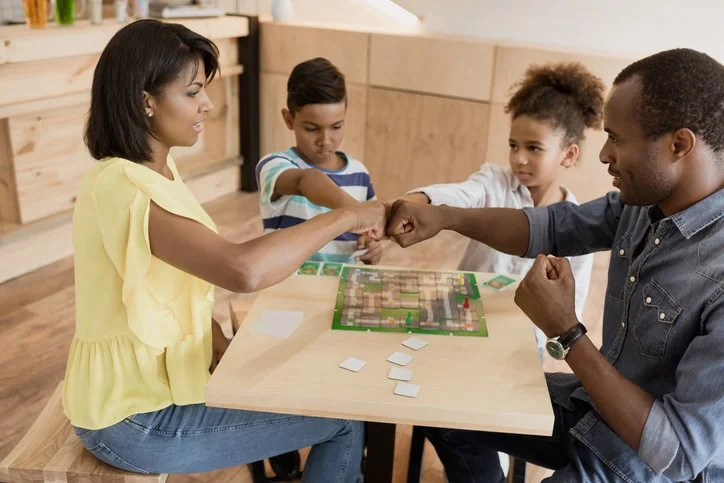
Romper.com: The AAP’s Advice For Choosing The Best Toys For Your Kids: Go Old-School


Psychology Today: Do the Holidays Make You Nervous? How to reduce social anxiety in teens and young adults with ADHD
